The Ethiopian Orthodox Tewahedo Church, explained
One of the world's oldest churches: what Tewahedo means, its 180 fasting days, the tabot and the Ark, Timkat, and the chant of Yared.
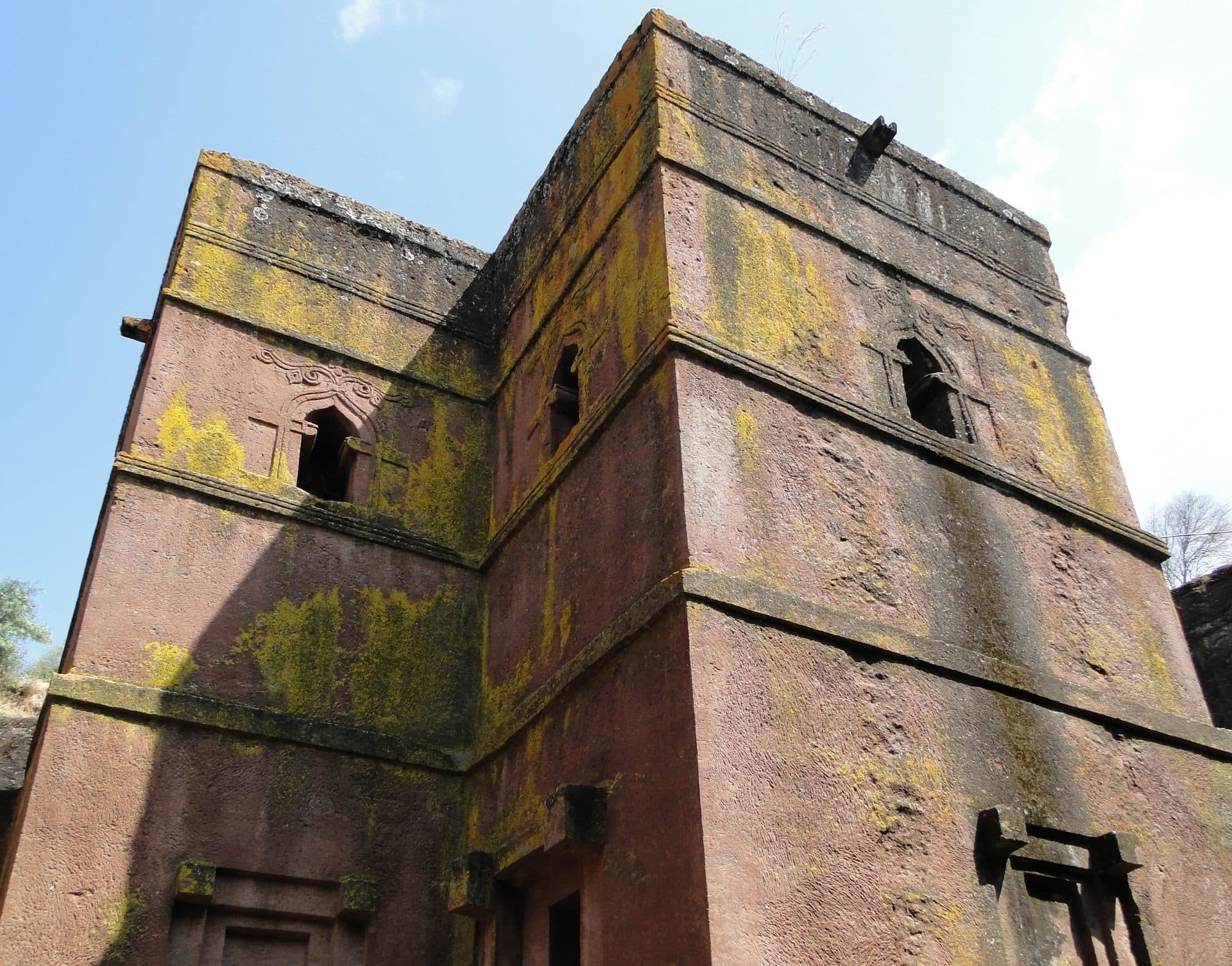
If you grew up in it, none of this feels exotic. It is just church: the smell of incense, the drum and the chant, the long fasts, the white netela pulled over your head, your grandmother's lips moving through prayers in a language you half understand. But step back and the Ethiopian Orthodox Tewahedo Church is one of the most remarkable institutions on earth, a form of Christianity that took root in Africa in the 300s and has kept its own path ever since.[1]
Start with the name: what "Tewahedo" means
The word carries the whole theology. Tewahedo is Ge'ez for "being made one," or unity.[2]It points to the church's central belief: that in Jesus, the divine and the human are joined into a single, united nature, not two natures sitting side by side. That may sound like a fine distinction, but it was the fault line of an ancient argument. At the Council of Chalcedon in 451, most of the Christian world adopted a two-natures formula. The Ethiopian church, along with the Coptic, Armenian, and Syriac churches, did not, and this family became known as the Oriental Orthodox.[1][6]
So when people ask whether Ethiopian Orthodox is Catholic or Protestant, the honest answer is neither. Its break from the rest of Christianity happened a thousand years before Luther, over a question most modern Christians have never heard of.
One of the world's oldest churches
The story begins in the Kingdom of Aksum, a Red Sea trading power. In the 4th century its king, Ezana, became a Christian, guided by Frumentius, a young Syrian-Greek who had been shipwrecked and enslaved as a boy, rose to serve at court, and was later made the first bishop of Aksum by the patriarch of Alexandria. Ethiopians remember him as Abba Selama, "father of peace."[7][1]Christianity became the state religion, and Aksum minted coins with the cross, among the first states in the world to do so.
For most of the next sixteen centuries the Ethiopian church remained tied to the Coptic Church of Egypt, which sent it a single Egyptian bishop at a time. That changed only in 1959, when the Coptic pope granted Ethiopia its own patriarch, and the church became fully self-governing.[1][2]Today it counts tens of millions of members, one of the largest bodies in all of Orthodox Christianity.[6]
The fasting church
Nothing shapes daily Ethiopian life more visibly than fasting, and no church fasts like this one. A layperson keeps around 180 fasting days a year; monks, nuns, and the especially devout keep up to about 250.[3] Fasting here does not mean skipping a meal. It means eating no animal products at all, no meat, no milk, no eggs, and often taking the first meal only after the morning service, around three in the afternoon.[3]
A layperson keeps around 180 fasting days a year; the especially devout keep up to about 250.
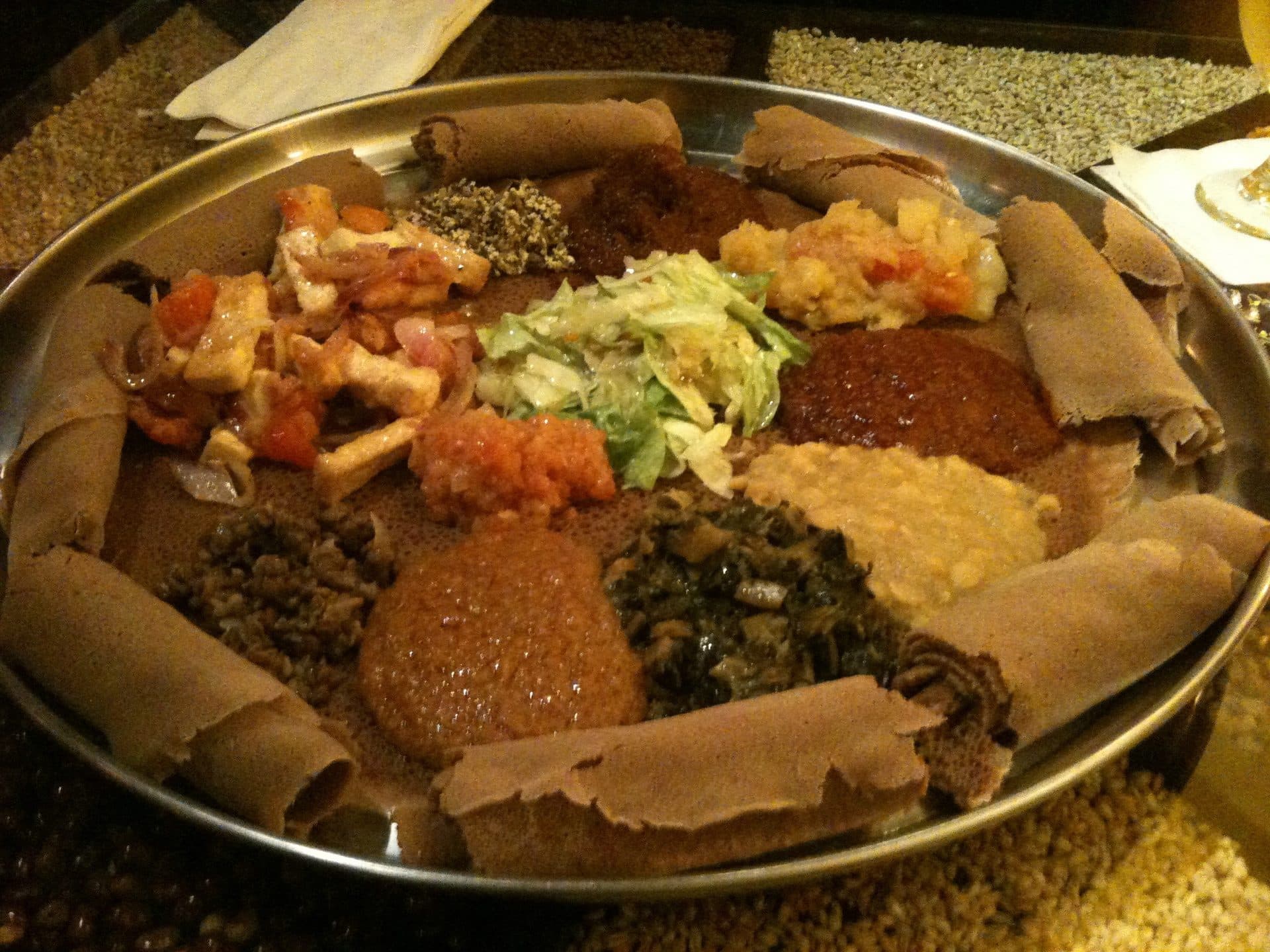
This single rule is the reason Ethiopian cuisine has one of the richest vegan traditions in the world. The fasting plate, beyaynetu, is a wheel of shiro, lentils, greens, and vegetables scooped up with injera, food built over centuries to be satisfying without a trace of meat or dairy. The big fasts run across the year:
| Fast | Length | What it marks |
|---|---|---|
| Wednesdays & Fridaysረቡዕና ዓርብThe weekly fasts, kept through most of the year outside the feast weeks. | most weeks, year-round | The weekly fasts, kept through most of the year outside the feast weeks. |
| Great Lent (Abiy Tsom)ዐቢይ ጾምThe longest and most intense fast, before Fasika (Easter). It folds in the 40 days of Lent, a week for Heraclius, and Holy Week. | 55 days | The longest and most intense fast, before Fasika (Easter). It folds in the 40 days of Lent, a week for Heraclius, and Holy Week. |
| Fast of the Apostlesጾመ ሐዋርያትAfter Pentecost, honoring the apostles. | varies | After Pentecost, honoring the apostles. |
| Fast of the Assumption (Filseta)ጾመ ፍልሰታIn August, devoted to Saint Mary. Widely and strictly kept. | 16 days | In August, devoted to Saint Mary. Widely and strictly kept. |
| Advent (Tsome Nebiyat)ጾመ ነቢያትThe Fast of the Prophets, before Genna (Christmas). | about 40 days | The Fast of the Prophets, before Genna (Christmas). |
| Fast of Ninevehጾመ ነነዌA short fast recalling the people of Nineveh in the book of Jonah. | 3 days | A short fast recalling the people of Nineveh in the book of Jonah. |
| Gahad (eves of Genna & Timkat)The vigil fasts kept the day before Christmas and Epiphany. | the eve | The vigil fasts kept the day before Christmas and Epiphany. |
Want to eat or cook for the fast? Our guide to fasting food lists the vegan dishes and where to find them in the DMV, and our recipes mark every fasting (tsom) dish.
The Ark, the tabot, and Timkat
Here is the claim that stops outsiders in their tracks. The Ethiopian church teaches that the original Ark of the Covenant, the gold chest that held the tablets of the Law, rests today in a guarded chapel beside the Church of Our Lady Mary of Zion in Axum. One monk, chosen for life, tends it and never leaves the grounds, and no one else is permitted to see it.[5] The story is told in the Kebra Nagast, the "Glory of Kings," which recounts how Menelik, the son of King Solomon and the Queen of Sheba, carried the Ark from Jerusalem to Ethiopia.[5]
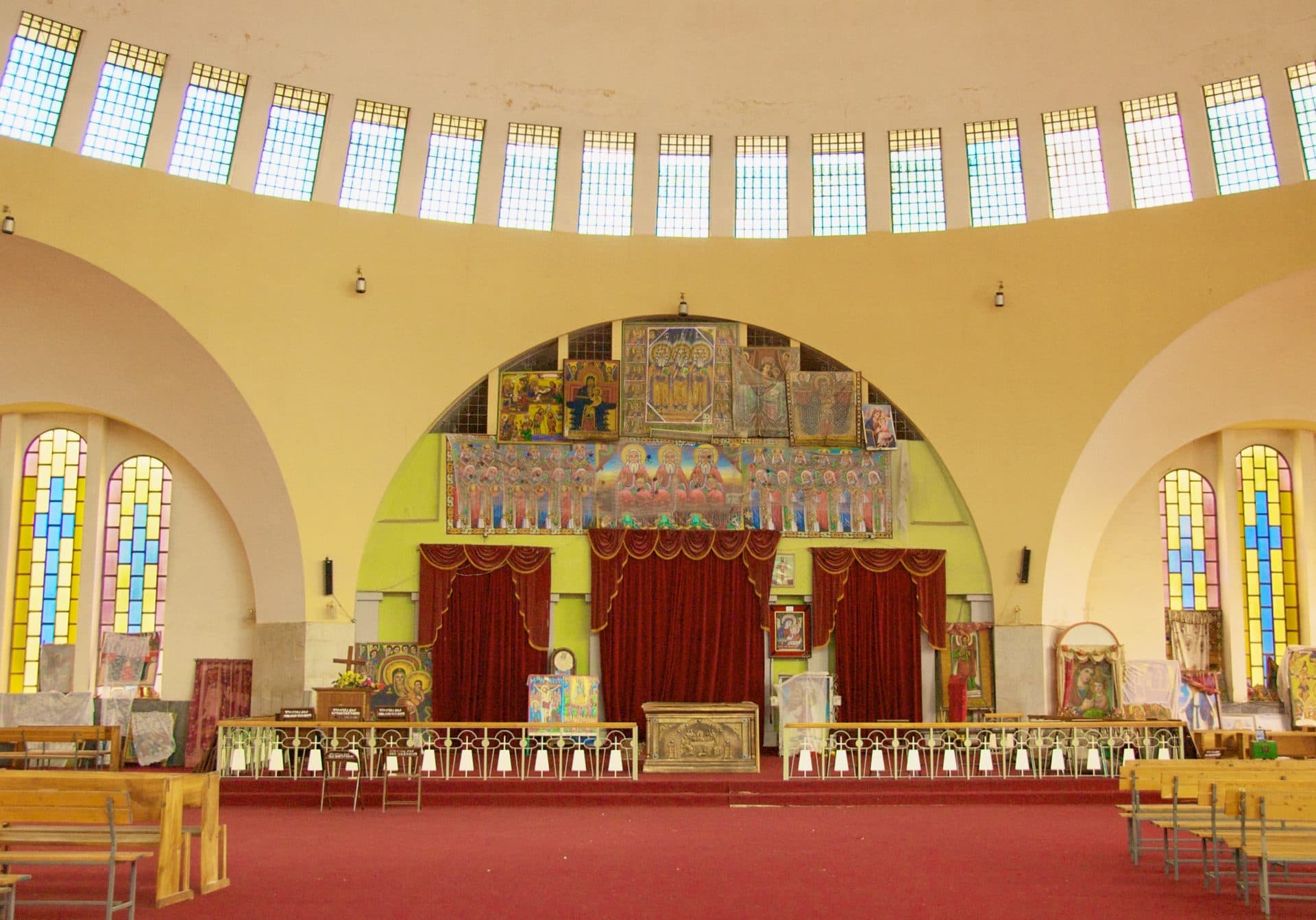
Here the line between faith and history matters. To the faithful this is sacred history. To historians the Kebra Nagast is a medieval work, and because no outsider has ever examined the object, the claim cannot be tested. What is beyond dispute is how deeply the Ark shapes the faith. Every Ethiopian church holds a tabot, a consecrated tablet standing for the Ark and the Law, in its innermost sanctuary, and a building is not truly a church without one.[5] Each tabot is dedicated to a saint, most often Mary, Saint George, or Saint Michael.
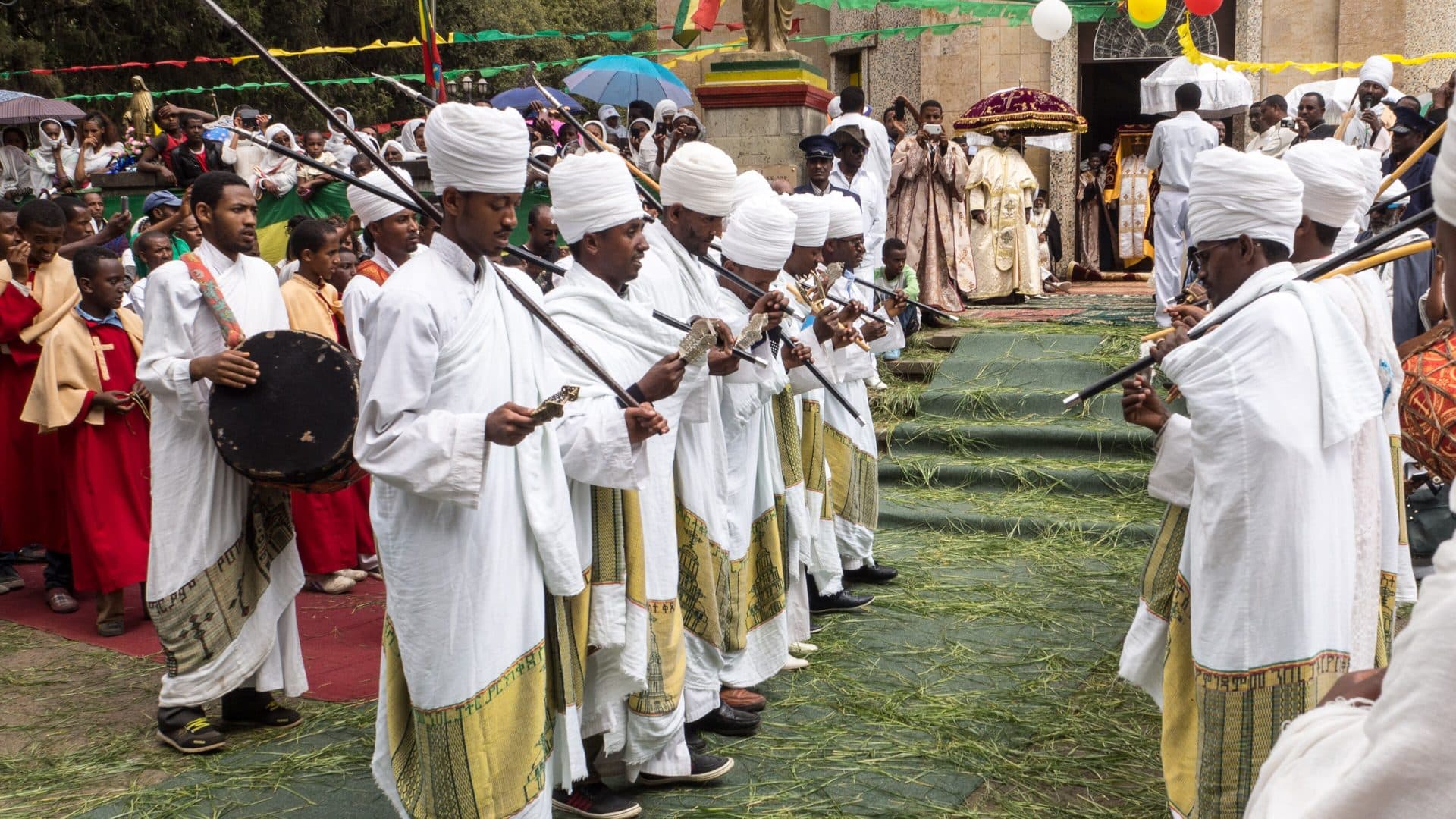
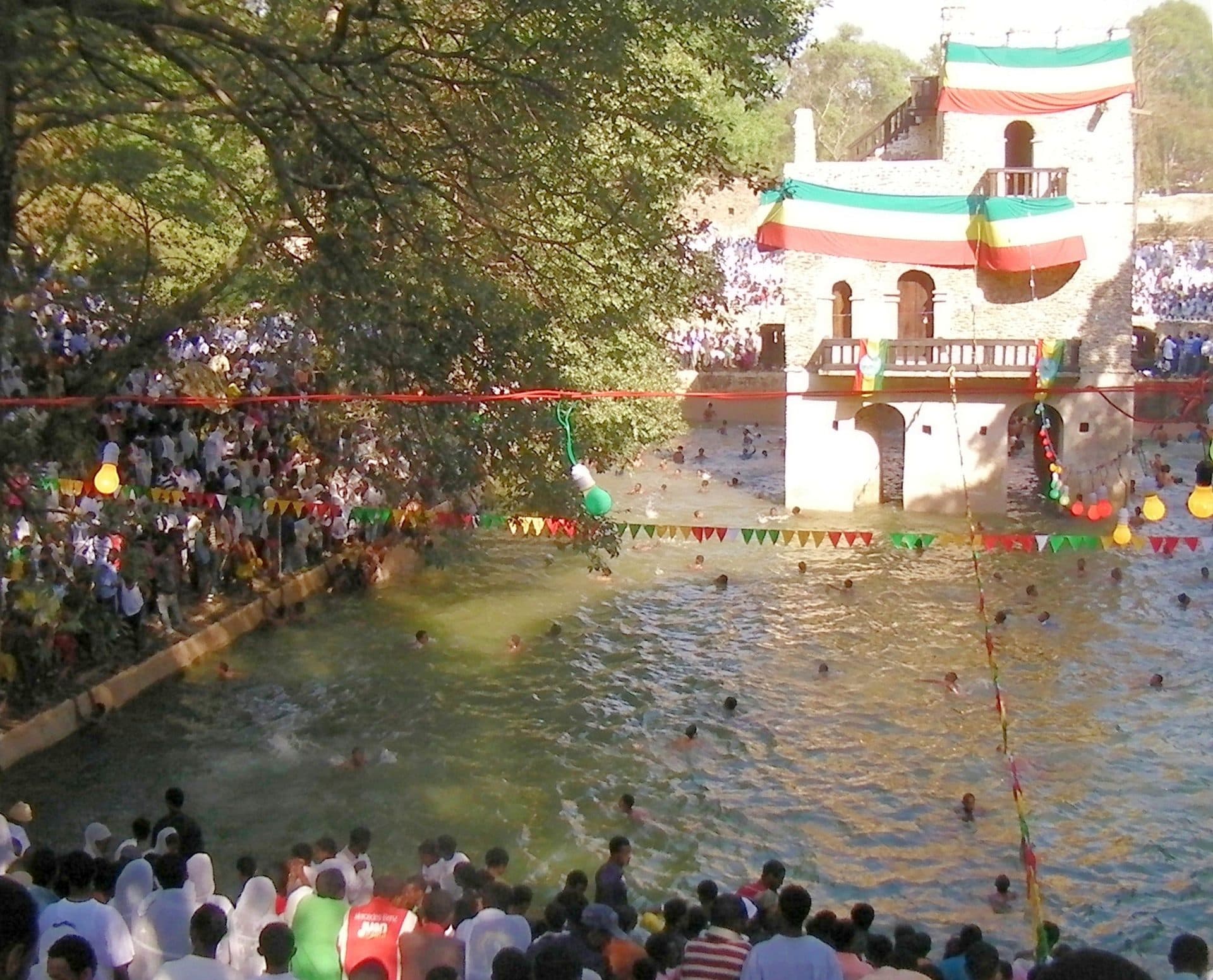
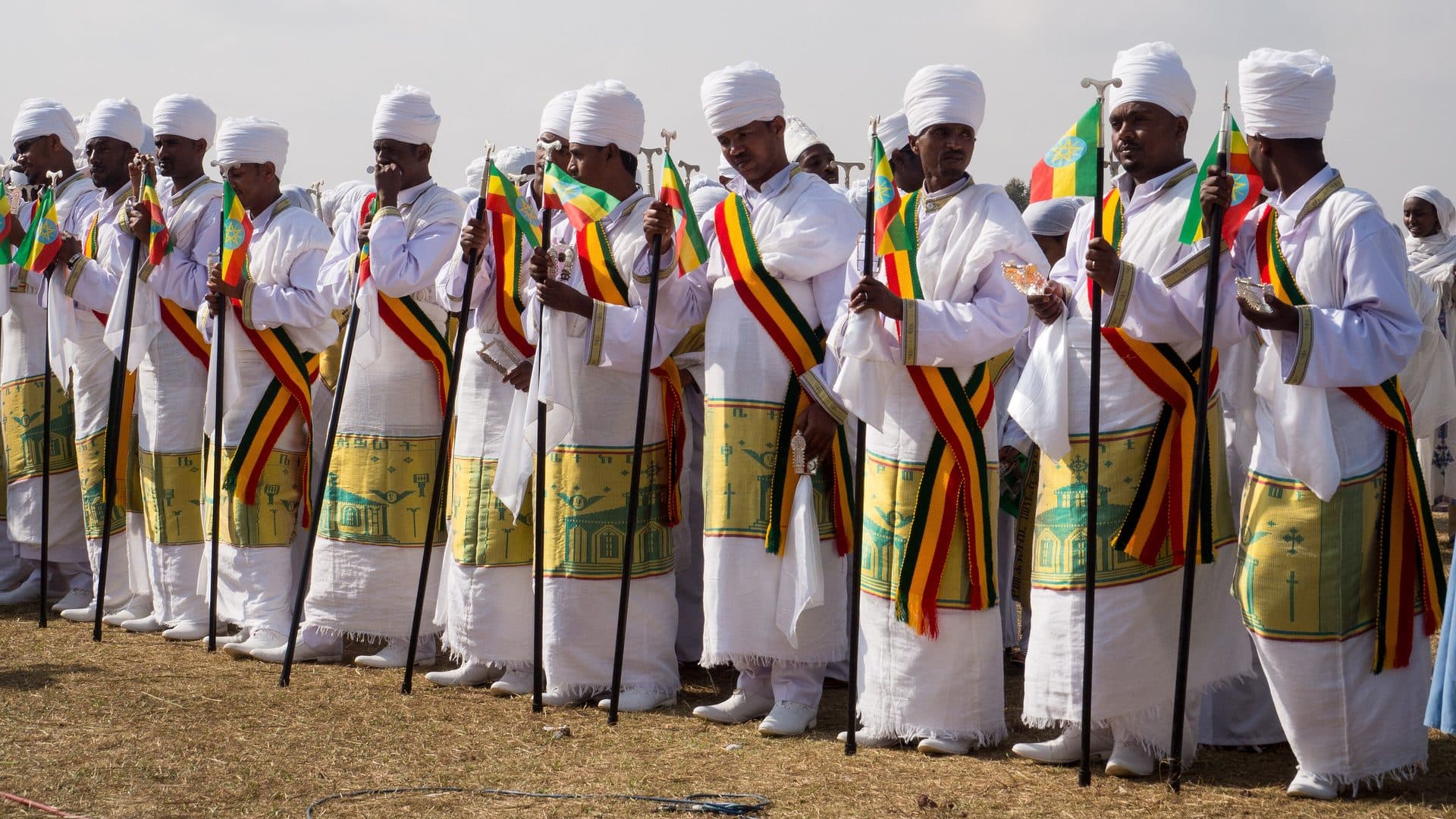
Once a year the tabots come out. At Timkat, the celebration of Christ's baptism on January 19, priests carry them in procession under velvet and umbrellas to a river or pool, the people keep vigil through the night, and at dawn the water is blessed and sprinkled over the crowd to renew their baptism.[1]It is one of the great sights of the Christian world. Our guide to Timket covers when it falls and what happens hour by hour.
The sound of it: Ge'ez and the chant of Yared
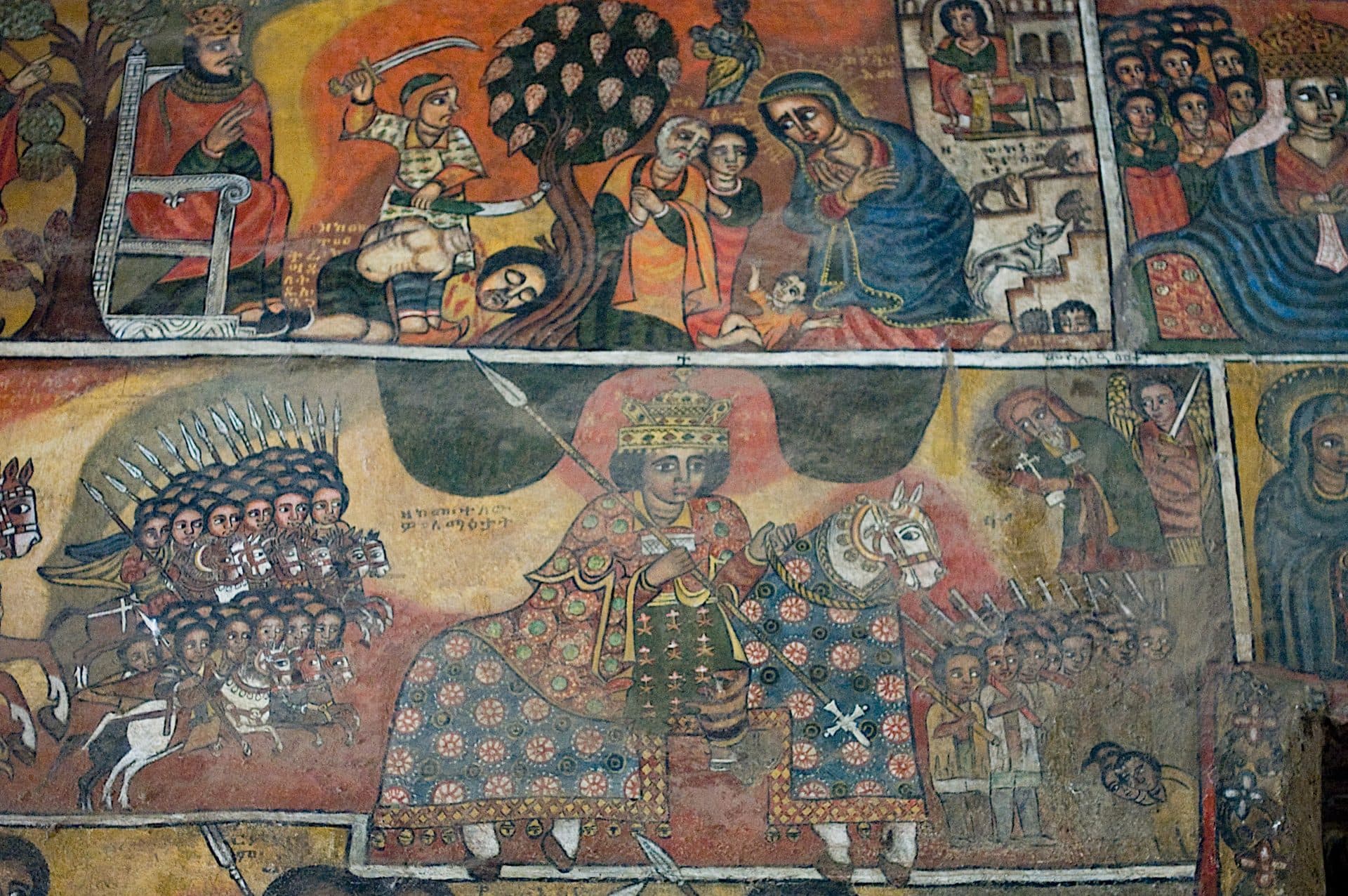
The liturgy is sung, not merely spoken, in Ge'ez, the ancient language that Ge'ez script and the whole written culture of Ethiopia grew from.[1] The sacred music is called zema, and tradition credits its creation to Saint Yared in the 6th century, who is said to have received it in three modes: ge'ez for most of the year, araray for the joyful feasts, and ezel for fasting and mourning, reserved for Holy Week.[4] Sung with the drum (kebero), the sistrum (tsenatsil), and the prayer staff, it is a music unlike anything else in Christianity. The same Ge'ez carries the church's Scripture, a Bible of 81 books that kept writings like the Book of Enoch; see the Ethiopian Bible, explained.
The major holy days
The church follows the Ethiopian calendar, so its feasts land on different Gregorian dates than Western Christmas and Easter. These are the days you will see churches in the DMV fill up. For every date in the year, see the Ethiopian calendar and the guide to Ethiopian holidays.
| Holy day | What it marks | When |
|---|---|---|
| Enkutatash | Ethiopian New Year | September 11 (12 in some years) |
| Meskel | Finding of the True Cross, with the Demera bonfire | September 27 (28 in some years) |
| Genna | Christmas | January 7 |
| Timkat | Epiphany, when the tabot is carried out in procession | January 19 (20 in some years) |
| Hudade (Abiy Tsom) | The Great Lent, the longest fast | The 55 days before Fasika |
| Fasika | Easter, ending the Great Lent | Moves each year, usually in April or early May |
Ethiopian and Eritrean Orthodox churches in the DMV
TiruList lists 23 Ethiopian and Eritrean Orthodox Tewahedo parishes across DC, Maryland and Virginia. Each page has the address, service details where the parish has shared them, and directions. To filter by community, open the Orthodox church directory, or see every Habesha church and faith community and church events and celebrations in the DMV.
Washington, DC (3)
Maryland (8)
- St. Michael Eritrean Orthodox Tewahdo Church, Bladensburg
- Debre Tsion Kidist Mariam We Kidus Gebriel Ethiopian Orthodox Tewahedo Church, Brookeville
- Be’zerwot Re'ese Adbarat Debre Selam Kedist Mariam Ethiopian Orthodox Tewahedo Church, College Park
- Debre Selam Medhane Alem Eritrean Orthodox Tewahdo Church, Colmar Manor
- Hamere Noah St. Mary Eritrean Orthodox Tewahedo Church, Hyattsville
- Hohte Misrak Kidane Mihret Ethiopian Orthodox Tewahedo Church, Hyattsville
- Tsrha Ariam Kdsti Slassie Eritrean Orthodox Tewahedo Church, Marlow Heights
- Debre Genet Medhanealem Ethiopian Orthodox Tewahedo Church, Temple Hills
Virginia (12)
- Debrekidussan Abune Aregawi, Tekle Haimanot & St. Gabriel Ethiopian Orthodox Tewahedo Church, Alexandria
- Hamere Noah Kidane Meheret Ethiopian Orthodox Tewahedo Church, Alexandria
- Mahdere-sebehat Ledeta Lemariam Ethiopian Orthodox Tewahedo Church, Alexandria
- Mekane Semait Kidist Arsema and Kidus Kirkos Ethiopian Orthodox Tewahedo Church, Alexandria
- Meskaye Hizunan Medhanealem Ethiopian Orthodox Tewahedo Church, Alexandria
- Debre Selam St. Amanuel, St. Mary & St. Rufael Ethiopian Orthodox Tewahedo Church, Arlington
- Hamere Berhan St. Abba Samuel Ethiopian Orthodox Tewahedo Monastery, Elkwood
- Debre Kerbe Kidist Mariam Wetsadik Abune Habtemariam Ethiopian Orthodox Tewahedo Church, Herndon
- Mekane Hiwot Abune Gebre Menfes Kidus Ethiopian Orthodox Tewahedo Church, Norfolk
- Beata Lemariam Ethiopian Orthodox Tewahido Church, Richmond
- Debre Medhanit Eyesus Ethiopian Orthodox Tewahedo Church, Woodbridge
- Debre Mitmak Tsadkane Mariam Ethiopian Orthodox Tewahedo Church, Woodbridge
Common questions
What does "Tewahedo" mean?
Tewahedo is a Ge'ez word meaning "being made one" or "unified." It captures the church's central belief that in Christ the divine and human are united in one nature. That is why the full name is the Ethiopian Orthodox Tewahedo Church.
Is the Ethiopian Orthodox Church Catholic or Protestant?
Neither. It is one of the Oriental Orthodox churches, a family that also includes the Coptic (Egyptian), Armenian, and Syriac churches. They parted from the rest of Christianity after the Council of Chalcedon in 451 over how to describe the nature of Christ, more than a thousand years before the Catholic and Protestant split.
How old is the Ethiopian Orthodox Church?
It dates to the 4th century, when Christianity became the state religion of the Kingdom of Aksum under King Ezana, guided by a shipwrecked Syrian-Greek named Frumentius whom Ethiopians honor as Abba Selama. That makes it one of the oldest national churches on earth. It remained under the Coptic Church of Alexandria until 1959, when it received its own patriarch.
Why do Ethiopian Orthodox Christians fast so much?
Fasting is seen as training for the soul, humbling the body to make room for prayer and repentance. The Ethiopian church keeps a long fasting calendar: around 180 fasting days a year for laypeople, and up to about 250 for clergy and the especially devout. On fasting days the faithful eat no animal products at all, which is why so much of Ethiopian cooking is naturally vegan.
What can you eat during Ethiopian Orthodox fasting?
No meat, no dairy, no eggs. Meals are plant-based: shiro, misir wat (red lentils), gomen (greens), atkilt (cabbage and potato), and other vegetable dishes, usually eaten only after the morning service, often around 3 pm. This is the origin of the beloved beyaynetu, the vegan combination platter.
Is the Ark of the Covenant really in Ethiopia?
The church teaches that the original Ark rests in a guarded chapel beside the Church of Our Lady Mary of Zion in Axum, watched over by a single monk who never leaves the grounds and shows it to no one. This is a matter of deep faith and national tradition, told in the Kebra Nagast; it has never been examined by outsiders, and historians treat the account cautiously. Every Ethiopian church, though, keeps a tabot, a consecrated tablet symbolizing the Ark, in its holiest place.
What is a tabot?
A tabot is a consecrated slab, usually wood or stone, that represents the Ark of the Covenant and the tablets of the Law. It sits in the Holy of Holies at the center of every Ethiopian church, and a church is not truly a church without one. Each tabot is dedicated to a saint; those for Mary, Saint George, and Saint Michael are the most common. At Timkat, the tabots are carried out in procession.
What is Timkat?
Timkat is the Ethiopian celebration of Epiphany, the baptism of Jesus in the Jordan, held on January 19 (January 20 in a leap year). It is one of the most spectacular festivals in the country: the tabots are carried in procession to a body of water, crowds keep vigil overnight, and the water is blessed and sprinkled to renew people's baptism.
What language is used in the Ethiopian Orthodox Church?
The traditional liturgical language is Ge'ez, an ancient Semitic tongue no longer spoken in daily life, though today many services are also held in Amharic. The sacred chant, called zema, is traditionally credited to Saint Yared in the 6th century, who is said to have set it into three modes still used today.
Sources
- [1]"Ethiopian Orthodox Tewahedo Church." Encyclopaedia Britannica (history, beliefs, and practices). Link
- [2]"Ethiopian Orthodox Tewahedo Church." Wikipedia (overview, with cited references). Link
- [3]"Fasting and abstinence in the Ethiopian Orthodox Tewahedo Church." Wikipedia (the fasting seasons and rules). Link
- [4]"Ethiopian chant." Encyclopaedia Britannica (Saint Yared and the three modes of zema). Link
- [5]"Church of Our Lady Mary of Zion." Wikipedia (Axum, the Ark claim, and the tabot). Link
- [6]"The Ethiopian Orthodox Tewahedo Church." CNEWA (Catholic Near East Welfare Association). Link
- [7]"Frumentius" and the conversion of King Ezana of Aksum in the 4th century. Link
Keep reading
All articles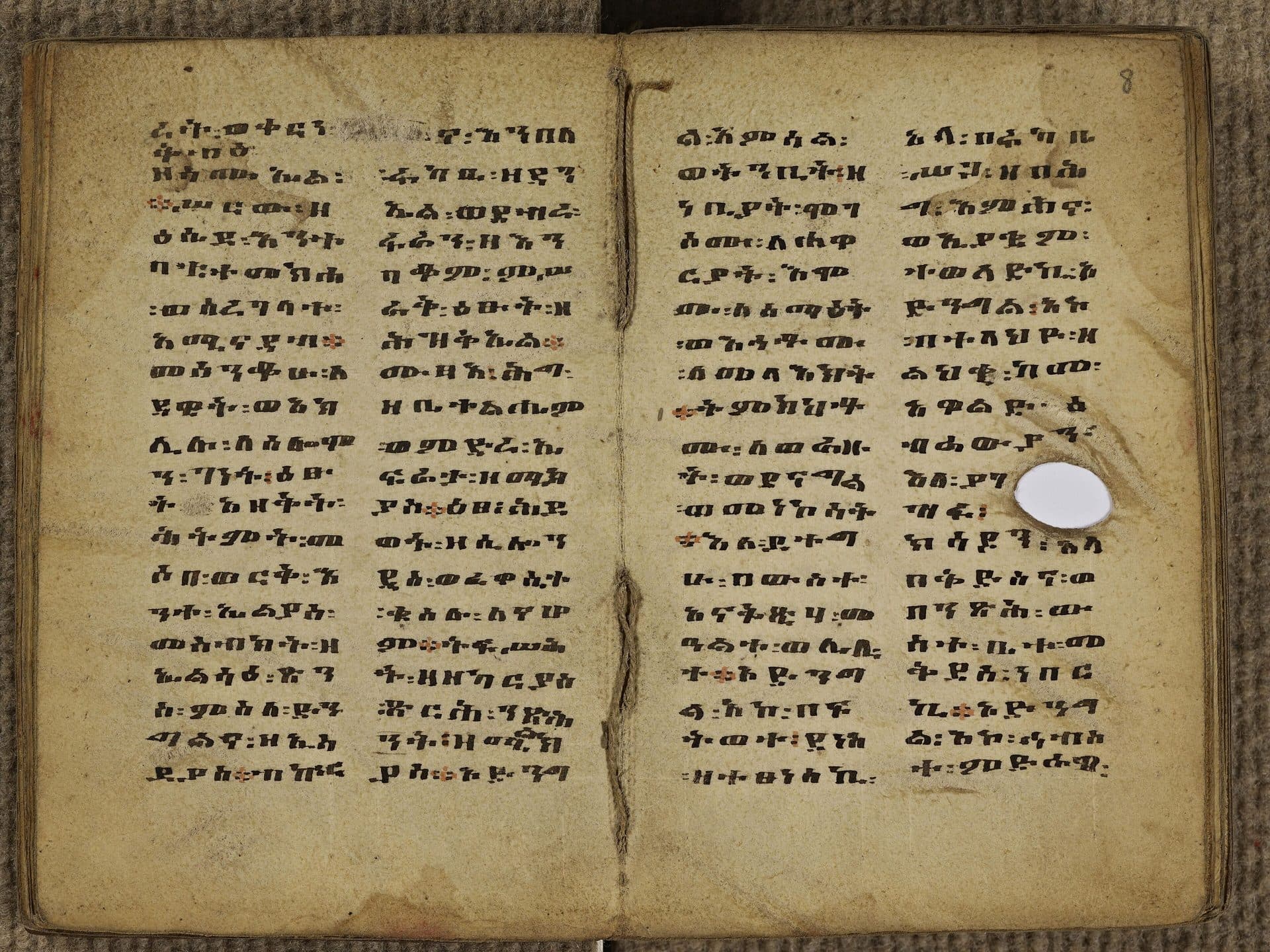
Culture & Faith
The Ethiopian Bible, explained
It has 81 books, not 66. It is written in a language almost no one speaks anymore. And it still holds Scripture that the rest of the world quietly lost more than a thousand years ago.
Culture & Faith
Tsom: Ethiopian fasting, and where to eat it in the DMV
No meat, no dairy, no eggs, for around 180 days a year. What the Ethiopian and Eritrean Orthodox fast means, whether today is a fasting day, and the DMV kitchens that cook for it.
Culture & Faith
Timket, the Ethiopian Epiphany
Timket is the colorful Ethiopian celebration of Christ's baptism, with processions behind the tabot. Here is when it falls and what happens.
The TiruList directory
Everything Habesha in the DMV, in one place.
Restaurants, churches, markets, services, and events, vouched for by the community.