Just arrived in the DMV?
Welcome. The first few months are mostly paperwork. Here is the order most Ethiopian and Eritrean newcomers do it in, what each step is for, and where to get help in your own language.
እንኳን ደህና መጣችሁ. Nine steps follow, roughly in the order people tackle them. Each one comes with the official government links and, where it helps, Habesha businesses in the DMV who can walk you through it in your own language.
1. Get a Social Security Numberሶሻል ሴኩሪቲ
Almost everything else (a job, a bank account, a lease) asks for this first. You apply in person at a Social Security office with your immigration documents and passport. It is free, and no one should charge you for it.
2. Get a state ID or driver's licenseመንጃ ፈቃድ
Each of the three jurisdictions runs its own process and document list, so use the one where you live. Book an appointment early, walk-in waits can be long. All three let you practice with a free online manual and sample knowledge tests before you go.
Habesha driving schools in the DMV
- Circle Driving SchoolDriving SchoolSilver Spring
- Tesfu DC Driving SchoolDriving SchoolWashington
- Mbb Driving SchoolDriving SchoolTakoma Park
- Moses Driving SchoolDriving SchoolAlexandria

3. Open a bank account
Most banks ask for a photo ID plus an SSN or ITIN. Ask about accounts with no monthly fee and no minimum balance, and about sending money home before you open one, since fees vary a lot.
4. Understand taxes, and get an ITIN if you need oneግብር
If you work, you will file a tax return each spring. If you are not eligible for an SSN, you may need an ITIN instead. A local Habesha tax preparer can walk you through your first filing in your own language, and there is free help if you earn under the IRS limit.
5. Immigration paperwork
Deadlines matter, and the rules change. Use the official USCIS site for forms and current fees, and talk to a licensed immigration attorney about your specific case. Be careful with anyone who is not a lawyer but offers legal advice for a fee. If cost is a barrier, the accredited nonprofits below charge little or nothing.
6. Health care and insuranceጤና
Each jurisdiction has its own marketplace, and there are community clinics that see patients regardless of insurance status. Enrollment has deadlines, so check early.
7. Enroll your kids in school
Children can enroll regardless of immigration status. Register through the school district for the county or city where you live. You will usually need proof of address, immunization records, and your child's birth certificate. Districts must provide an interpreter at meetings about your child, at no cost to you.
Childcare and daycare
- Wheaton Woods Little CottageHome DaycareRockville
- Genet B. (Habesha Nanny)Home DaycareSilver Spring
- Senait Teklu Family WeecareHome DaycareSilver Spring
- Selam Youth Spiritual and Social ServicesHome DaycareAlexandria
Children can enroll in school regardless of immigration status.
8. Find housing
Landlords typically ask for ID, proof of income, and sometimes a credit history you may not have yet. A co-signer, a larger deposit, or a letter from your employer can help. Ask around the community first, word of mouth still moves faster than listing sites here. It is illegal for a landlord to refuse you because of your national origin.
9. Find your peopleማህበረሰብ
This is the part that makes a new place feel like home. The DMV has the largest Habesha community in the country: churches and mosques, markets that carry what you actually cook with, and restaurants that taste like home.
Churches, mosques, and community groups
- Eritrean Muslim American NetworkReligious AssociationAlexandria
- Mekane Hiwot Abune Gebre Menfes Kidus Ethiopian Orthodox Tewahedo ChurchEthiopian Orthodox ChurchNorfolk
- Emmanuel United Church of MarylandProtestant ChurchSilver Spring
- Debre Haile Kidus Raguael CathedralEthiopian Orthodox ChurchSterling
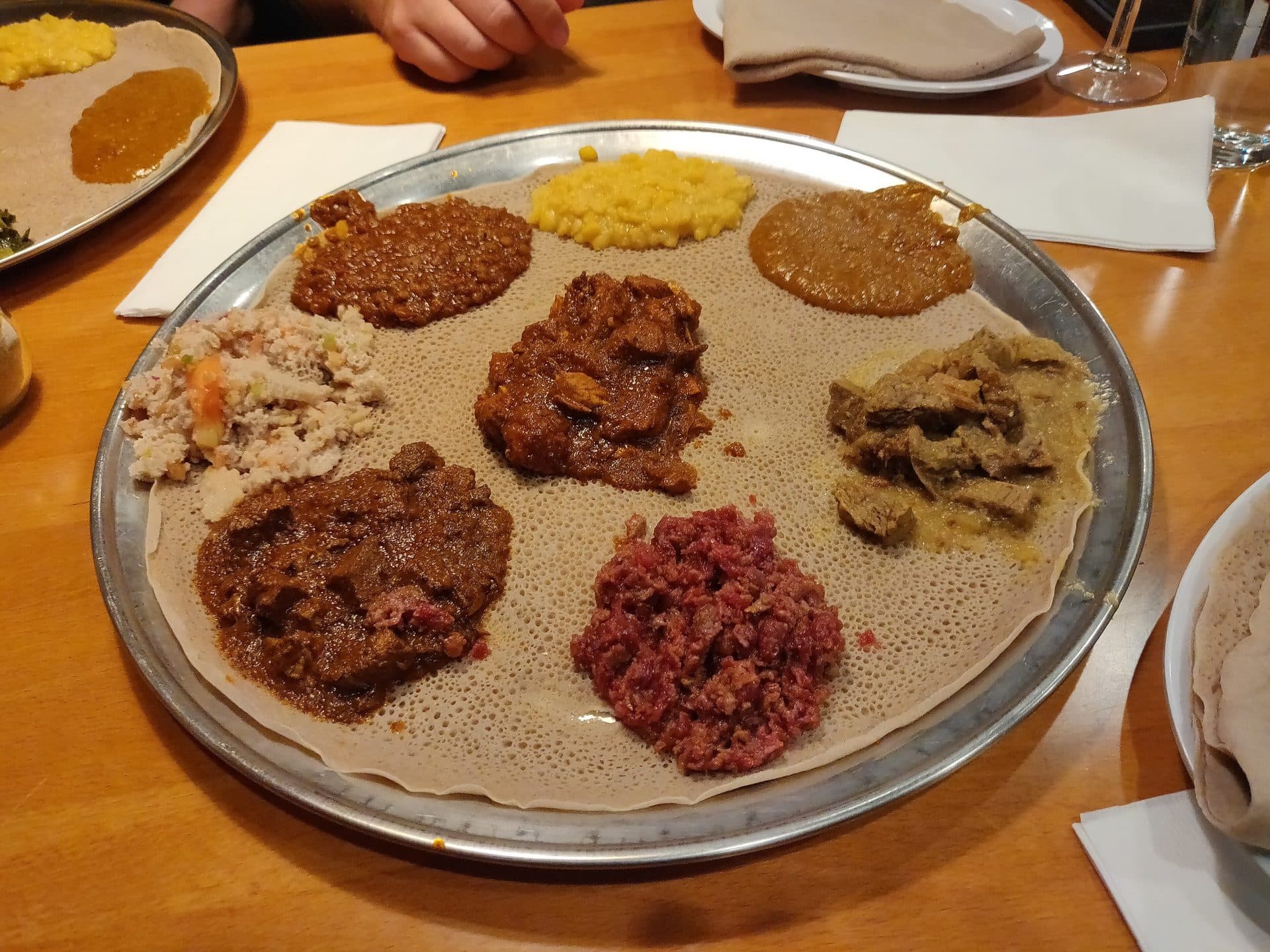
Once the paperwork settles, the community is the best part. Start with the restaurants the DMV ranks highest, and if you are waiting on family to join you, read the DV Lottery, explained so no one falls for a scam.
This is general information to help you get oriented, not legal or financial advice. Rules and fees change, so always confirm on the official government sites linked above. Businesses listed here are not endorsed or vetted by TiruList, always check credentials yourself. For anything about your immigration case, talk to a licensed immigration attorney.
Keep reading
All articles
Diaspora Life
The DV Lottery, explained
The green card lottery gives away up to 55,000 U.S. immigrant visas a year, chosen at random. It costs nothing to enter, and it is one of the most targeted by scams. Here is how it actually works, and how to stay safe.
Diaspora Life
Is your money transfer service licensed?
The National Bank of Ethiopia licenses every company allowed to move money into Ethiopia. Search the official list before you send, and see the licensed services people in the DMV actually use.
Diaspora Life
Equb, the savings circle
The oldest savings plan we have, minus the notebook. What an equb is, where it comes from, how it works, and a free tool to run your own. TiruList never touches the money.
The TiruList directory
Everything Habesha in the DMV, in one place.
Restaurants, churches, markets, services, and events, vouched for by the community.