
Ethiopian coffee, from the place coffee began
Ethiopia did not just grow coffee; it gave the world the drink. The regions and their flavors, the buna ceremony, and where to buy the beans.
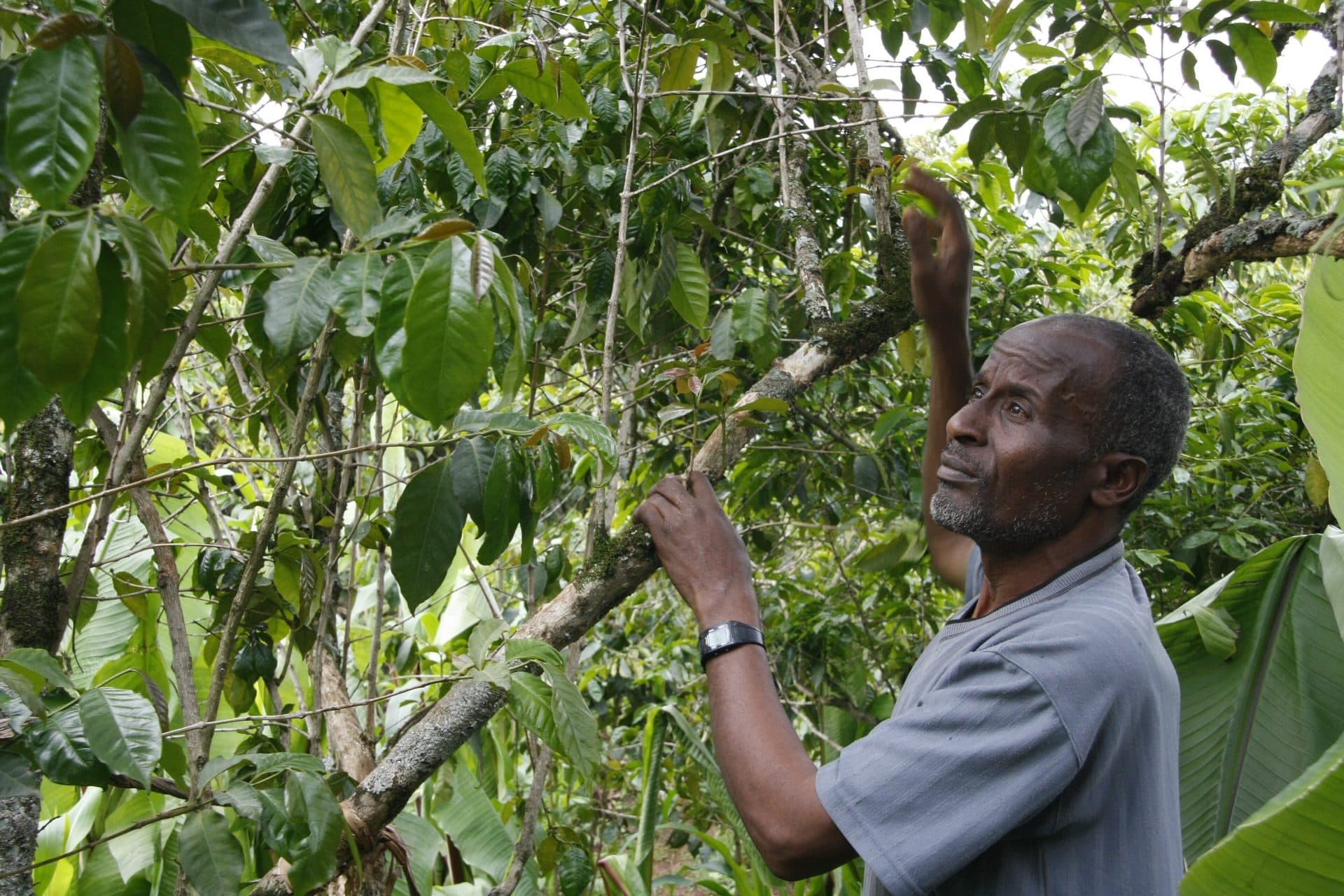
The legend tells of Kaldi, a goatherd in the southwestern highlands who noticed his goats dancing after eating the bright red cherries of a wild bush. He tried them himself, and the rest is nine centuries of history. Whether or not Kaldi was real, the botany is: the arabica coffee plant is native to Ethiopia, still grows wild in the forests of Kaffa, the region that most likely gave coffee its name, and the country is home to thousands of heirloom varieties, more genetic diversity than the rest of the coffee world combined.[1]
That is why Ethiopian coffee does not taste like one thing. A cup from Yirgacheffe can be as light and floral as tea; one from Harrar can be as heavy and winey as a glass of port. The differences come down to two things: the region, and how the coffee is processed. Start with what you like.
Find your cup, region by region
Pick a taste, or search a region by name, to see what each coffee is like and where to buy it.
What do you like to drink?
7 coffees
Yirgacheffe
WashedGedeo zone, southern Ethiopia
The star of Ethiopian coffee, and one of the most admired coffees on earth. Washed and delicate, it tastes almost like a floral tea, with a clean, bright lift.
Good if: you like light, floral, tea-like cups and bright citrus.
Sidama (Sidamo)
Washed & naturalSidama, southern Ethiopia
The all-rounder. Sidama gives balanced, approachable cups, brighter when washed, sweeter and berry-forward when natural. One of Ethiopia's three trademarked coffee names.
Good if: you want a crowd-pleaser that is neither too light nor too heavy.
Guji
Washed & naturalGuji zone, southern Ethiopia
Once sold as Sidamo, now prized in its own right. Guji is vivid and fruit-forward, with a clean, juicy brightness that specialty roasters chase.
Good if: you love juicy, fruity coffee with a lot of character.
Harrar (Harar)
NaturalEastern highlands
The wild one. Dry-processed under the eastern sun, Harrar is heavy, winey, and berry-soaked, with a rustic depth that has been famous for centuries.
Good if: you like bold, heavy, wine-like coffee with big fruit.
Limu
WashedSouthwestern Ethiopia
Smooth and well-behaved. Limu is balanced and gently spiced, with a soft, winey sweetness and moderate acidity that make it an easy everyday cup.
Good if: you want something smooth and balanced for every day.
Jimma (Djimma)
NaturalSouthwestern Ethiopia
The workhorse of Ethiopian coffee, grown across a wide southwestern region. Often earthier and more rustic, it is the everyday coffee for much of the country.
Good if: you like a mellow, earthy, no-fuss cup.
Kaffa (Keffa)
NaturalSouthwestern forests, southern Ethiopia
The birthplace itself. Coffee still grows wild in the forests of Kaffa, the region that very likely gave the drink its name. Its forest coffees are deep, spicy, and untamed.
Good if: you want to taste coffee from the place it began.
Washed or natural? The one thing to understand
After the region, this is the biggest fork in flavor, and it just means how the fruit is taken off the bean.
Washed
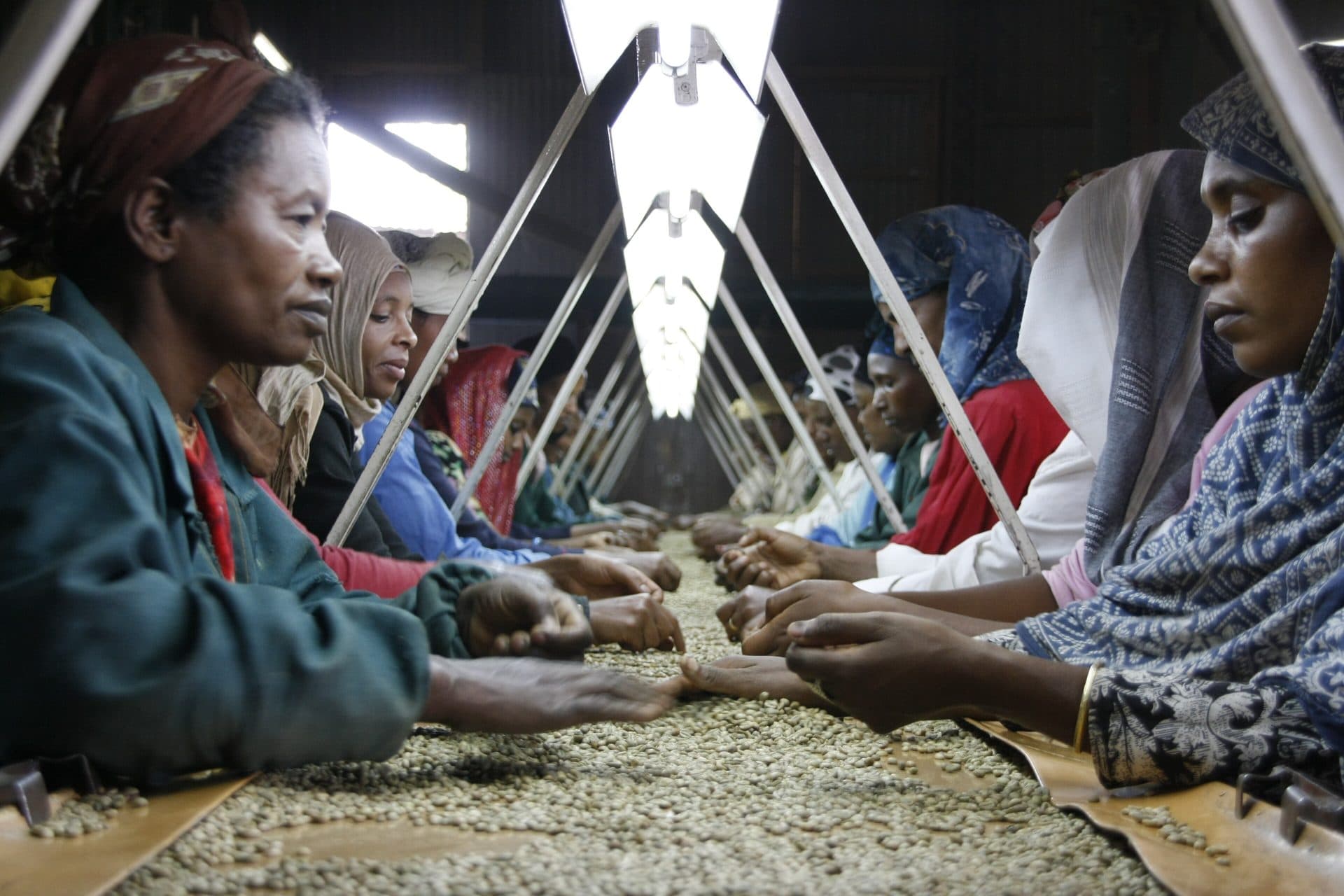
The fruit is stripped and the bean is washed before drying. The result is cleaner, brighter, and more floral. Most Yirgacheffe is washed.[2]
Natural (dry)
The bean dries inside the whole fruit, soaking up sweetness. The result is heavier, fruitier, and more wine-like. Harrar is the classic natural.[2]
Where coffee began, and why it still matters
Coffee is one of the few things the whole world drinks that can be traced to a single place, and that place is Ethiopia. Encyclopaedia Britannica describes coffee as a beverage brewed from the seeds of a tropical evergreen plant of African origin, and botanists agree that Coffea arabica evolved in the montane forests of southwestern Ethiopia, where it still grows wild today.[3] The Kaffa region, the most likely source of the very word "coffee," gave the plant its first home, and Ethiopia still holds more genetic diversity in its heirloom varieties than the rest of the coffee world combined.
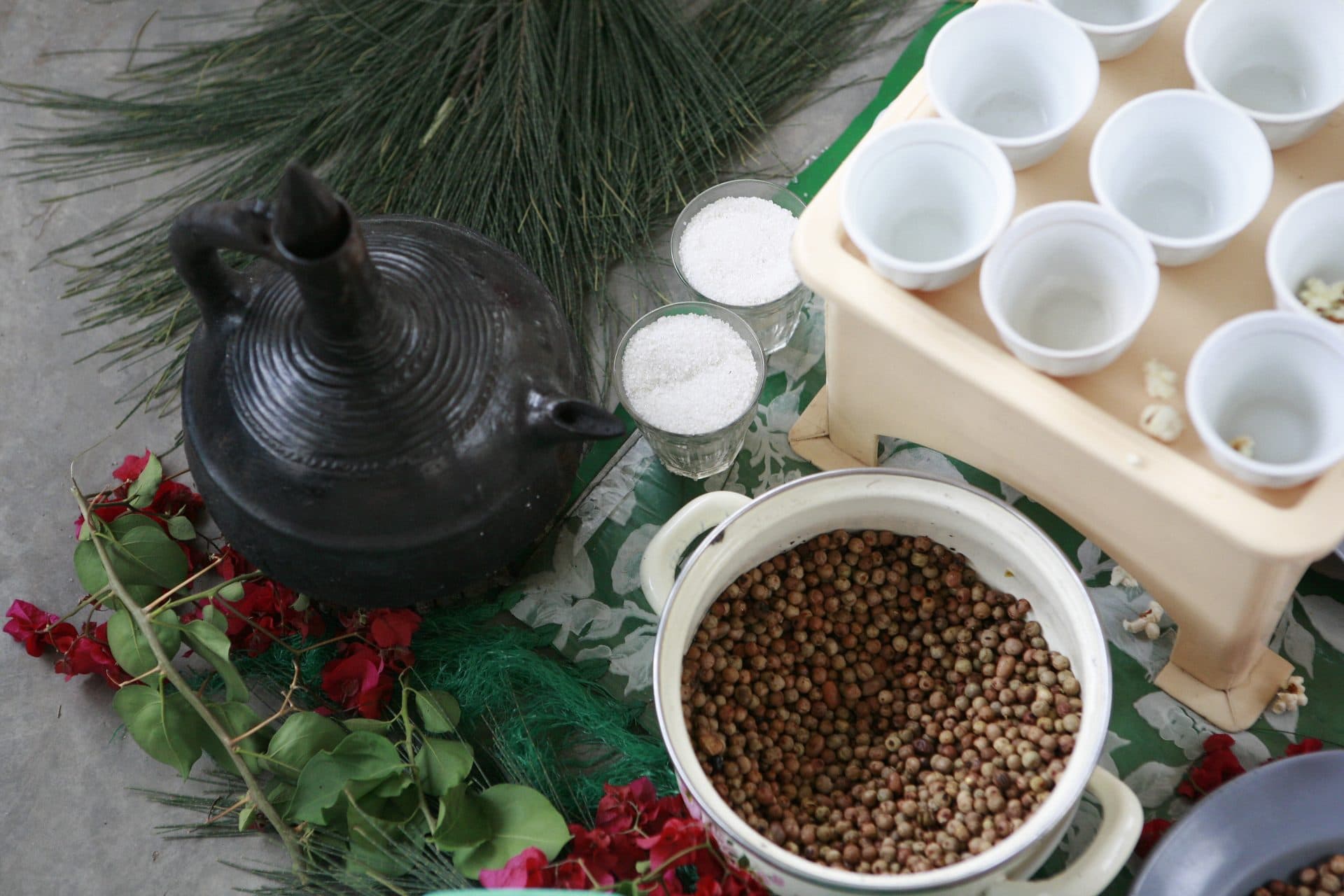
From those forests the drink spread north into the Arabian Peninsula and then to the world, but in Ethiopia coffee never became a mere commodity. It became a ritual. The coffee ceremony, ቡና buna, is a daily act of hospitality that can stretch across hours. Green beans are washed and roasted over coals until they darken and pop, the fragrant smoke is offered around the room, the beans are ground by hand, and the coffee is brewed in a rounded clay pot called a jebena. It is served in three rounds, known as abol, tona, and baraka, each a little weaker than the last, often over incense and popcorn. The same ceremony is cherished in Eritrea, where it anchors gatherings in exactly the same way.
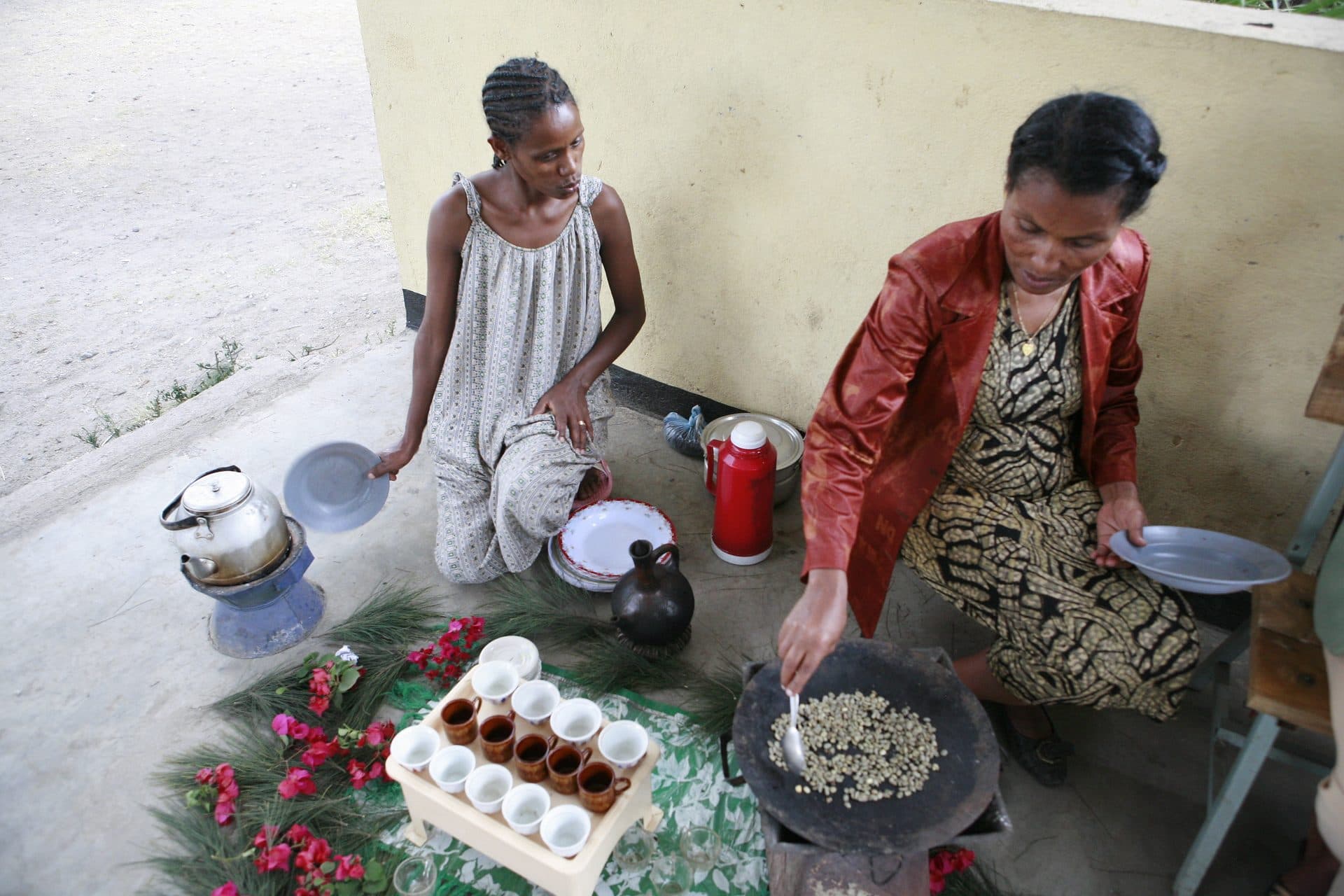
Abol, tona, baraka: three rounds, each a little weaker than the last.
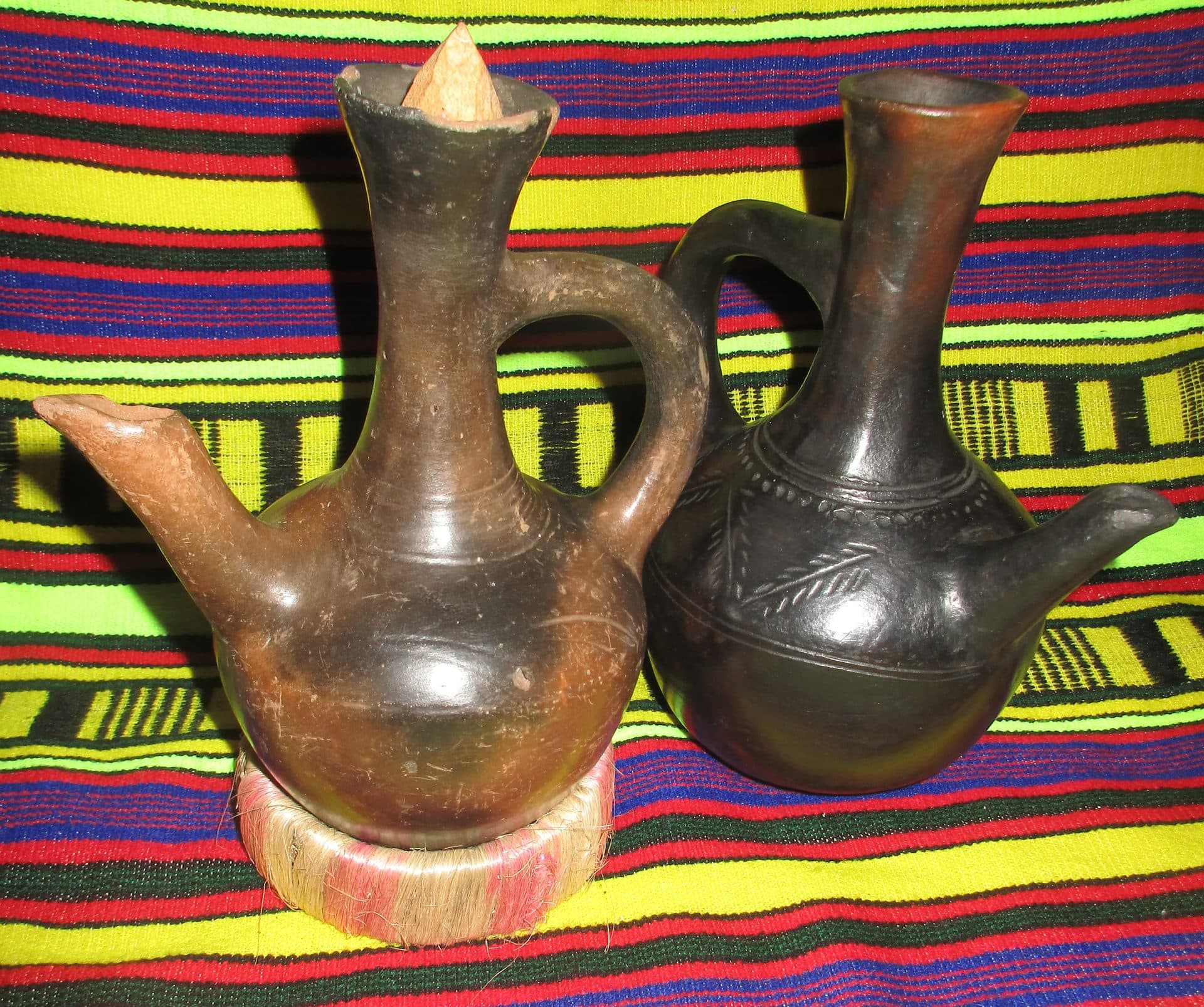
That living tradition is now being recognized on the world stage. In 2025 Ethiopia advanced a formal nomination to inscribe its traditional coffee ceremony on the UNESCO Representative List of the Intangible Cultural Heritage of Humanity, describing it as an age-old ritual "deeply ingrained in the country's social fabric" that fosters dialogue, hospitality, and social cohesion.[4] For Habesha families in the DMV, that heritage is not an abstraction. It is the smell of roasting buna filling an apartment on a Sunday, and it starts with good beans. During the long fasting seasons it is often the warm, shared thing that marks the day, and the Ethiopian calendar of feasts brings families around the jebena again and again. Read how the ceremony is really done in our guide to buna.
Where to buy Ethiopian coffee
Locally, and freshest
Habesha markets and cafes sell fresh beans and roast for the coffee ceremony. Buy from your neighbors first.
Online, by region
Order beans by name from roasters and marketplaces. Each coffee above has a "buy online" link; here is the whole selection.
Ethiopian coffee on AmazonSome online links are affiliate links: TiruList may earn a small commission if you buy, at no extra cost to you. As an Amazon Associate, TiruList earns from qualifying purchases. Local shops are listed first and we earn nothing from them.
Prefer to have it poured for you? Many of the DMV's best Ethiopian restaurants end the meal with a full buna, and a Habesha cafe near you will roast it fresh.
Common questions
Where does Ethiopian coffee come from?
Ethiopia is the birthplace of coffee, the original home of the arabica plant, which still grows wild in its southwestern forests. Today it is grown across several regions, each with its own taste: Yirgacheffe, Sidama, Guji, Harrar, Limu, Jimma, and Kaffa are the best known.
What is Yirgacheffe coffee?
Yirgacheffe is a washed coffee from the Gedeo zone of southern Ethiopia, famous worldwide for a clean, bright, floral cup that can taste almost like a jasmine or citrus tea. It is often held up as one of the finest coffees on earth.
What is the difference between Yirgacheffe and Sidamo?
They come from neighboring areas and share a family resemblance, but Yirgacheffe is lighter, more floral, and more tea-like, while Sidama (Sidamo) is a touch fuller and more balanced, often with a berry sweetness, especially when it is natural-processed. Yirgacheffe actually sits within the wider Sidama growing area but is prized as its own name.
What is the best Ethiopian coffee?
There is no single best; it depends on what you like. If you want bright and floral, reach for Yirgacheffe or Guji. If you want bold and winey, try a natural Harrar. If you want balanced and easy, Sidama or Limu. Use the taste filter above to find yours.
What is the difference between washed and natural Ethiopian coffee?
It is how the fruit is removed from the bean. Washed coffees are cleaner, brighter, and more floral. Natural (dry-processed) coffees, where the bean dries inside the fruit, come out heavier, sweeter, and more wine-and-berry-like. Harrar is the classic natural; most Yirgacheffe is washed.
Where can I buy Ethiopian coffee?
Two easy ways. Locally, Habesha markets and cafes sell fresh beans and serve the coffee, and you can find them on TiruList. Online, you can order beans by region from roasters and marketplaces like Amazon. Both paths are linked on this page.
Sources
Keep reading
All articles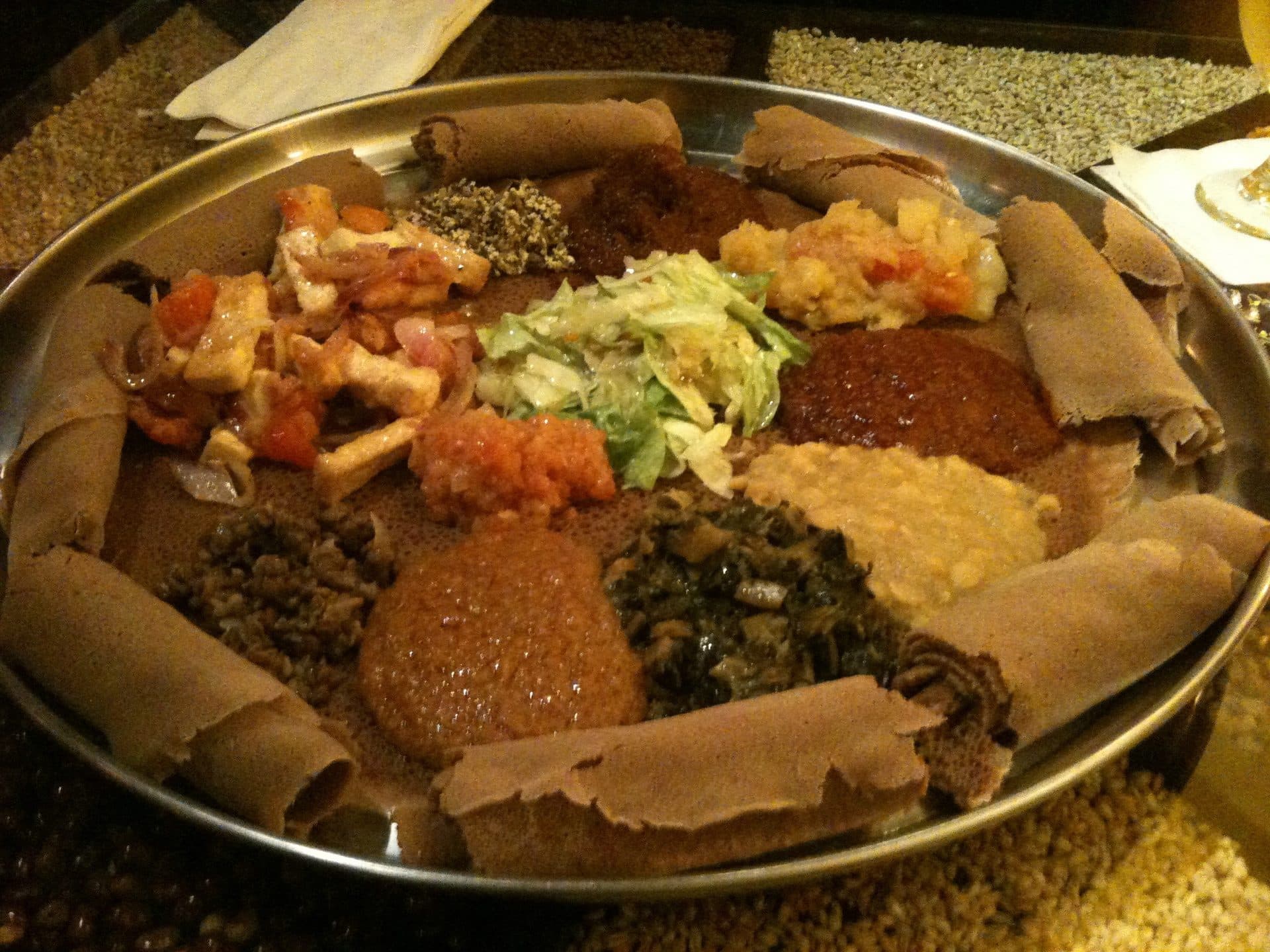
Culture & Faith
Tsom: Ethiopian fasting, and where to eat it in the DMV
No meat, no dairy, no eggs, for around 180 days a year. What the Ethiopian and Eritrean Orthodox fast means, whether today is a fasting day, and the DMV kitchens that cook for it.
Food & Dining
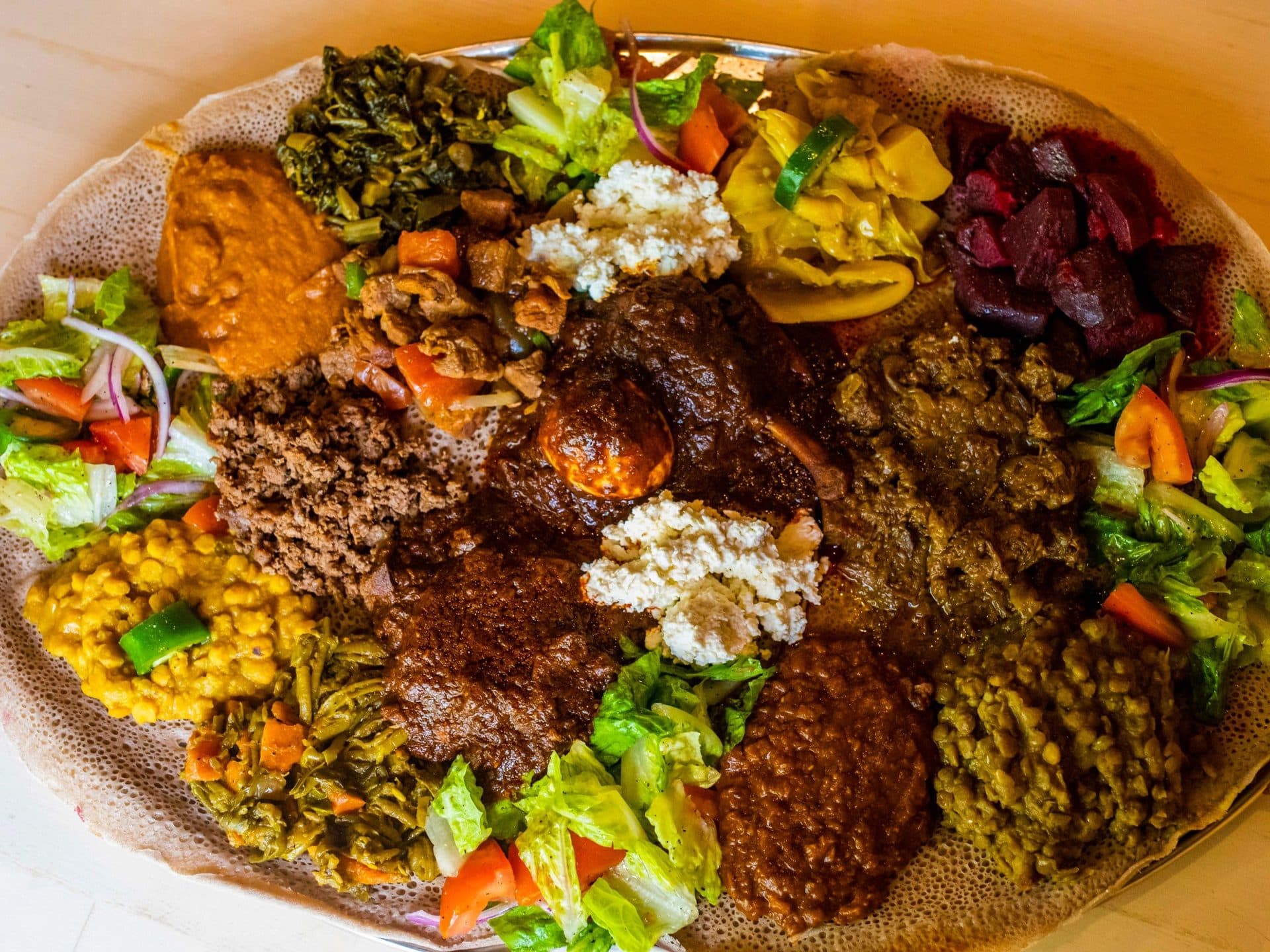
Best Ethiopian restaurant in the DMV?
The food, the injera, the buna, the welcome. The community ranks the Ethiopian and Eritrean restaurants it actually goes back to, and you can add your vote in seconds.
Food & Dining
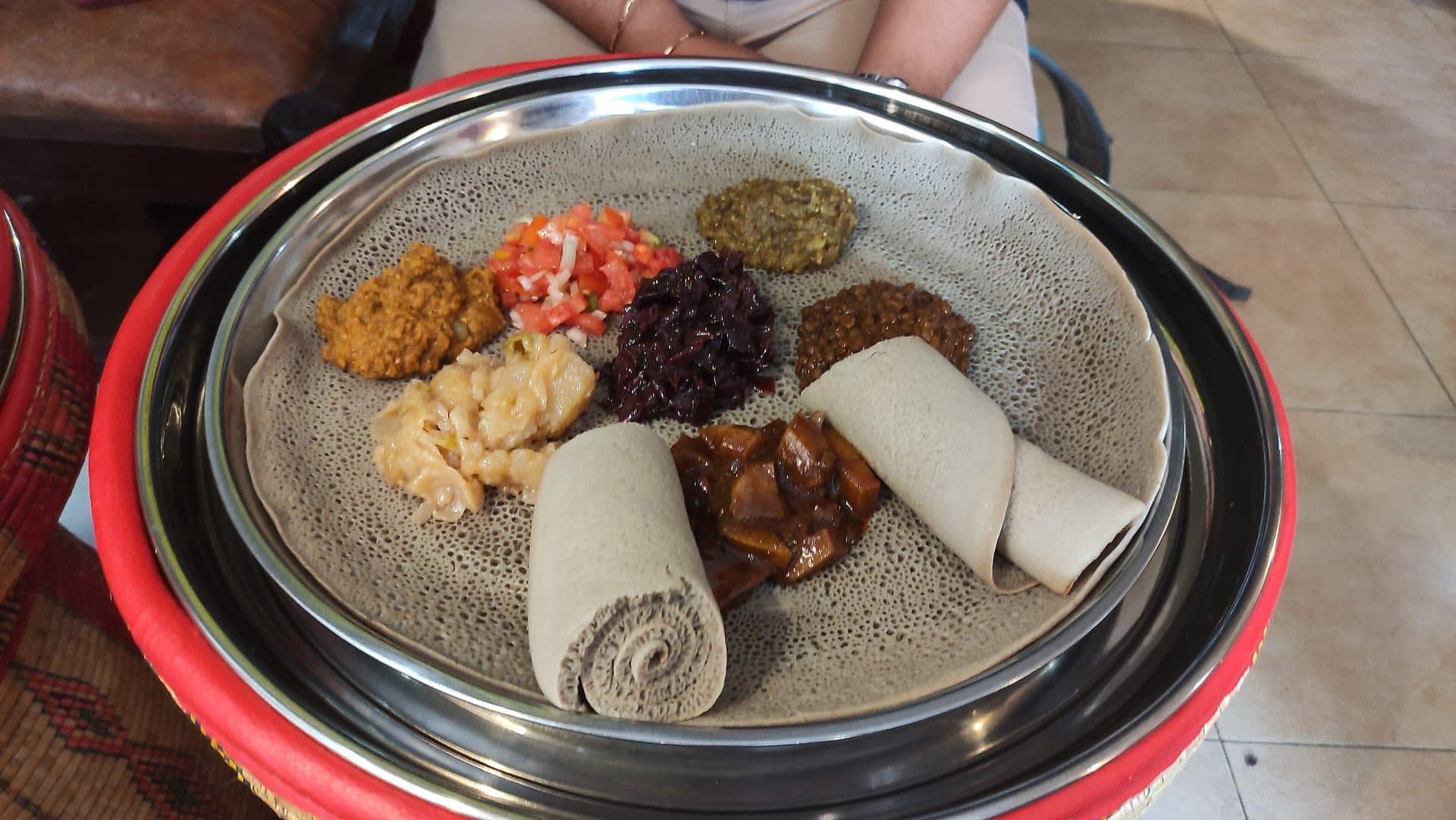
A guide to Ethiopian and Eritrean food
New to Ethiopian and Eritrean food? Learn injera, the spicy stews (wot), grilled meats like tibs and tire sega, fasting dishes, and how to eat it all with your hands.
The TiruList directory
Everything Habesha in the DMV, in one place.
Restaurants, churches, markets, services, and events, vouched for by the community.