The Ethiopian Bible, explained
It has 81 books, not 66. It is written in a language almost no one speaks anymore. And it still holds Scripture that the rest of the world quietly lost more than a thousand years ago.
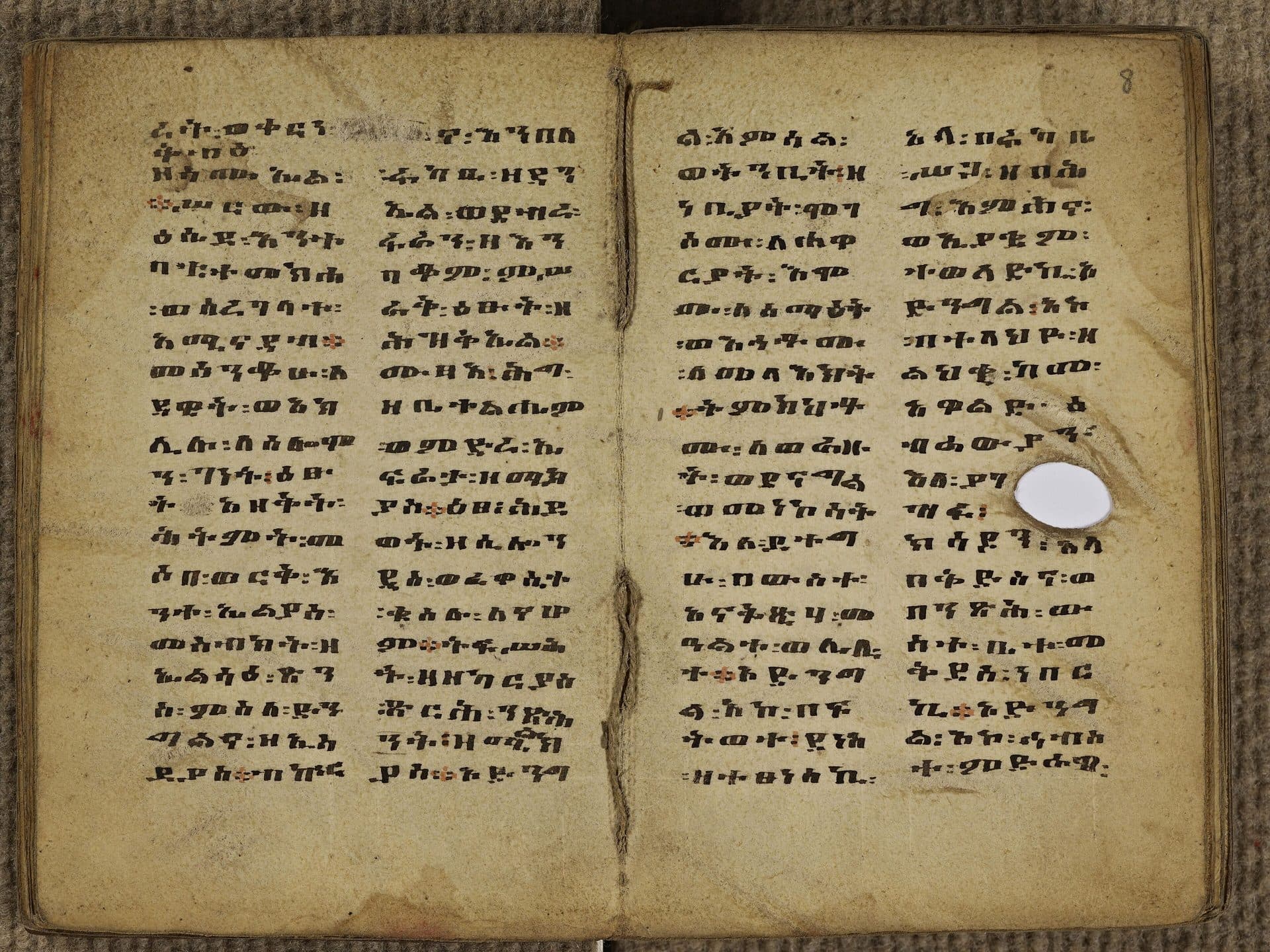
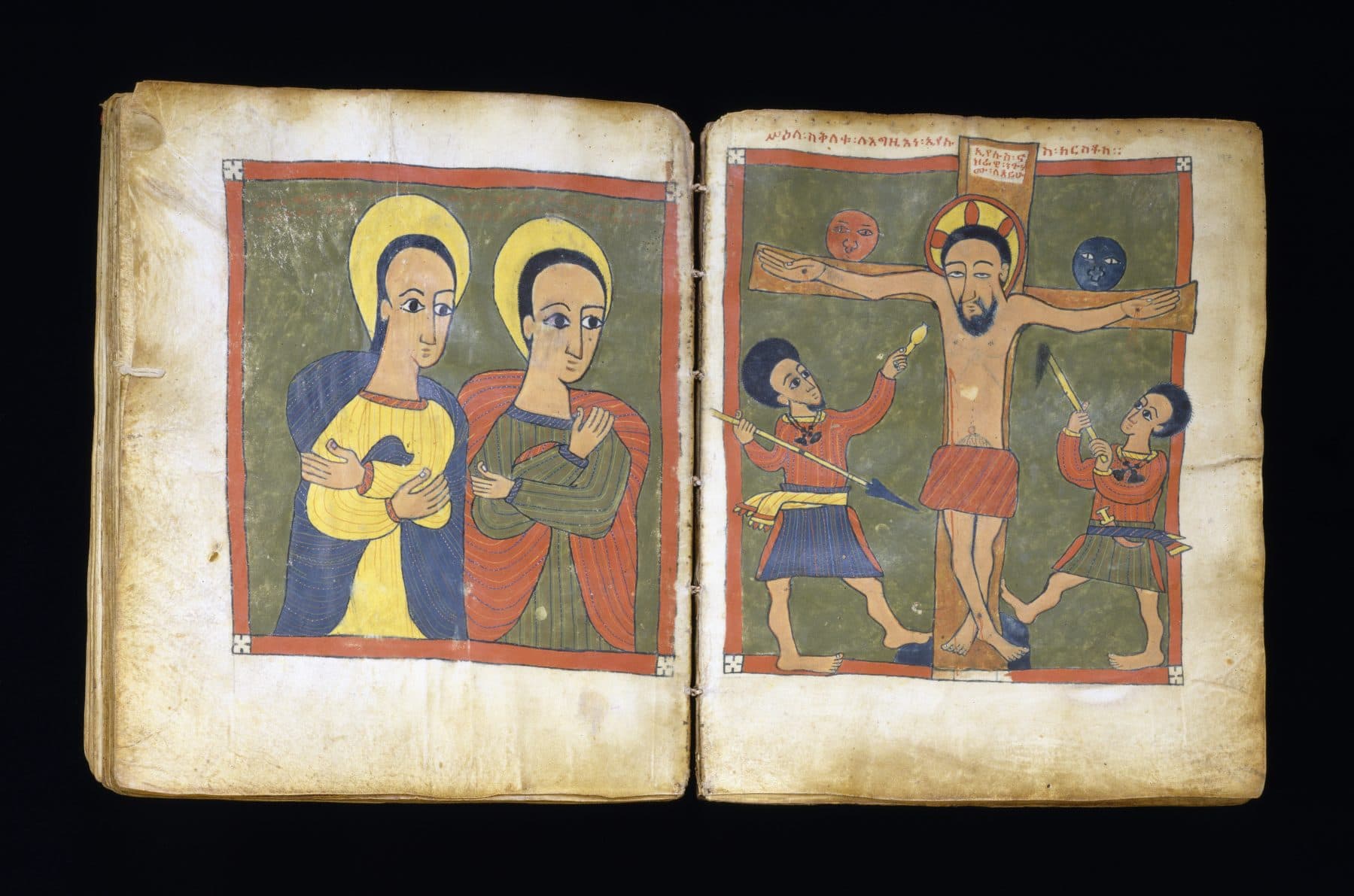
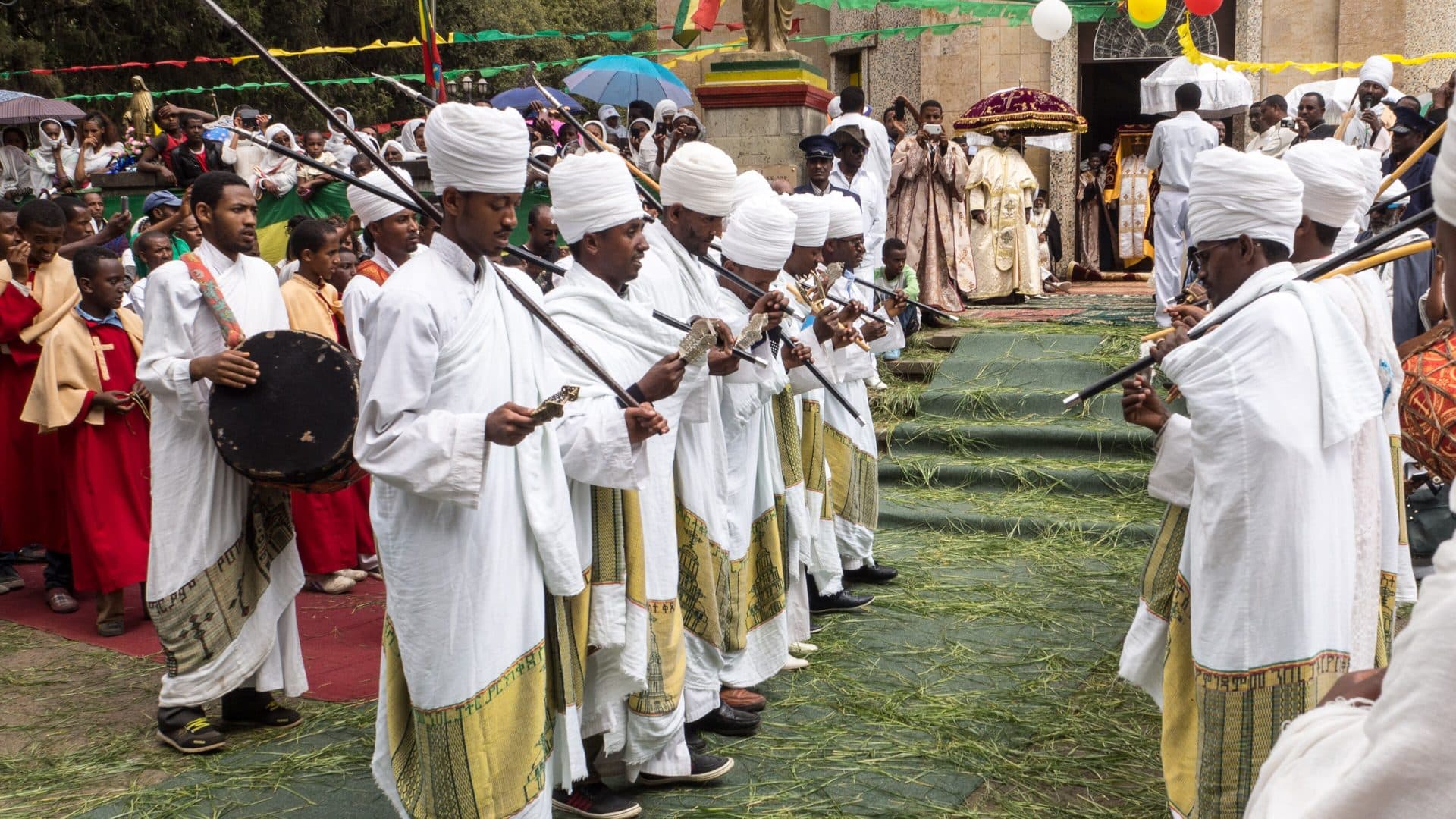
Walk into an Ethiopian Orthodox church on a feast day and you will hear chanting in Ge'ez, a language that has not been anyone's mother tongue for centuries. The deacon may be reading from a book that most Christians in the world have never held and would not fully recognize. It is a Bible, but a bigger one, older in places than the versions on Western shelves, and it carries writings that Rome and the Protestant reformers set aside long ago. Ethiopia kept them. That is the short version. The long version is more interesting.
First, the number everyone asks about: 81
The Ethiopian Orthodox Tewahedo Church counts 81 books in its Bible: 46 in the Old Testament and 35 in the New.[2][1] For comparison, a King James Bible has 66, and a Catholic Bible has 73. At 81, the Ethiopian canon is the largest of any traditional Christian church.[11]
You will also run into the number 88, which is what a lot of English articles and search results now repeat. Both can be correct, because the difference is really about counting, not about disagreement. Think of it like a bookshelf where a few of the "books" are actually boxed sets. Sinodos, a collection of early church rules, is four texts that can be counted as one book or as four. Do that a couple of times, or fold in the so-called "broader canon" of church-order writings, and 81 becomes 88 or more.[1][3] Scholars have a name for this: the narrower canon (the familiar 81) and the broader canon (the 81 plus around nine additional church-order books).[1] Even inside Ethiopia the exact list has never been printed as one tidy volume, and it varies between manuscripts, which is part of why researchers still argue about it.[4]
The books almost no one else kept
The most striking thing about the Ethiopian Bible is not the count. It is the contents. Several books that were read and loved in the early church, then dropped by the Western churches, survived here without interruption.[3][11]
Ethiopia kept them. That is the short version. The long version is more interesting.
1 Enoch
መጽሐፈ ሄኖክAn ancient book attributed to Enoch, Noah's great-grandfather. The New Testament letter of Jude quotes it directly. Only the Ethiopian and Eritrean churches kept it as Scripture.
Jubilees
ኩፋሌA retelling of Genesis and part of Exodus, dividing history into 49-year "jubilees." Fragments were later found among the Dead Sea Scrolls.
1, 2 and 3 Meqabyan
መቃብያንThe "Ethiopian Maccabees." They share a name with the Greek books of Maccabees but are entirely different works.
4 Baruch
ተረፈ ኤርምያስAlso called the Paralipomena of Jeremiah, "the things left over from Jeremiah," a story set around the fall of Jerusalem.
Prayer of Manasseh, 2 Ezra, Ezra Sutuel
Extra prayers and Ezra writings that also appear, in various forms, in other ancient Christian traditions.
The strange journey of the Book of Enoch
Of all of these, the Book of Enoch has the wildest history. It is an ancient work attributed to Enoch, the great-grandfather of Noah, full of visions of heaven, fallen angels, and the end of days. The early church knew it well. The New Testament letter of Jude quotes it directly, naming Enoch and citing his prophecy, which is a remarkable thing: a book in your Bible quoting a book that was later cut from most Bibles.[9]
By roughly the 4th century, most churches stopped treating Enoch as Scripture, and in the West the full text simply vanished. For over a thousand years, European scholars knew it only from that one quotation in Jude and a few scattered mentions by early writers.[9] Ethiopia, meanwhile, had never lost it. It sat in the canon the whole time, copied by hand, generation after generation.
The book came back to Europe almost by accident. In 1773 a Scottish traveler named James Bruce, who had gone to Ethiopia searching for the source of the Blue Nile, came home with three Ge'ez copies of Enoch. A Hebrew professor at Oxford, Richard Laurence, published the first English translation in 1821, and the lost book was lost no longer.[10] A century and a half after that, archaeologists digging at Qumran found ancient Aramaic fragments of Enoch among the Dead Sea Scrolls, proof that the book really was as old as Ethiopia had always treated it.[9]
Read the full story of the Book of Enoch: the Watchers and the Nephilim, who really wrote it, and why it stirs up so much debate.
Older than almost anything: the Garima Gospels
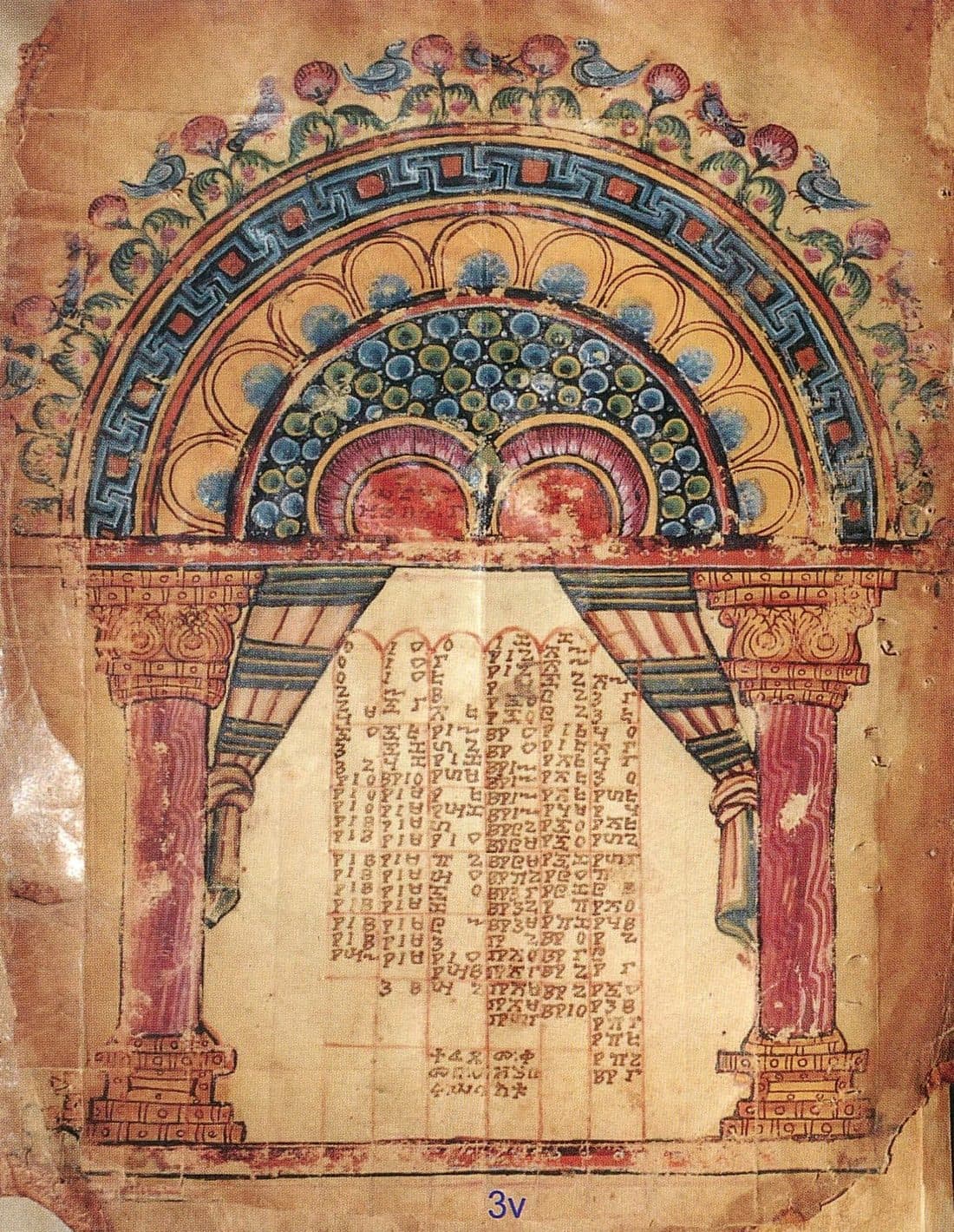
High in the mountains of Tigray, at the monastery of Abba Garima, monks have kept two illustrated Gospel books for so long that tradition says they were written in a single day with divine help. The truth is nearly as astonishing. When researchers finally radiocarbon-dated the parchment at Oxford, the earlier of the two volumes came back to roughly 390 to 570 CE.[7] That places the Garima Gospels among the earliest surviving illustrated Gospel manuscripts anywhere in the world, older than many famous European treasures, written while the Roman Empire in the West was still collapsing.[7]
Roughly 390 to 570 CE: among the earliest illustrated Gospels to survive anywhere.
Where it came from: Aksum, Ge'ez, and the Greek Bible
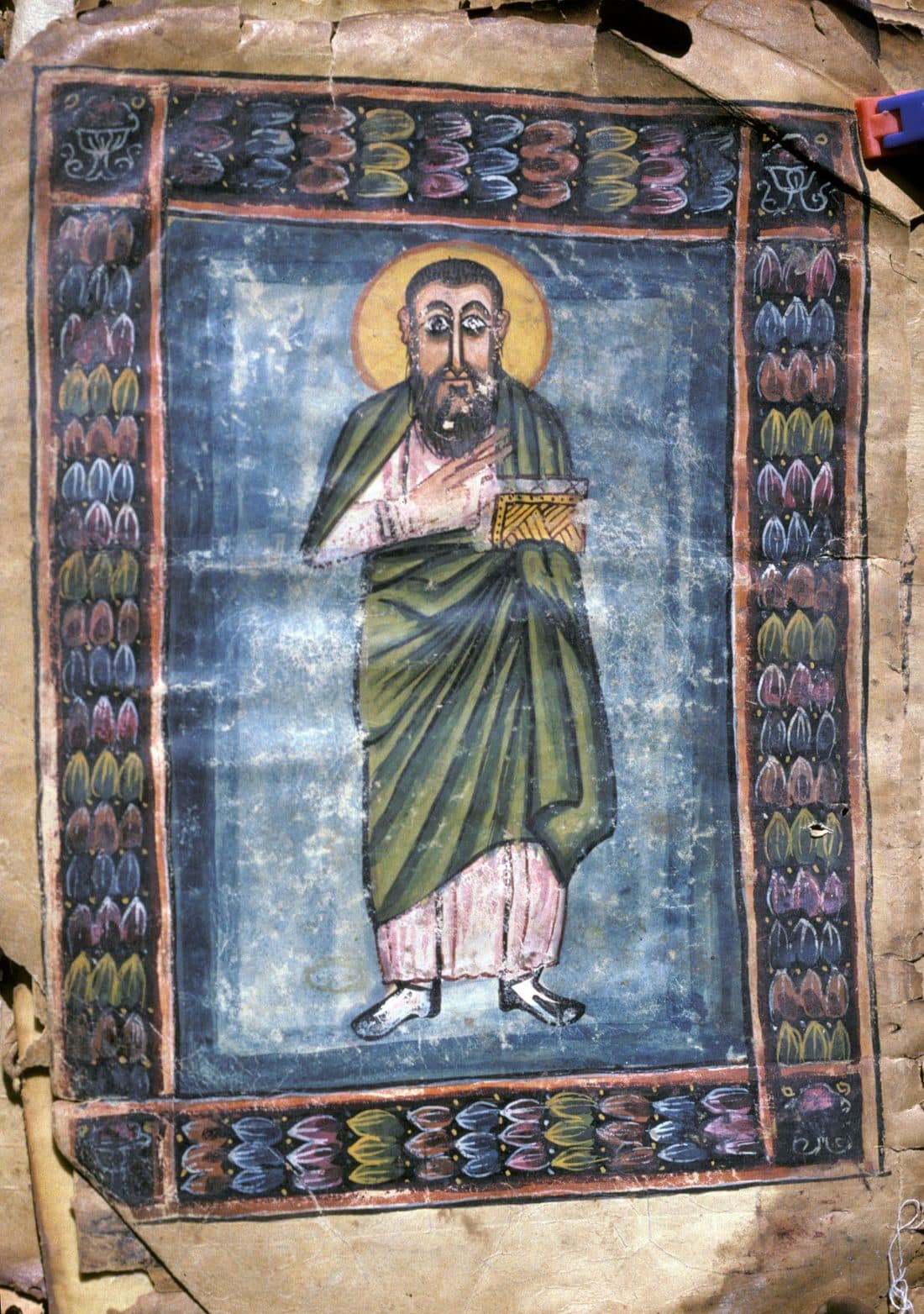
To understand why the Ethiopian Bible looks the way it does, you have to go back to the Kingdom of Aksum, a trading empire on the Red Sea. In the 4th century its king, Ezana, converted to Christianity, guided by a shipwrecked Syrian-Greek named Frumentius whom the Ethiopians remember as Abba Selama, "father of peace." Frumentius was made the first bishop of Aksum by the patriarch of Alexandria.[8]
That Alexandrian connection shaped everything. When scholars began translating the Scriptures into Ge'ez, the local language, they did not work from the Hebrew. They worked from the Septuagint, the ancient Greek translation of the Hebrew Bible that the whole early church used.[5] The work started in the 4th century and continued into the 6th and 7th, which means the Ethiopian text was taking shape around 1,600 years ago.[5][3] Ge'ez itself is a bit like Latin: no longer spoken at the dinner table, but still the sacred language of the liturgy today, alongside Amharic in modern printings. You will hear it sung at every service of the Ethiopian Orthodox Church, and it still names the months of the Ethiopian calendar.
So is it the oldest Bible? Is it the most accurate?
These are the two questions the internet argues about most, and both deserve an honest answer rather than a slogan. On "oldest": the oldest surviving near-complete Christian Bible is Codex Sinaiticus, a Greek manuscript from the 4th century, not an Ethiopian one.[11] What Ethiopia can fairly claim is that the Garima Gospels are possibly the oldest illustrated Gospels, and that its canon is the largest and most complete of any church.[7][1] That is remarkable enough without overstating it.
On "accurate": because the Old Testament here was translated from the Septuagint rather than the later Hebrew Masoretic text, it sometimes preserves very early readings, and it keeps whole books other traditions dropped. Scholars prize the Ge'ez text for exactly that reason, as an old and independent witness to how the Bible was passed down.[5][3] Whether that makes it "more accurate" depends on what you are measuring against; what is not in dispute is that it is old, independent, and unusually complete.
How to read it today
There has never been a single official volume that gathers all 81 books between two covers, even in Ethiopia, and a few of the rarer books are genuinely hard to find.[11][4]The liturgy is still in Ge'ez; modern Bibles are printed in Amharic; and English editions of individual books, especially Enoch and Jubilees, are widely available. The church year that the readings follow, from Timket to the long fasting seasons, is its own story. If you go looking for an English "Complete Ethiopian Bible," just know that the ones you will find are modern compilations, and that their book counts and contents vary, which is exactly why you see 81, 84, and 88 all quoted for the same Bible.
Common questions
How many books are in the Ethiopian Bible?
The Ethiopian Orthodox Tewahedo Church counts 81 books in its standard ("narrower") canon: 46 in the Old Testament and 35 in the New Testament. That makes it the largest biblical canon of any traditional church. You will also see the number 88, and even 84; those come from counting a few multi-part works (like the four-part Sinodos) as separate books, or from a "broader" canon that adds church-order writings. The church's own traditional figure is 81.
Why does the Ethiopian Bible have 88 books in some lists?
Because some English editions and articles count differently. Several of the 81 are really collections. Sinodos, for example, is a set of four church-order texts that can be counted as one book or as four. Add those subdivisions, or include the "broader canon" of church-order works, and the total climbs to 88 or more. It is a counting difference, not a disagreement about the core Scripture. The church's traditional count is 81.
What books are in the Ethiopian Bible that other Bibles do not have?
The best known are 1 Enoch, Jubilees, and the three books of Meqabyan (Ethiopian Maccabees, which are not the same as the Greek Maccabees). It also keeps 4 Baruch, the Prayer of Manasseh, and additional Ezra writings. Most of these were once widely read in the early church and were later dropped by the Western churches, but the Ethiopian church never let them go.
Is the Ethiopian Bible the oldest Bible in the world?
Not exactly, and it is worth being precise. The oldest surviving near-complete Christian Bible is Codex Sinaiticus, a Greek manuscript from the 4th century. What Ethiopia holds is the Garima Gospels, which radiocarbon testing at Oxford dates as early as roughly 390 to 570 CE, making them possibly the earliest surviving illustrated Gospel manuscripts anywhere. So the honest claim is not "the oldest Bible," but "among the oldest illuminated Gospels, and the largest canon."
Is the Ethiopian Bible accurate?
Its Old Testament was translated from the Septuagint, the ancient Greek version of the Hebrew Scriptures used across the early church, rather than the later Hebrew Masoretic text. Scholars value the Ethiopic (Ge'ez) text precisely because it is old and independent, which helps them study how the Bible was transmitted. "Accurate" depends on what you are comparing it to; what is not in dispute is that it preserves very early readings and whole books that other traditions lost.
What language is the Ethiopian Bible written in?
Ge'ez (also called Classical Ethiopic), an ancient Semitic language that is no longer spoken day to day but is still the liturgical language of the Ethiopian and Eritrean Orthodox churches, the way Latin long served the Roman Catholic Church. Modern editions are also printed in Amharic.
When was the Ethiopian Bible written?
The translation into Ge'ez began after Christianity became the state religion of the Kingdom of Aksum in the 4th century, under King Ezana, and continued into roughly the 6th and 7th centuries. So the text was taking shape in Ethiopia around 1,600 years ago.
Why is the Book of Enoch in the Ethiopian Bible but not in mine?
The Book of Enoch was read and respected in the early church, and the New Testament letter of Jude even quotes it. But by around the 4th century most churches stopped treating it as Scripture, and in the West it was eventually lost entirely. The Ethiopian church kept it. Europe only recovered the full text in 1773, when the Scottish traveler James Bruce brought three Ge'ez copies out of Ethiopia.
Sources
- [1]Cowley, R. W. (1974). "The Biblical Canon of the Ethiopian Orthodox Church Today." Ostkirchliche Studien 23: 318 to 323. Link
- [2]Ethiopian Orthodox Tewahedo Church, "The Bible / Canonical Books" (official church website). Link
- [3]Pentiuc, E. J. (ed.) (2022). The Oxford Handbook of the Bible in Orthodox Christianity. Oxford University Press. See Daniel Assefa, "The Biblical Canon of the Ethiopian Orthodox Tewahedo Church." Link
- [4]Asale, Bruk A. (2016). "The Ethiopian Orthodox Tewahedo Church Canon of the Scriptures: Neither Open nor Closed." The Bible Translator 67(2): 202 to 222. Link
- [5]Mikre-Sellassie, G. A. (1993). "The Bible and its Canon in the Ethiopian Orthodox Church." The Bible Translator 44(1): 111 to 123. Link
- [6]Wanger, Anke (2011). "The Biblical Canon of the Ethiopian Orthodox Tewahdo Church." Euclid University (working paper). Link
- [7]Garima Gospels, Abba Garima Monastery (Tigray). Radiocarbon dating at Oxford places the earlier volume c. 390 to 570 CE. See the Garima Gospels overview and reporting. Link
- [8]Frumentius (Abba Selama) and the conversion of Aksum under King Ezana in the 4th century; consecrated first bishop by Athanasius of Alexandria. Link
- [9]"Book of Enoch," New World Encyclopedia (history, canonicity, and rediscovery). Link
- [10]James Bruce brought three Ge'ez copies of the Book of Enoch to Europe in 1773; Richard Laurence published the first English translation in 1821. Link
- [11]"Orthodox Tewahedo biblical canon" (overview and book lists, with primary references to Cowley and the Oxford Handbook). Link
Keep reading
All articles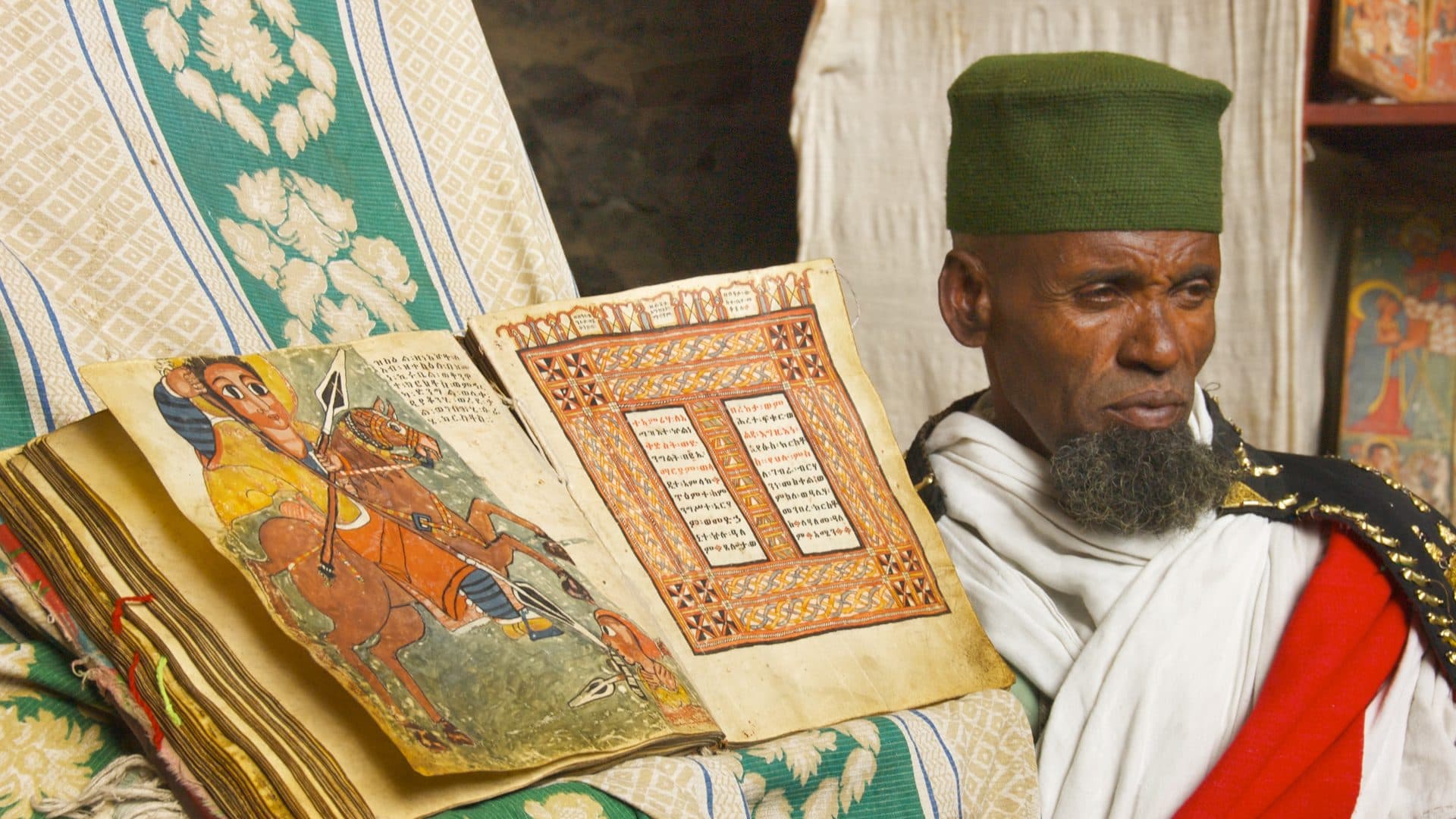
Culture & Faith
The Book of Enoch
A book of fallen angels and giants, older than the Dead Sea Scrolls, quoted in the New Testament, and left out of nearly every Bible on earth. One church never let it go.
Culture & Faith
The Ethiopian Orthodox Tewahedo Church, explained
One of the world's oldest churches: what Tewahedo means, its 180 fasting days, the tabot and the Ark, Timkat, and the chant of Yared.
Culture & Faith
The Ethiopian calendar, explained
Thirteen months, a new year in September, and a count of years that sits seven behind the rest of the world. It is simpler than it looks once you see why.
The TiruList directory
Everything Habesha in the DMV, in one place.
Restaurants, churches, markets, services, and events, vouched for by the community.