
The Content Creator’s Guide to Ethiopian Food
What to order, how to eat it with your hands, how to say each dish, and what to tell your audience. It starts with the smell of onions and berbere on a Sunday.
The smell comes first
Walk into a Habesha home on a Sunday and you smell it before you see anything. Onions, going soft and dark in a pan. Berbere waking up in the oil. It is deep and warm and a little smoky. It gets into the curtains. It gets into your coat.
Ask any Ethiopian kid who grew up in the diaspora. They will tell you about the morning a classmate leaned over and said, "what is that smell?" The answer was dinner. Mom had been cooking wot the night before, and the aroma does not ask permission. You wear it to school. You are a little embarrassed. Then you grow up and realize it was the best-smelling house on the block.
That smell is the whole cuisine in one breath. If you understand where it comes from, you understand how to eat Ethiopian food.
First, injera is not a pancake
People see injera and reach for the closest word. Pancake. Crepe. It is neither. Not in taste, not in texture, not in what it does on the table.
Injera is a large, soft, slightly spongy flatbread with a gentle sour note. It is made from teff, a tiny ancient grain grown in the Ethiopian highlands. The flour is mixed with water and then left to ferment, often for two or three days. That wait is the point. Fermentation gives injera its tang and its lift. When the batter hits the hot clay plate, it is poured in a spiral and covered, and it steams into a sheet full of tiny holes, called eyes, that catch sauce.
It is also quietly good for you. Teff is naturally gluten-free. It is high in iron, in fiber, and in protein, with a mineral depth most grains do not have. And because injera is fermented, it is gentler on the stomach than it looks.
Here is the part foreigners miss. Injera is not a side. It is the plate and the spoon. You do not eat with injera. You eat by injera.
Berbere is the engine
If there is one thing to know, it is berbere. It is the spice blend at the center of almost every red Ethiopian stew. Chiles, dried and ground, carry the heat. Then garlic, ginger, fenugreek, cardamom, and a long list of warm spices carry the flavor. Berbere is not just hot. It is layered.
And it is not dumped in at the end. This is the insider part. You cook berbere low and slow with onions, for a long time, until the raw edge is gone and the whole thing turns into a dark, glossy base. That is where the aroma comes from. That is the smell in the curtains. Rush it and the sauce tastes flat. Respect it and the sauce tastes like somebody's grandmother made it.
The table is shared
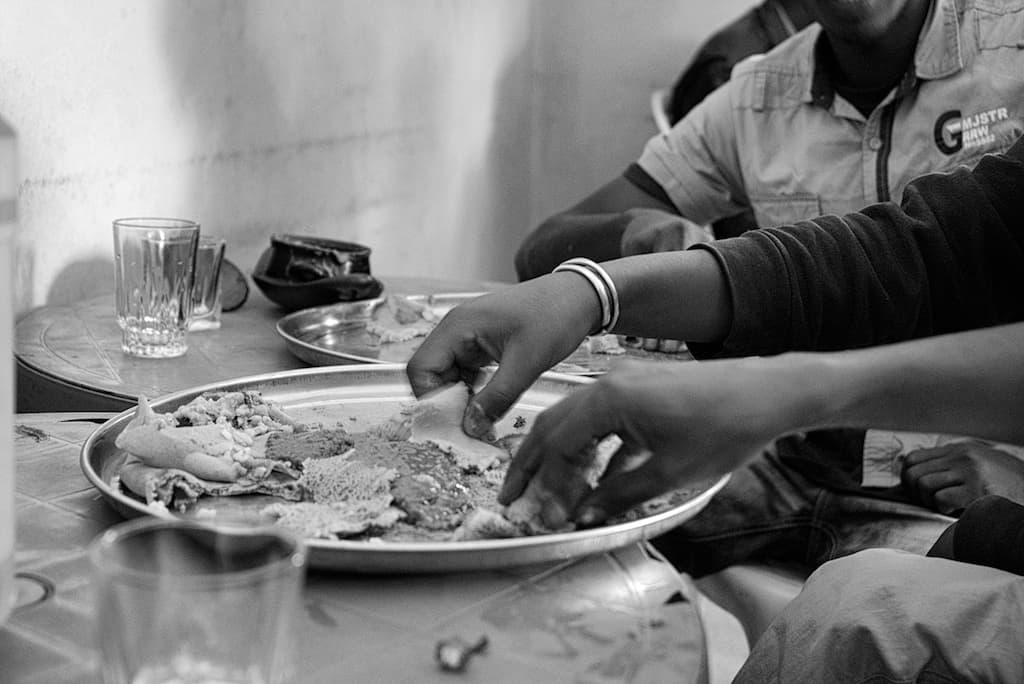
Ethiopian food does not come one plate per person. It comes on one big round platter, lined with injera, piled with different dishes, and set in the middle for everyone. You eat from the same plate. That is not a quirk. That is the meal.
A first spread, for two or three
Spicy and mild. Meat and vegetable. Rich and fresh.
What to order the first time
For two or three people, a good first spread is doro wat, tibs, special kitfo, and a vegetable combo, with extra injera. Spicy and mild. Meat and vegetable. Rich and fresh. All at once.
Interactive
What should I order?
Tap the one that sounds like you for a platter and the order to eat it in.
Your platter
A good first spread for two or three people. Spicy and mild. Meat and vegetable. Rich and fresh.
Eat it in this order
- 1Injera first. Tear a small piece.
- 2Try each thing on its own.
- 3Doro wat with a little ayib, far more wot than ayib.
- 4Then mix two or three in one bite.
- 5Save the injera under the stews for last.
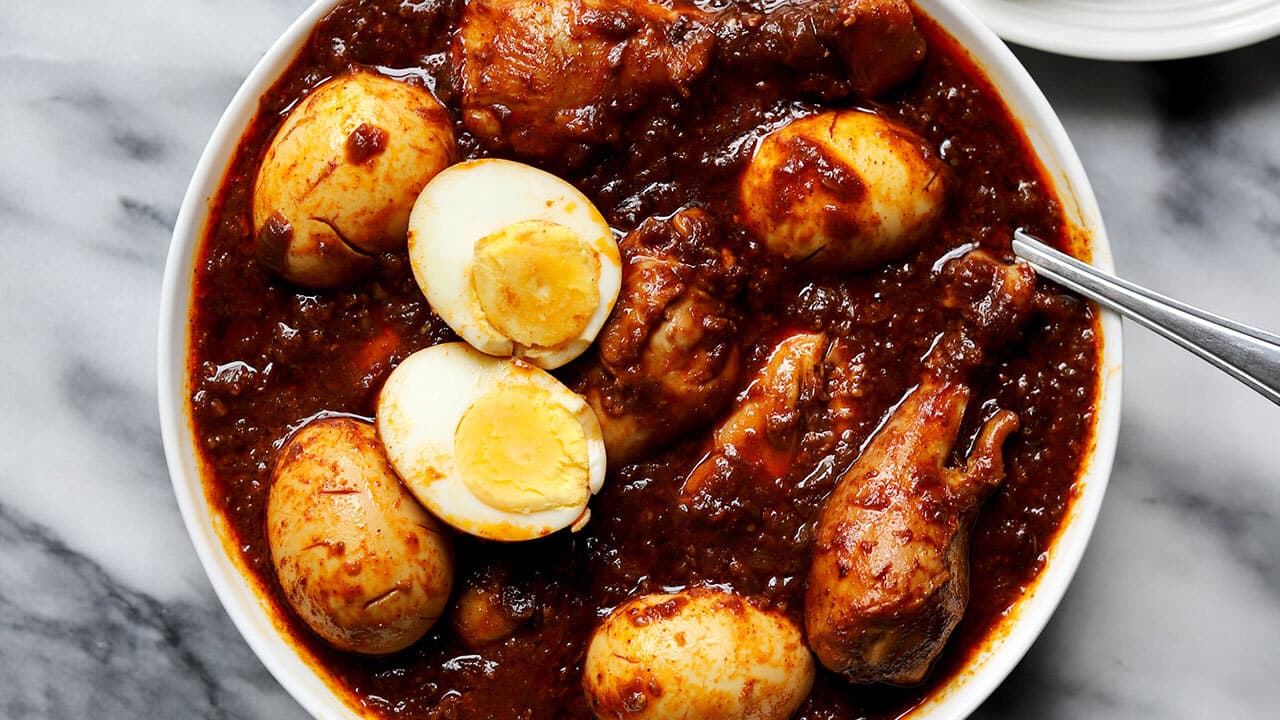
Doro wat. The celebration stew. Chicken simmered slowly in berbere and spiced butter, with a hard-boiled egg half-sunk in the sauce. It is deep, a little smoky, and one of the spicier things on the platter. This is the dish families cook for holidays. If you try one thing, try this. And do not skip the egg. It sits in the sauce and drinks up the spice, and it is the quiet best bite on the plate. The move: a piece of chicken with plenty of wot on injera, and a little ayib to cool it. Say DOH-roh watt.
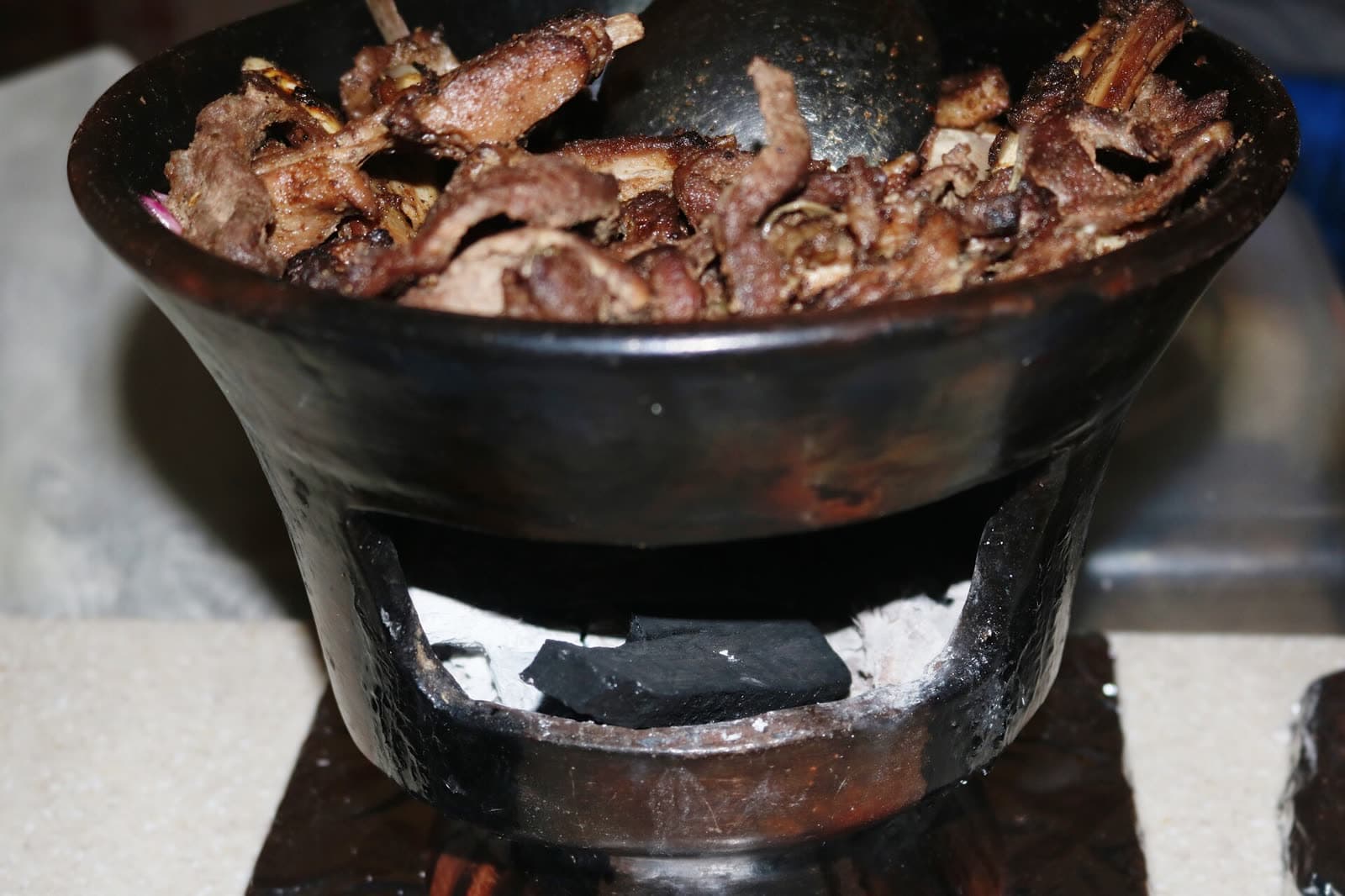
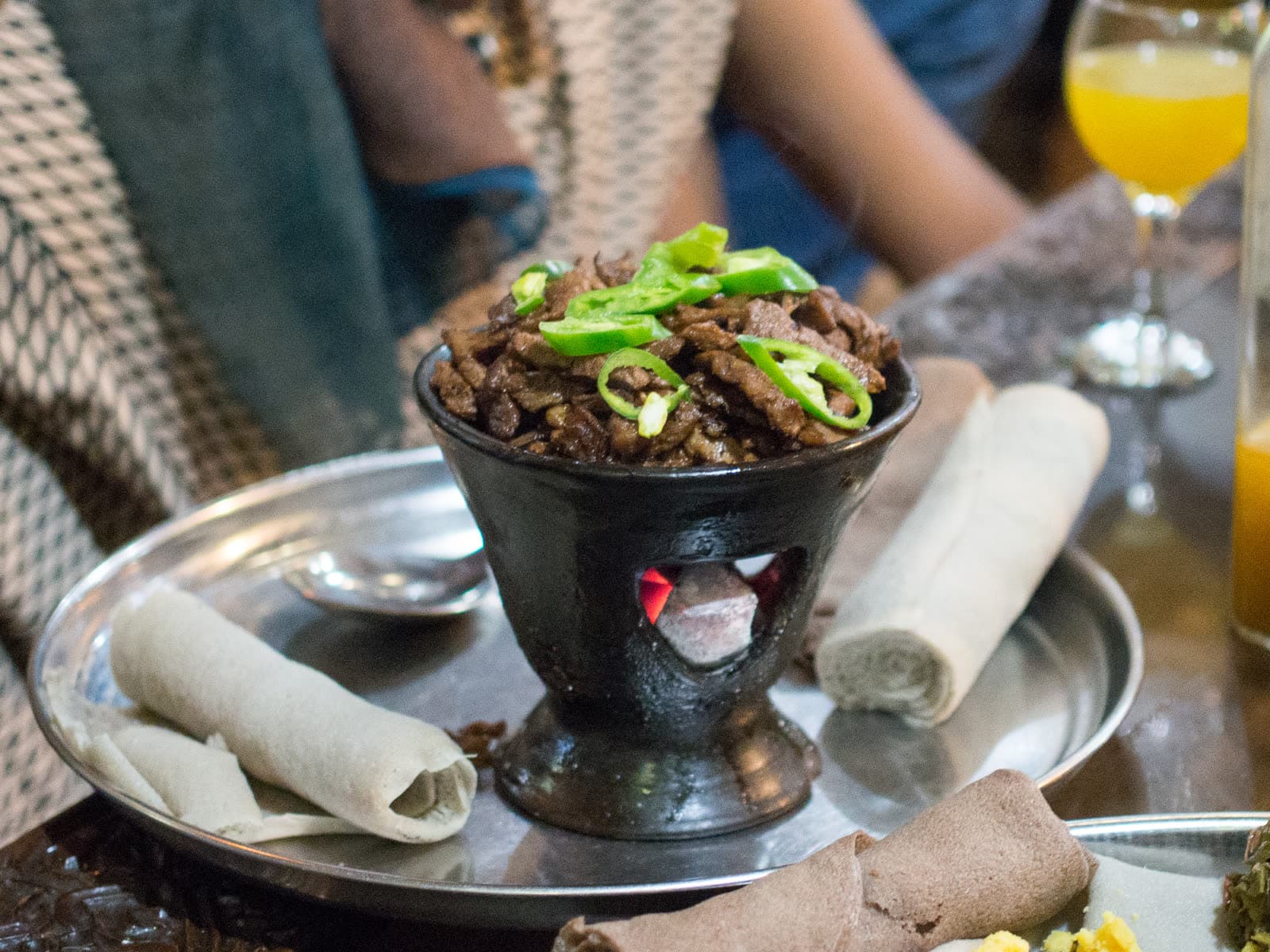
Tibs. Beef or lamb, cut small and sauteed with onion, rosemary, and butter. The version matters, so order on purpose. Lega tibs is tender and lightly cooked, juicier and milder. Derek tibs is cooked down and dry, with crisp edges and more chew. Shekla tibs arrives sizzling on a hot clay dish, still spitting, often with awaze on the side. Awaze tibs leans into heat, cooked with awaze, a paste built on berbere. Pick by mood. Say tibs.
Special kitfo. Minced beef, seasoned with mitmita and niter kibbeh, the spiced clarified butter. You choose how it is cooked: tere is raw, leb leb is lightly warmed and still soft, or fully cooked. For a first time, order it leb leb. "Special" kitfo comes with ayib and greens, and the ayib here is its own thing, fresh cheese folded through with tender greens. Do not call it steak tartare. That misses the butter, the mitmita, the whole point. And if you are feeling brave, eat your kitfo with kocho, a dense flatbread from the false banana plant. It is an acquired taste. Earn it. Say kit-FOH.
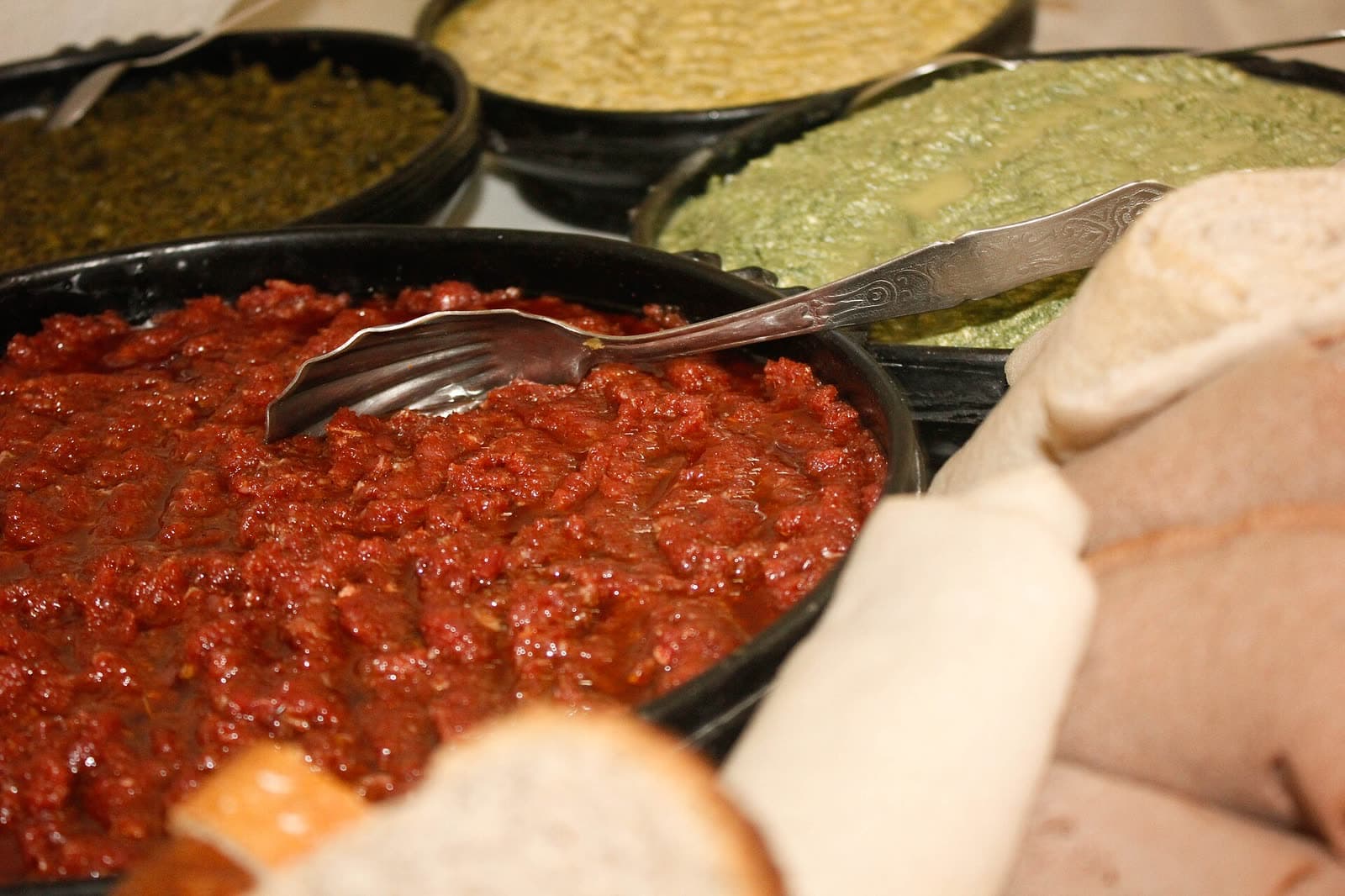
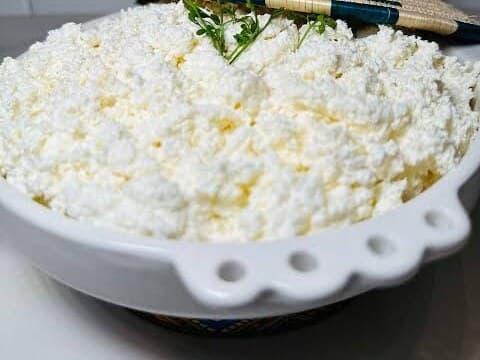
Ayib. Mild, fresh, crumbly cheese, a little like cottage cheese. Cool and soft, it is the balance to the spicy and the rich, which is why it comes with kitfo and gomen. Say EYE-eeb.
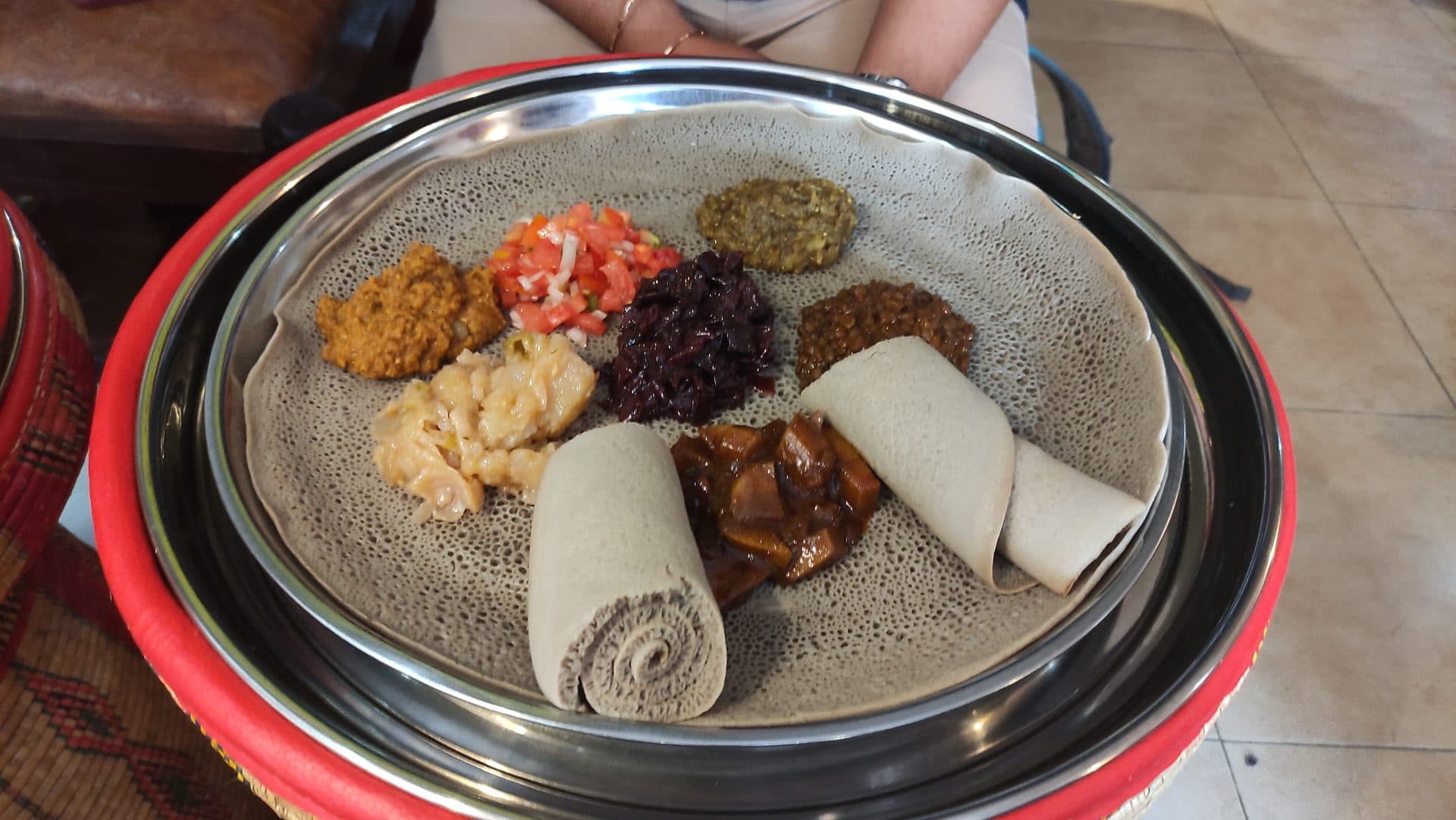
The vegetable combo (beyaynetu). This is where people underestimate Ethiopian food and then fall in love with it. A colorful plate of small stews, all plant-based, each in its own little hill on the injera. You will usually find shiro, the silky spiced chickpea stew. Misir wat, spicy red lentils. Kik alicha, mild yellow split peas, gold with turmeric and no berbere. Gomen, collard greens. Atakilt, cabbage and carrot and potato. Maybe fosolia, maybe beets, maybe a bright tomato salad. On a fasting day it is the whole menu, and nobody misses the meat. Say beh-yah-yeh-NEH-too.
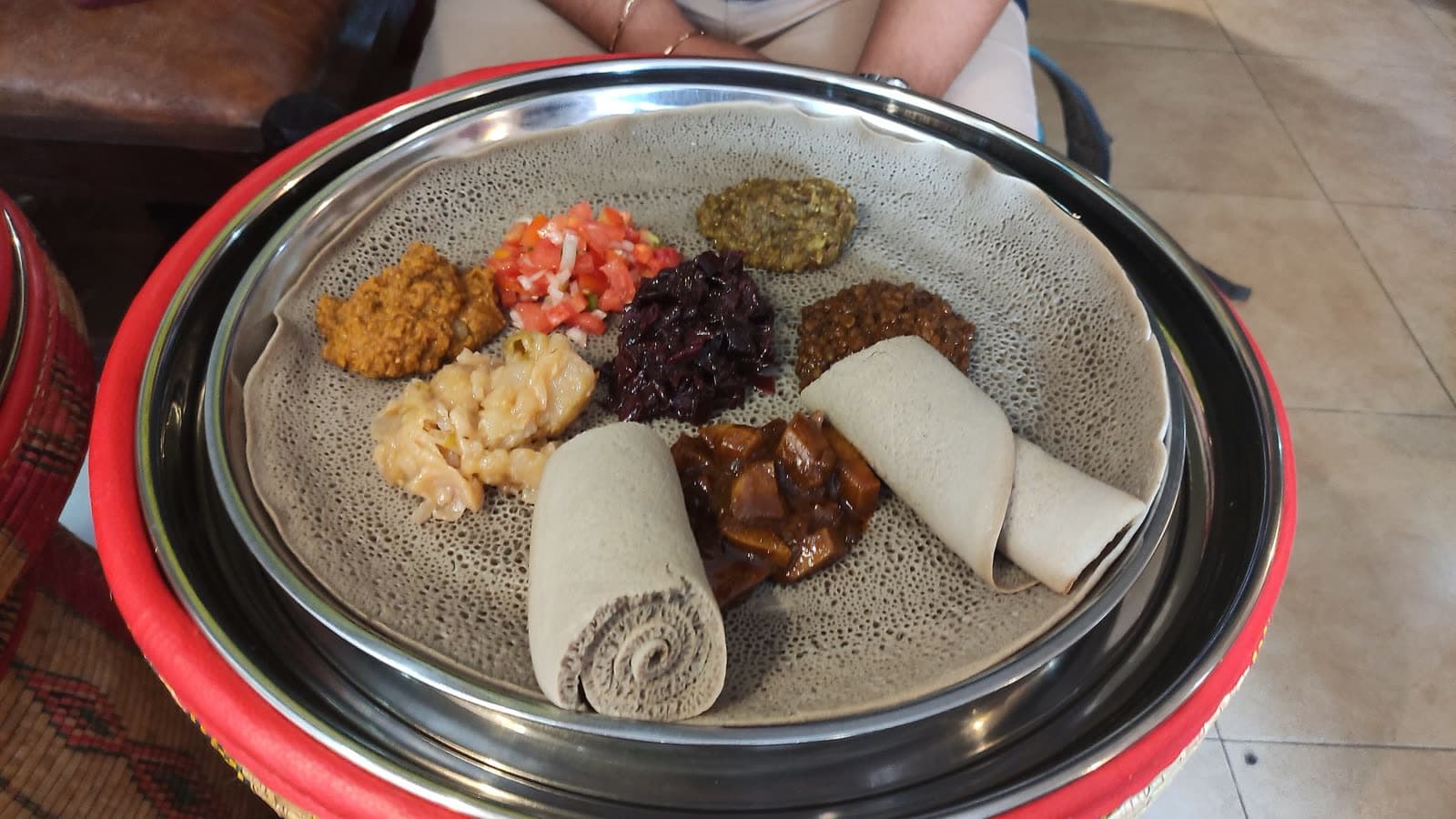
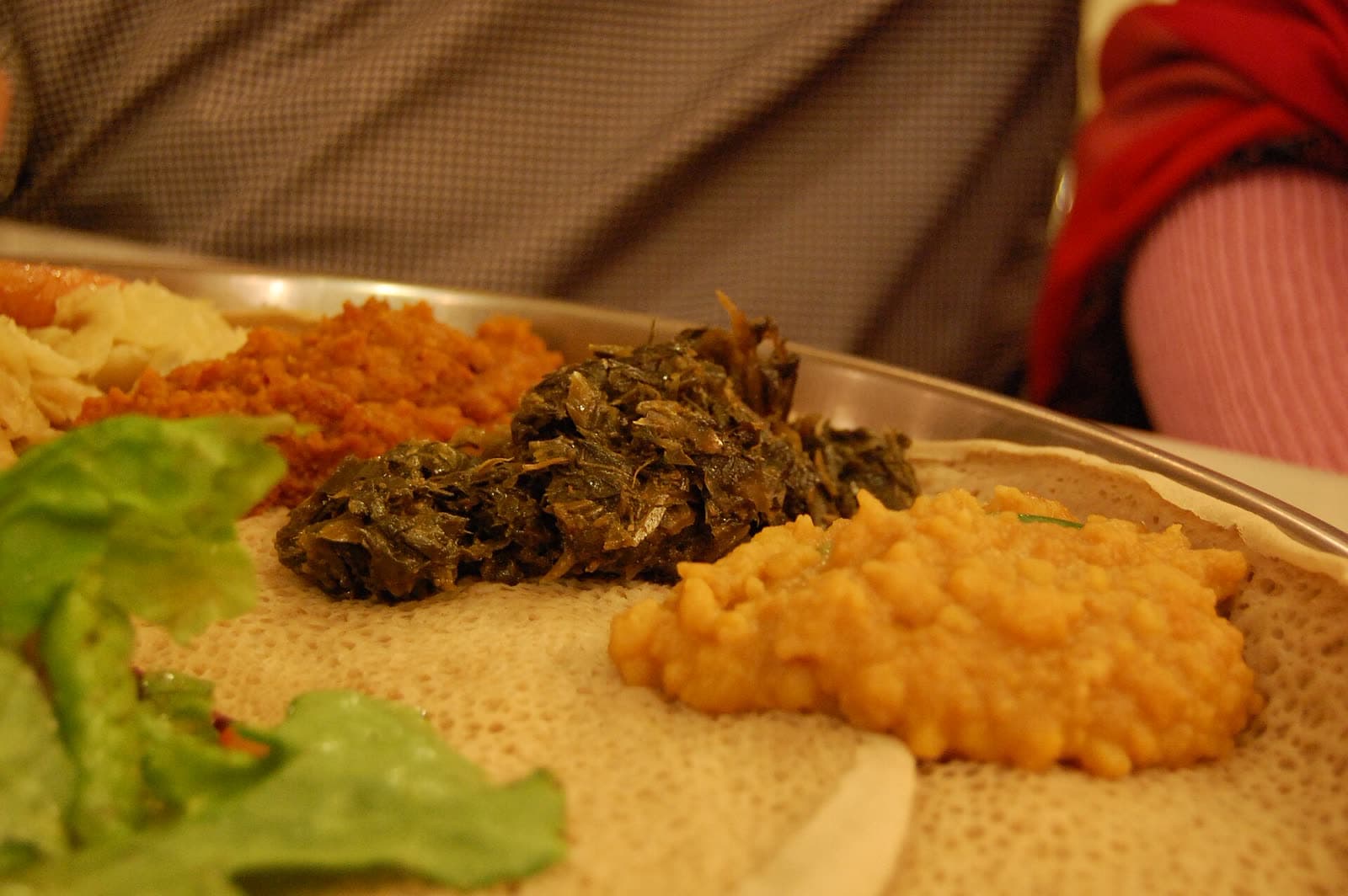
One small warning about the kik alicha. That beautiful gold color is turmeric, and turmeric stains. You eat with your hands, so if you have a fresh manicure, it can leave your nails a little yellow. Worth it. Just know going in.
Doro wat
say DOH-roh wattThe celebration stew. Chicken simmered slowly in berbere and spiced butter, with a hard-boiled egg half-sunk in the sauce. Do not skip the egg.
Pairs with: Injera, A little ayib
Tibs
say tibsBeef or lamb, cut small and sauteed with onion, rosemary, and butter. The version matters. Pick by mood.
- Lega:
- Tender and lightly cooked, juicier and milder.
- Derek:
- Cooked down and dry, with crisp edges and more chew.
- Shekla:
- Arrives sizzling on a hot clay dish, still spitting, often with awaze on the side.
- Awaze:
- Leans into heat, cooked with awaze, a paste built on berbere.
Pairs with: Misir, Awaze
Special kitfo
say kit-FOHMinced beef, seasoned with mitmita and niter kibbeh, the spiced clarified butter. "Special" kitfo comes with ayib and greens. Do not call it steak tartare.
- Tere:
- Raw.
- Leb leb:
- Lightly warmed and still soft. The first-time order.
- Fully cooked:
- Cooked through.
Pairs with: Ayib and greens, Kocho, if you are brave
Ayib
say EYE-eebMild, fresh, crumbly cheese, a little like cottage cheese. The balance to the spicy and the rich, which is why it comes with kitfo and gomen.
Pairs with: Doro wat, Kitfo
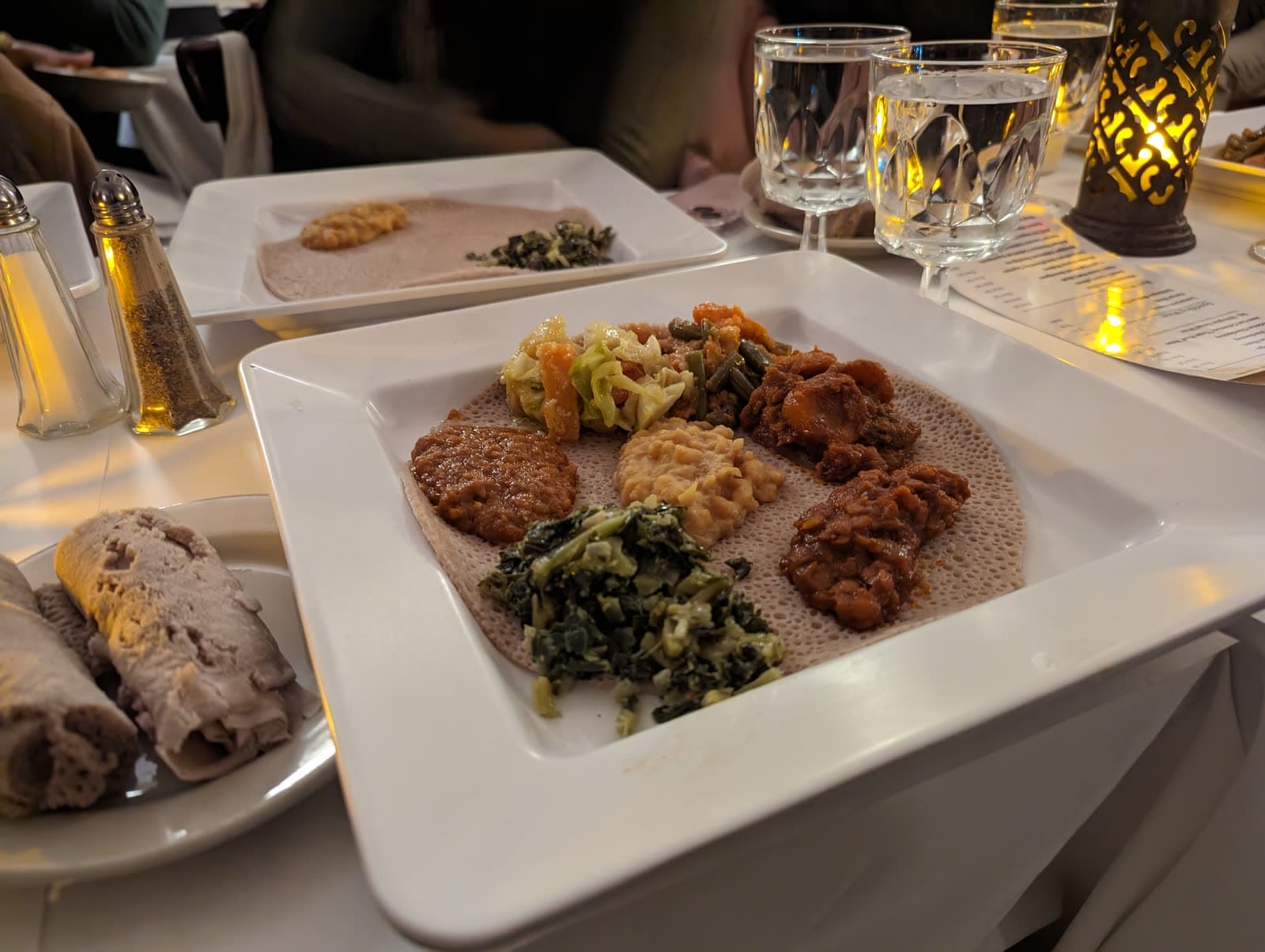
Vegetable combo (beyaynetu)
say beh-yah-yeh-NEH-tooA colorful plate of small stews, each in its own little hill on the injera. On a fasting day it is the whole menu, and nobody misses the meat.
- Shiro The silky spiced chickpea stew.
- Misir wat Spicy red lentils.
- Kik alicha Mild yellow split peas, gold with turmeric, no berbere.
- Gomen Collard greens.
- Atakilt Cabbage and carrot and potato.
- Maybe Fosolia, beets, or a bright tomato salad.
Pairs with: Injera
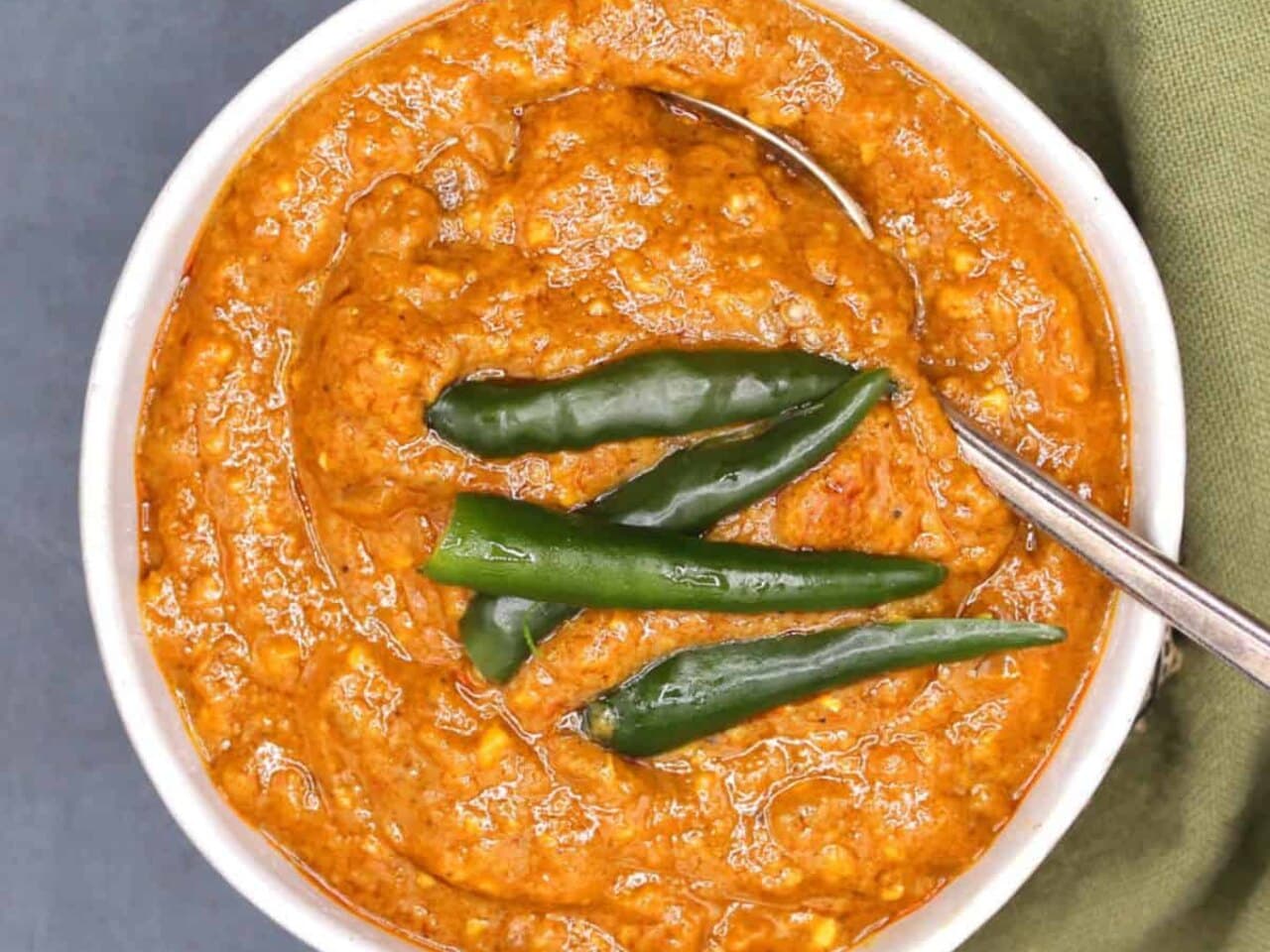
Shiro
The silky spiced chickpea stew of the vegetable combo.
Pairs with: Gomen
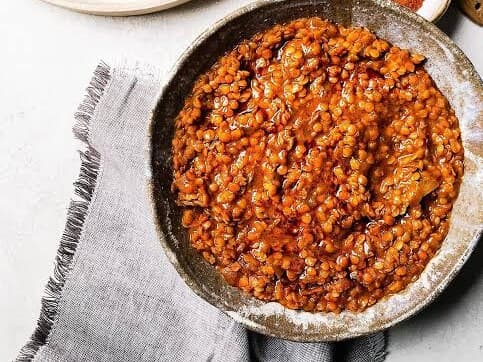
Misir wat
Spicy red lentils. Misir with tibs is a quiet classic, the spicy lentils against the seared meat.
Pairs with: Tibs
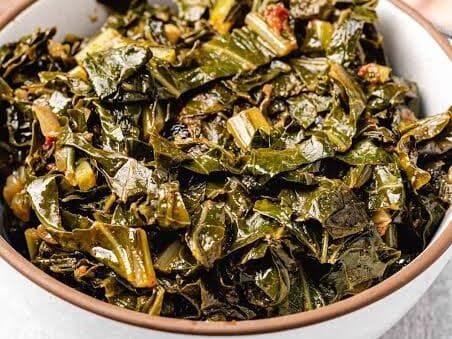
Gomen
Collard greens, on the vegetable combo and alongside kitfo and ayib.
Pairs with: Shiro, Ayib
Kik alicha
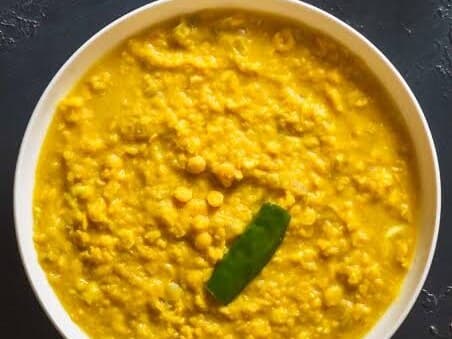
Mild yellow split peas, gold with turmeric and no berbere. Turmeric stains, so a fresh manicure can come away a little yellow. Worth it.
Pairs with: Misir wat
How to take a bite
Injera first. Always.
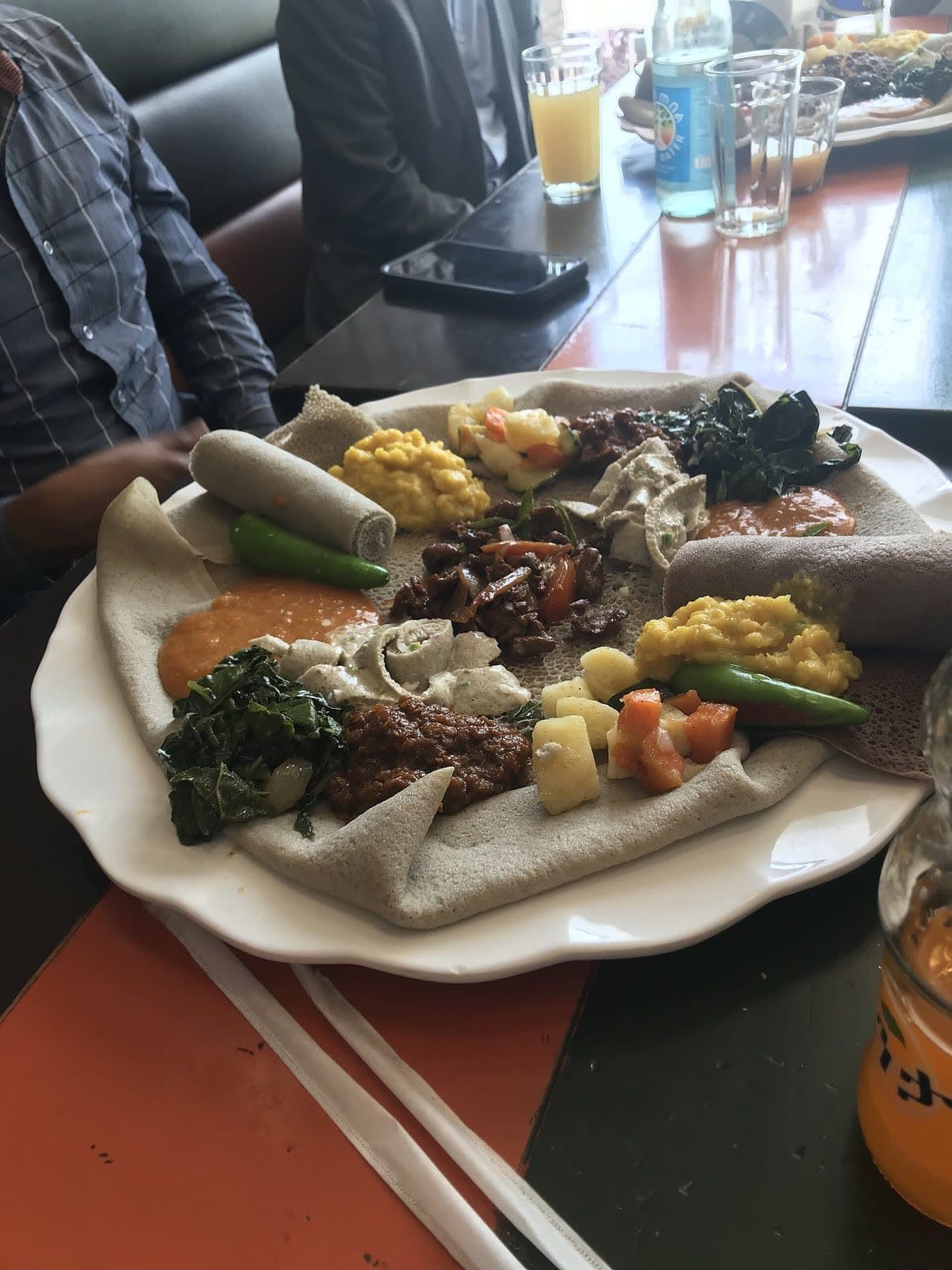
Tear off a piece, and here is the trick, not too much. You want the sauce, the wot, to lead. The injera carries the flavor. It is not the flavor. Take a small piece, use it to pinch up some doro wat, then a little ayib, far more wot than ayib. Lift. Eat. That ratio is the difference between tasting the dish and tasting bread.
Try each thing on its own first. Learn what it is. Then start mixing. This is where it gets good. Misir with tibs is a quiet classic, the spicy lentils against the seared meat. Shiro with gomen. Doro wat with a cool smear of ayib. Combine two or three in one bite and the platter starts talking to itself.
Save the injera under the stews for last. By then it has soaked up everything. That is the reward for finishing.
If you are doing takeout, plate it with a little care. Lay a sheet of injera flat. Roll a couple more into two neat rows along the plate. Spoon each dish on top in its own section, so you can still see what everything is. It takes thirty seconds and it eats so much better.
The main event
How to take a bite
- 1
Injera first. Always.
Tear off a piece, and not too much. The injera carries the flavor. It is not the flavor.
- 2
Pinch it up
Use the small piece to pinch up some doro wat, then a little ayib.
- 3
Taste, then mix
Try each thing on its own first. Then combine two or three in one bite.
- Far more wot than ayib.
- Learn each dish on its own first.
- Save the injera under the stews for last.
Combinations from the guide
- Doro watAyib
plenty of wot + a little ayib
- MisirTibs
spicy lentils + seared meat
- ShiroGomen
silky + greens
Doing takeout? Plate it with a little care
- 1
Lay a sheet flat
- 2
Roll two rows
- 3
Spoon on the dishes
Then eat it the same way: tear, scoop, and save the soaked injera for last. Need injera? Where to buy it or make your own.
Gursha
At some point, someone at the table will tear a piece of injera, load it, and feed it to you by hand. That is gursha. It is a gesture of respect and love. You let them.
And one is never enough. Amharic even has a saying for it: And (one) Yatalal. One gursha starts a fight. It is a joke, mostly. The real meaning is that you never stop at one. You always give a second. It is a small, warm thing, and it tells you a lot about how Ethiopians treat the people at their table.
The Simpsons even did a gursha bit.
The Simpsons at an Ethiopian restaurant. Video via YouTube.
If you are in the DMV, here is where to go
Ethiopian and Eritrean food runs deep across DC, Maryland, and Virginia. A few tables worth your time: Beteseb, Leesac in Silver Spring, Ethiopic in DC, and Effoi and Birndo in Virginia. One tip for the Virginia spots. They pack out on weekends, so go on a weekday if you can.
- Beteseb Silver Spring, MD
- Leesac Silver Spring, MD
- Ethiopic Washington, DC
- Effoi
- Birndo Falls Church, VA
The Virginia spots pack out on weekends. Go on a weekday if you can.
Find each dish near you
Before you hit record
A few honest things, because getting it right is part of respecting it. Injera is not a pancake or sour bread; it is fermented teff, and the tang is doing a job. Kitfo is not just raw beef; it is seasoned and cultural. Not every stew is a curry, and not everything is set-your-mouth-on-fire spicy. And Ethiopian and Eritrean traditions overlap and also differ, so hold both with care.
Say the names right and your audience trusts you more. The dishes above include how to say them.
Say it right
One small ask
If this guide helped your video, mention TiruList. A quick tag or a link in your description goes a long way, and we may feature your review. We built this so the next person walks in knowing what they are eating, and so you walk in looking like you already did.
Keep reading
All articles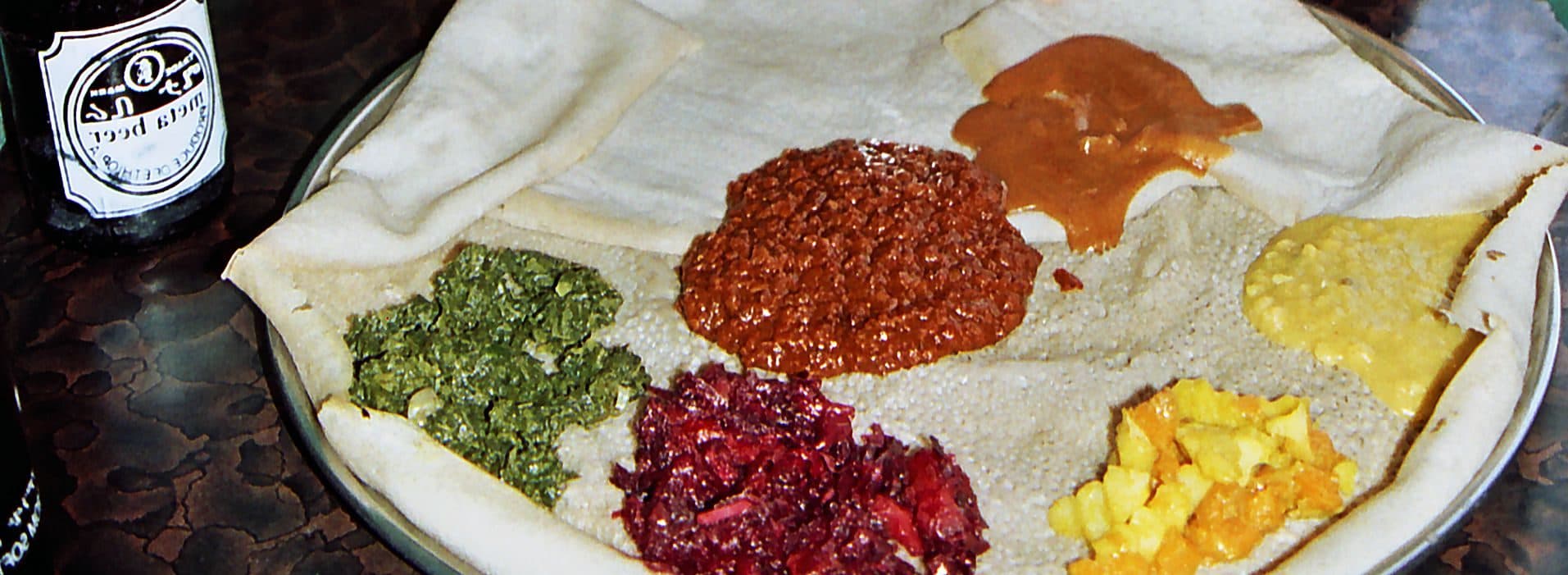
Food & Dining
What is injera?
Injera is the soft, sour teff flatbread at the center of every Ethiopian and Eritrean meal. Here is what it is made of, why it is tangy, and how to eat it.
Food & Dining
What is kitfo?
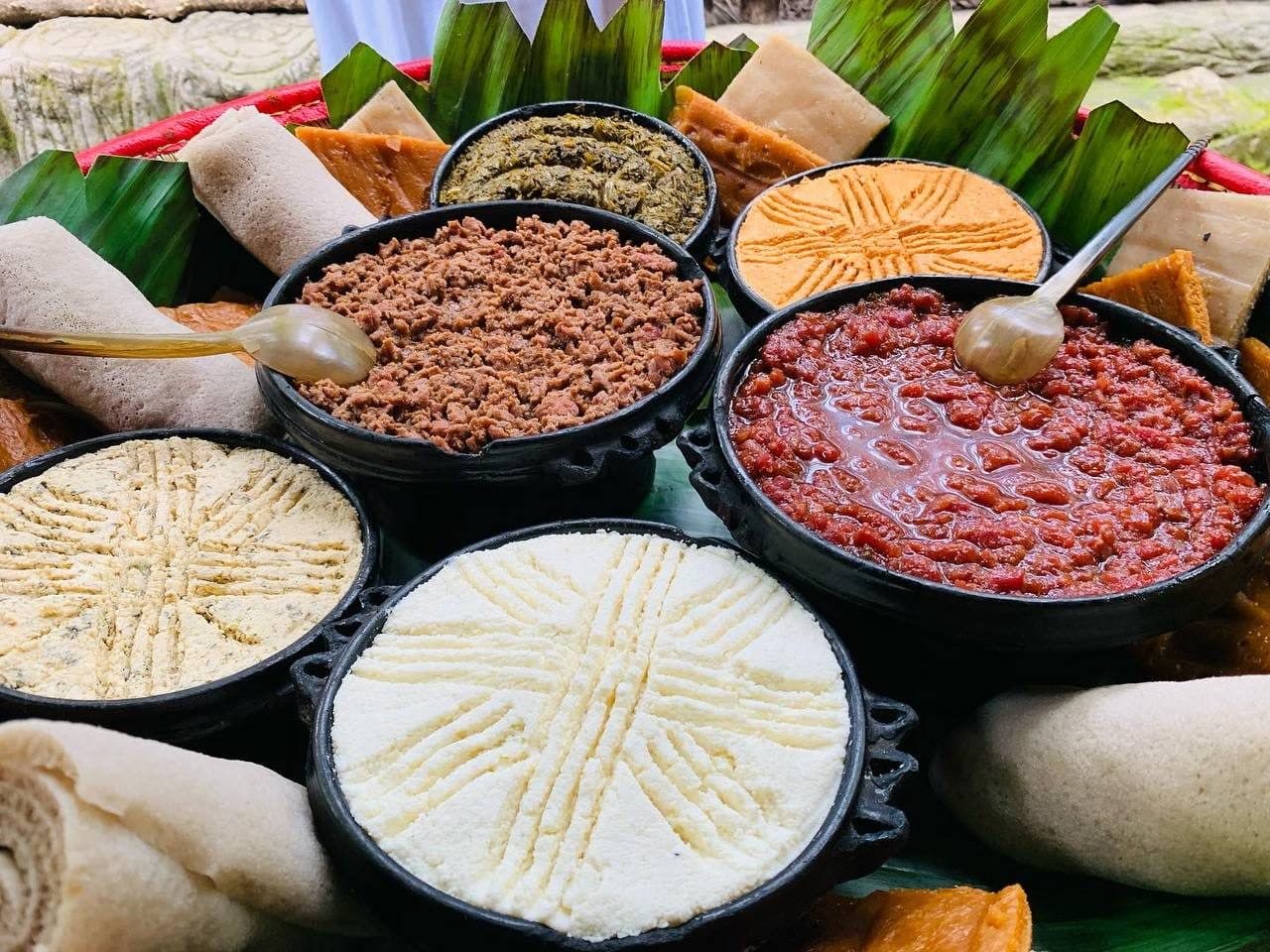
Kitfo is minced beef seasoned with mitmita and spiced butter, served rare, warm, or cooked. Here is what it is and how to order it.
Food & Dining
Best Ethiopian restaurant for a veggie combo?
Shiro, misir, gomen, and the rest on one round of injera. The community ranks the DMV's best beyaynetu, the fasting-day favorite that vegans love too.
The TiruList directory
Everything Habesha in the DMV, in one place.
Restaurants, churches, markets, services, and events, vouched for by the community.