
What is injera?
Injera is the soft, sour teff flatbread at the center of every Ethiopian and Eritrean meal. Here is what it is made of, why it is tangy, and how to eat it.
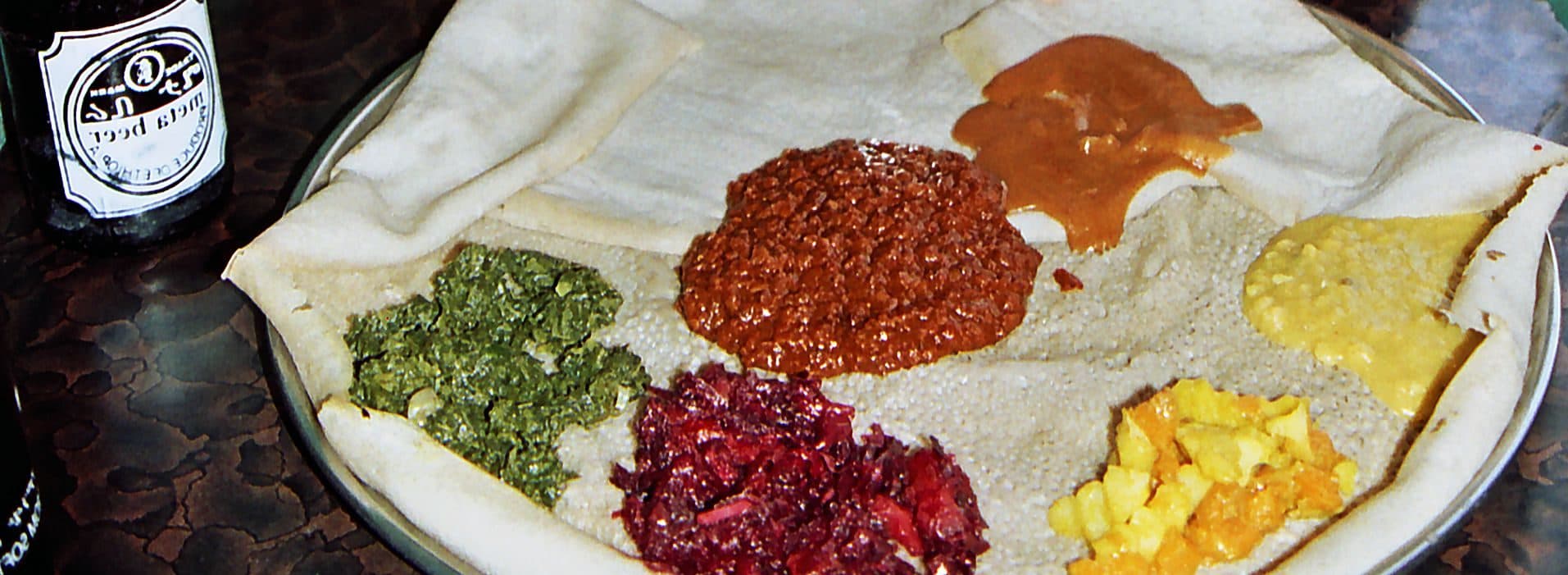
Injera is the foundation of the meal: a large, spongy, slightly sour flatbread that doubles as both plate and utensil.
What it is made of
Injera is traditionally made from teff, a tiny, nutritious grain grown in the Ethiopian highlands. The batter is fermented for a day or more, which gives injera its signature tang and its airy, bubbled surface.
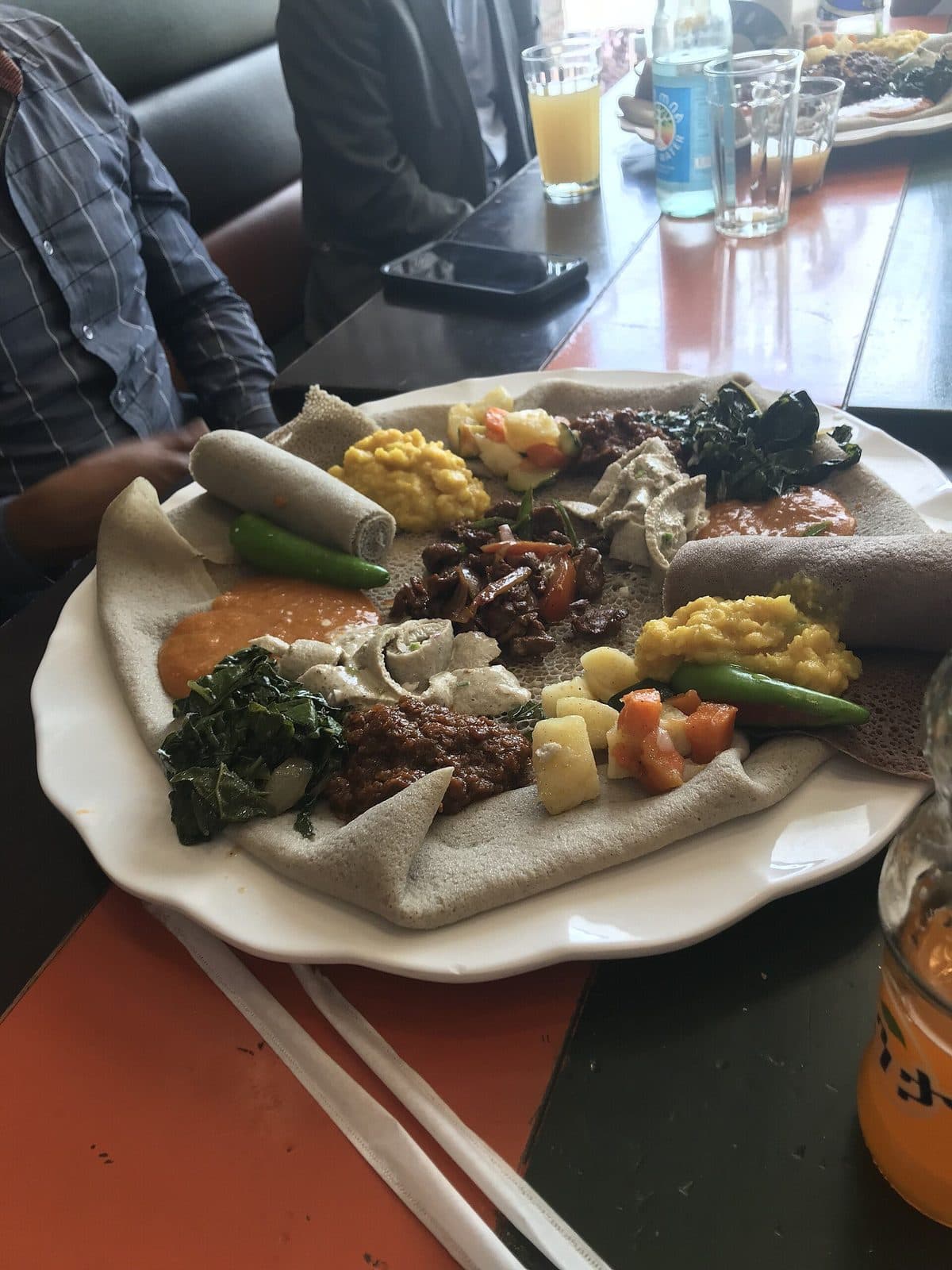
How you eat it
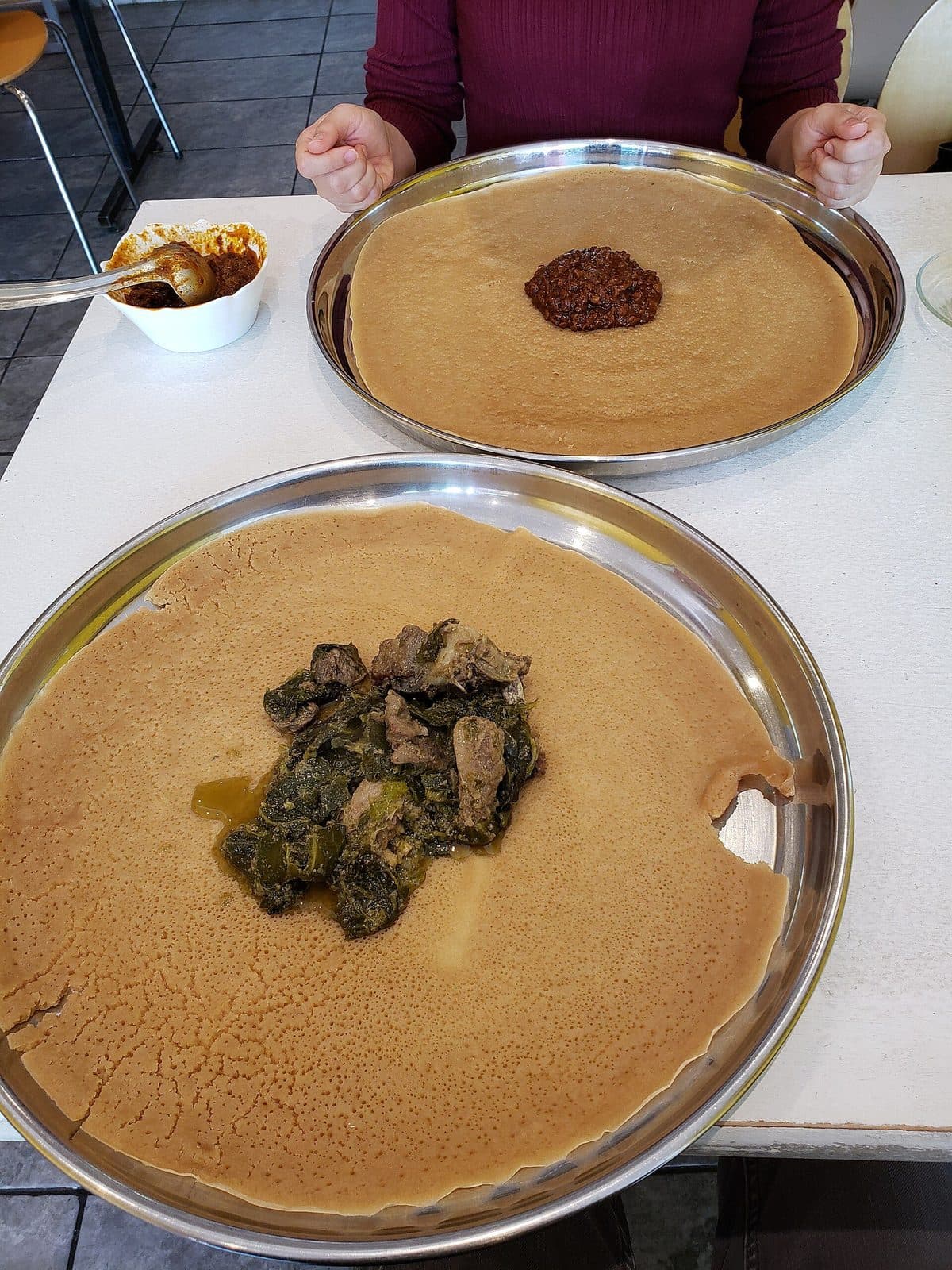
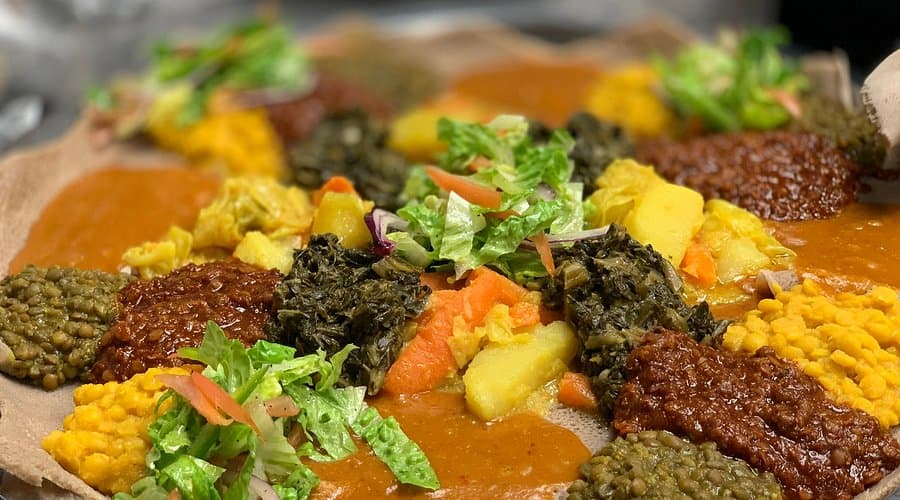
The injera is laid on a shared platter and topped with stews and vegetables. You tear off a piece and use it to scoop, no cutlery needed. Extra rolls of injera come on the side.
You tear off a piece and use it to scoop, no cutlery needed.
Frequently asked
Why is injera sour?
The batter is naturally fermented before cooking, which develops a mild sourness a little like sourdough.
Is injera gluten-free?
Teff is gluten-free, but some restaurants blend teff with wheat or barley flour, so ask if you need it to be fully gluten-free.
More in this guide: food & flavor
Or browse every TiruList guide.
Keep reading
All articles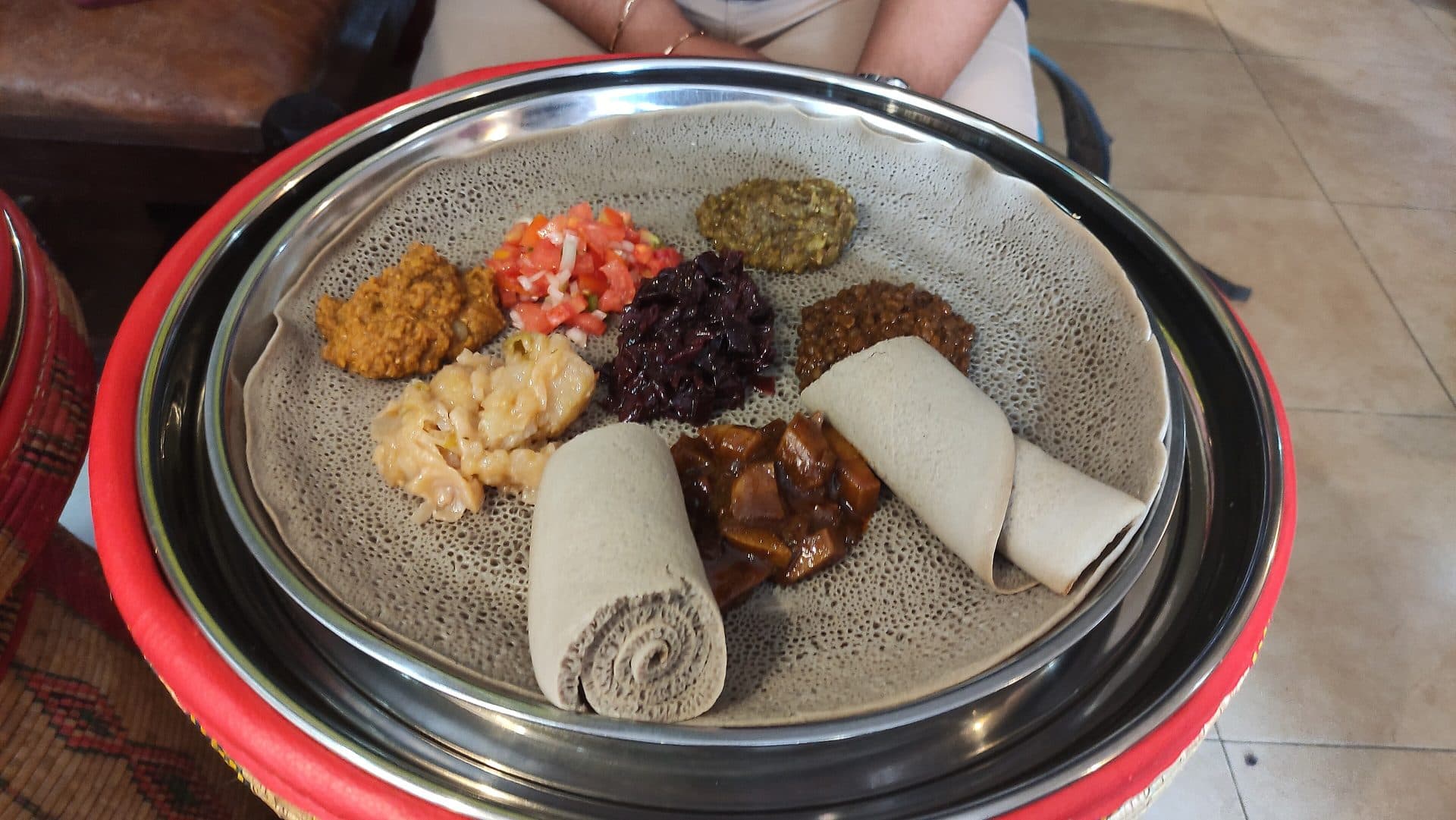
Food & Dining
A guide to Ethiopian and Eritrean food
New to Ethiopian and Eritrean food? Learn injera, the spicy stews (wot), grilled meats like tibs and tire sega, fasting dishes, and how to eat it all with your hands.
Food & Dining
What is kitfo?
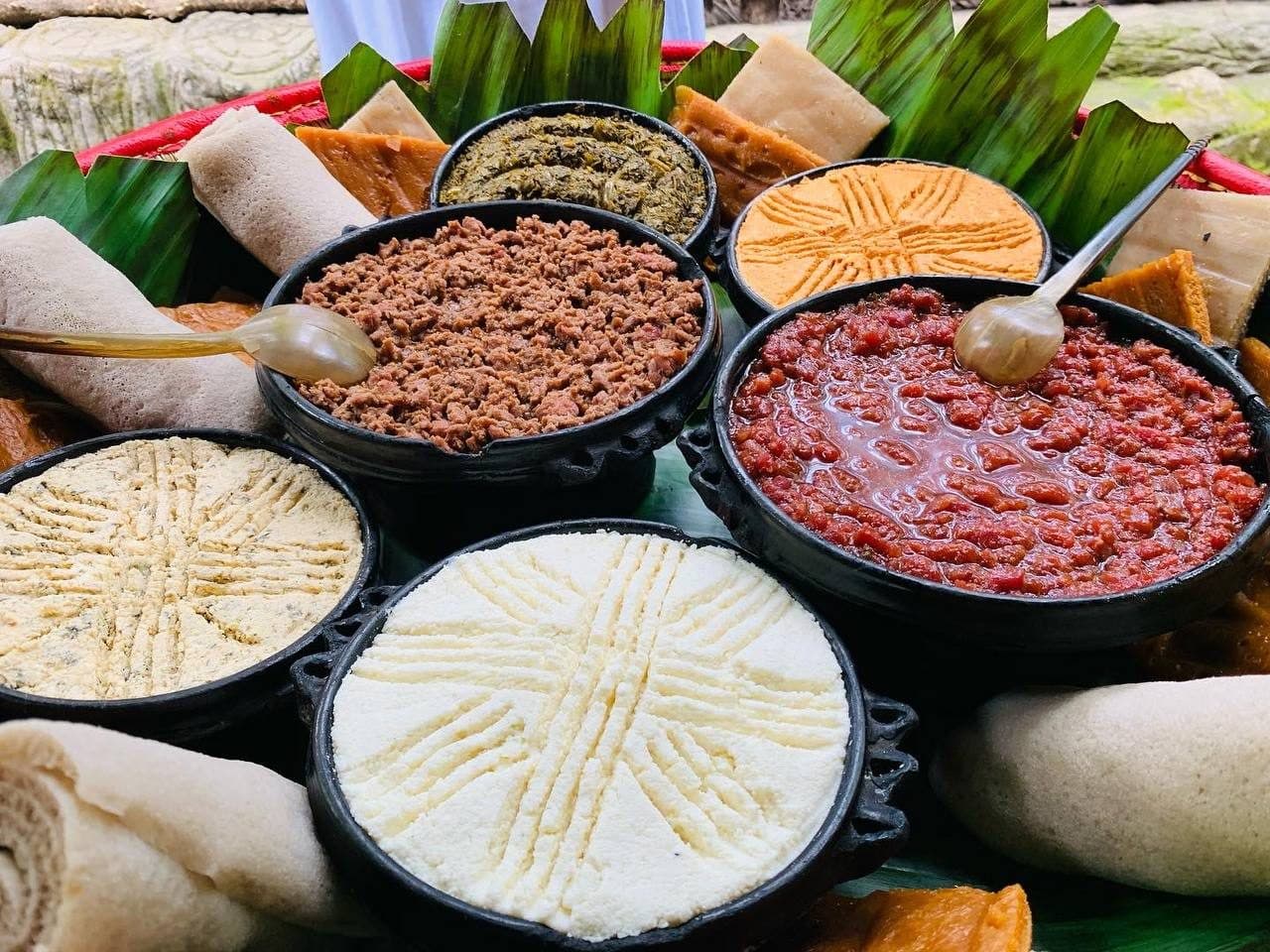
Kitfo is minced beef seasoned with mitmita and spiced butter, served rare, warm, or cooked. Here is what it is and how to order it.
Culture & Faith
Tsom: Ethiopian fasting, and where to eat it in the DMV
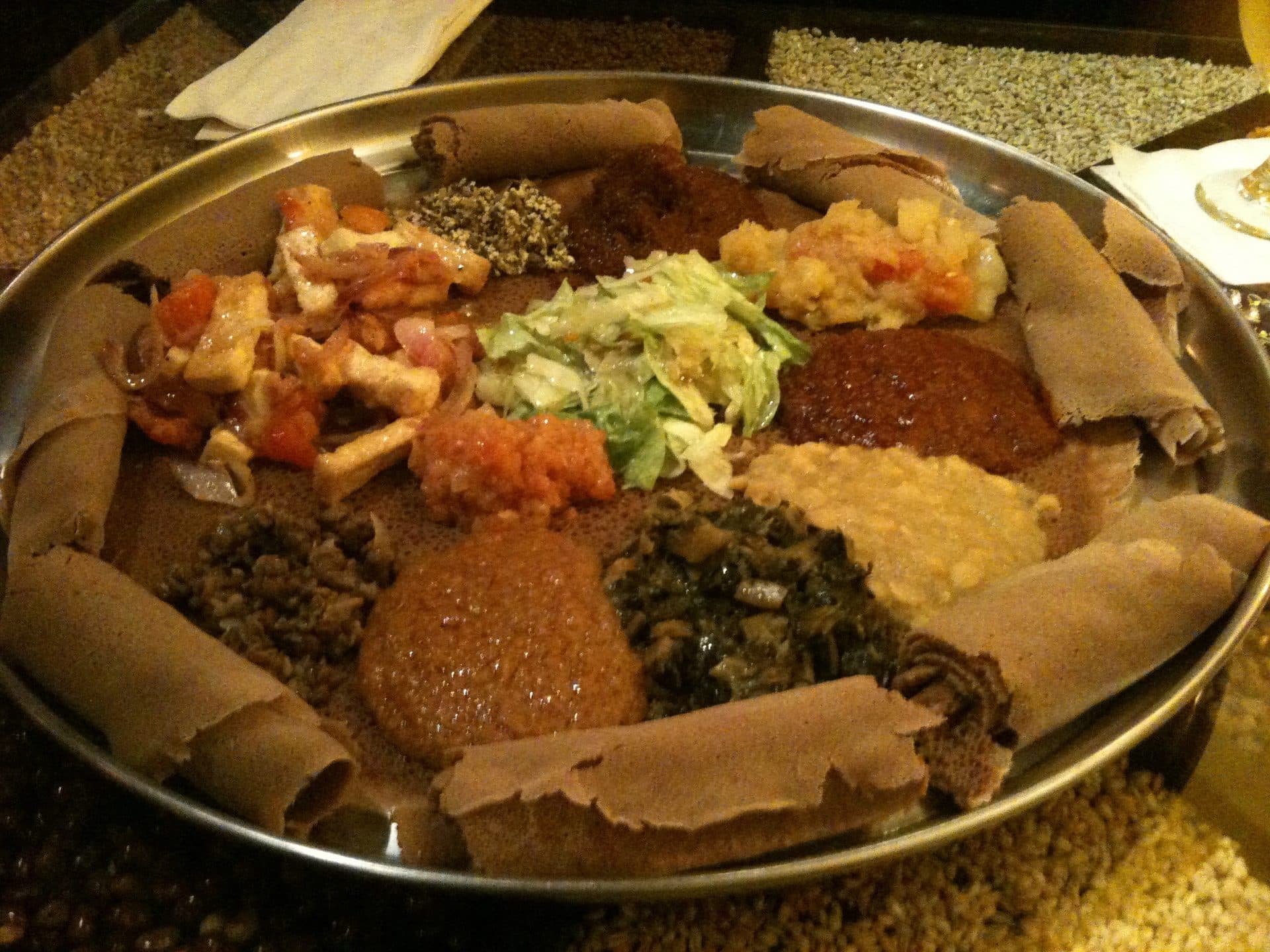
No meat, no dairy, no eggs, for around 180 days a year. What the Ethiopian and Eritrean Orthodox fast means, whether today is a fasting day, and the DMV kitchens that cook for it.
The TiruList directory
Everything Habesha in the DMV, in one place.
Restaurants, churches, markets, services, and events, vouched for by the community.