
A guide to Ethiopian and Eritrean food
New to Ethiopian and Eritrean food? Learn injera, the spicy stews (wot), grilled meats like tibs and tire sega, fasting dishes, and how to eat it all with your hands.
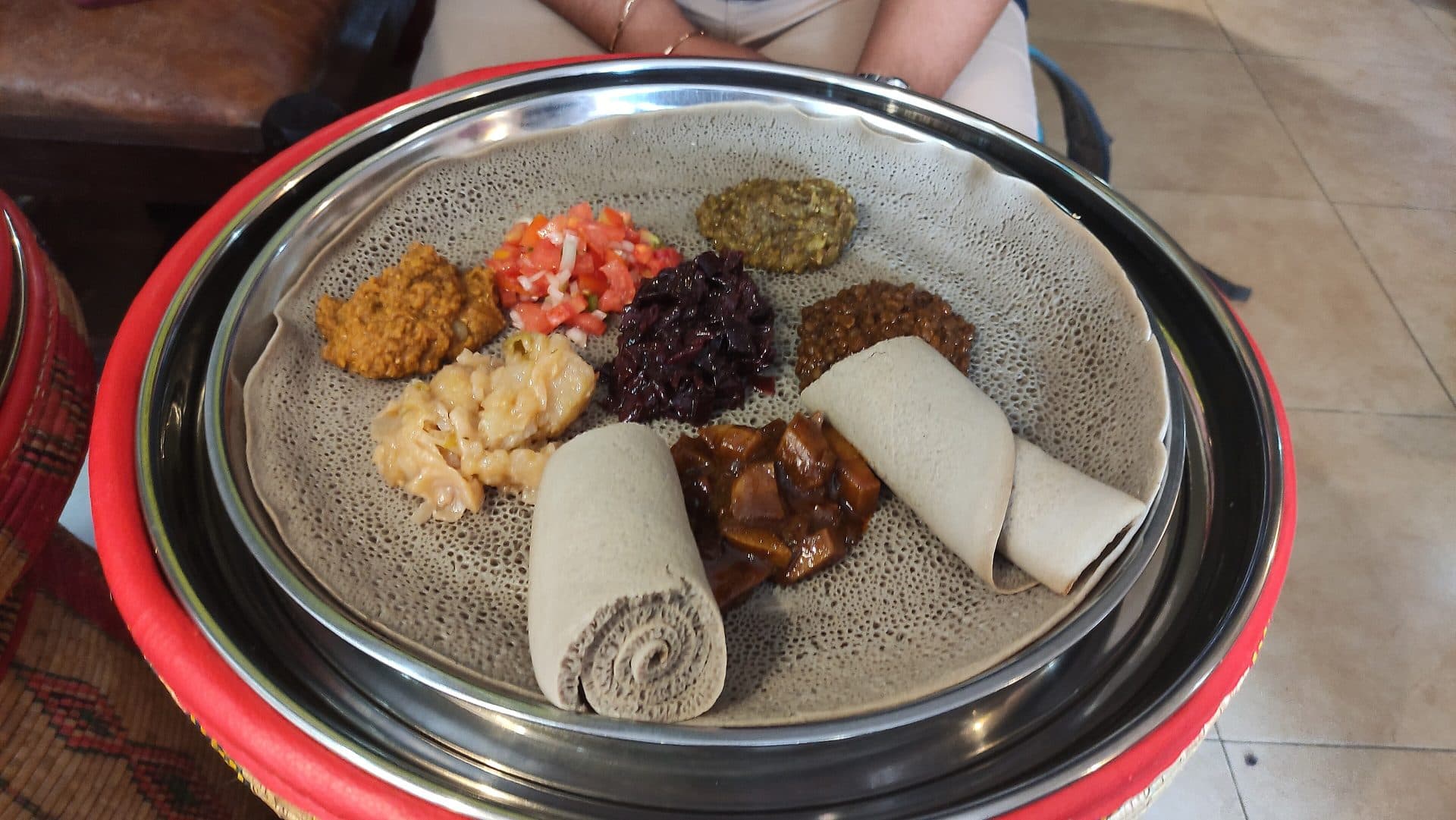
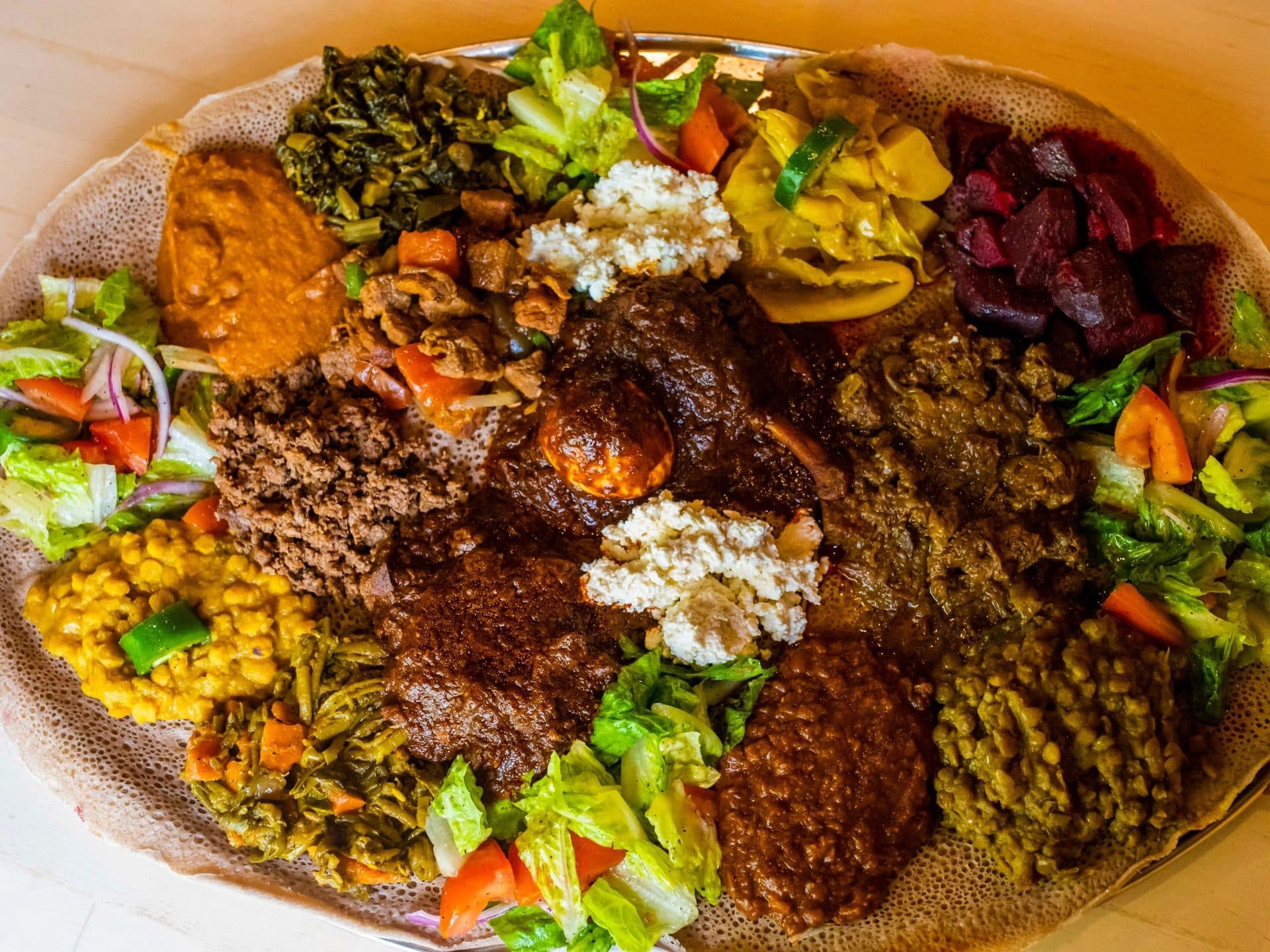
Ethiopian and Eritrean food is built to be shared. A large round of injera is spread on a communal plate, topped with small mounds of stews and vegetables, and everyone eats from the same platter with their hands.
This guide covers the building blocks so you can order with confidence, then point you to the restaurants in the DMV where you can try them.
Injera and the platter
Injera is a large, soft, slightly sour flatbread made from teff. It is both the plate and the utensil: you tear a piece and use it to scoop up the dishes. The tang comes from a natural fermentation, and the best injera is light and springy.
A shared platter (beyaynetu when it is a mixed vegetarian spread) lets you taste many things at once, which is the easiest way to start.
Wot: the stews
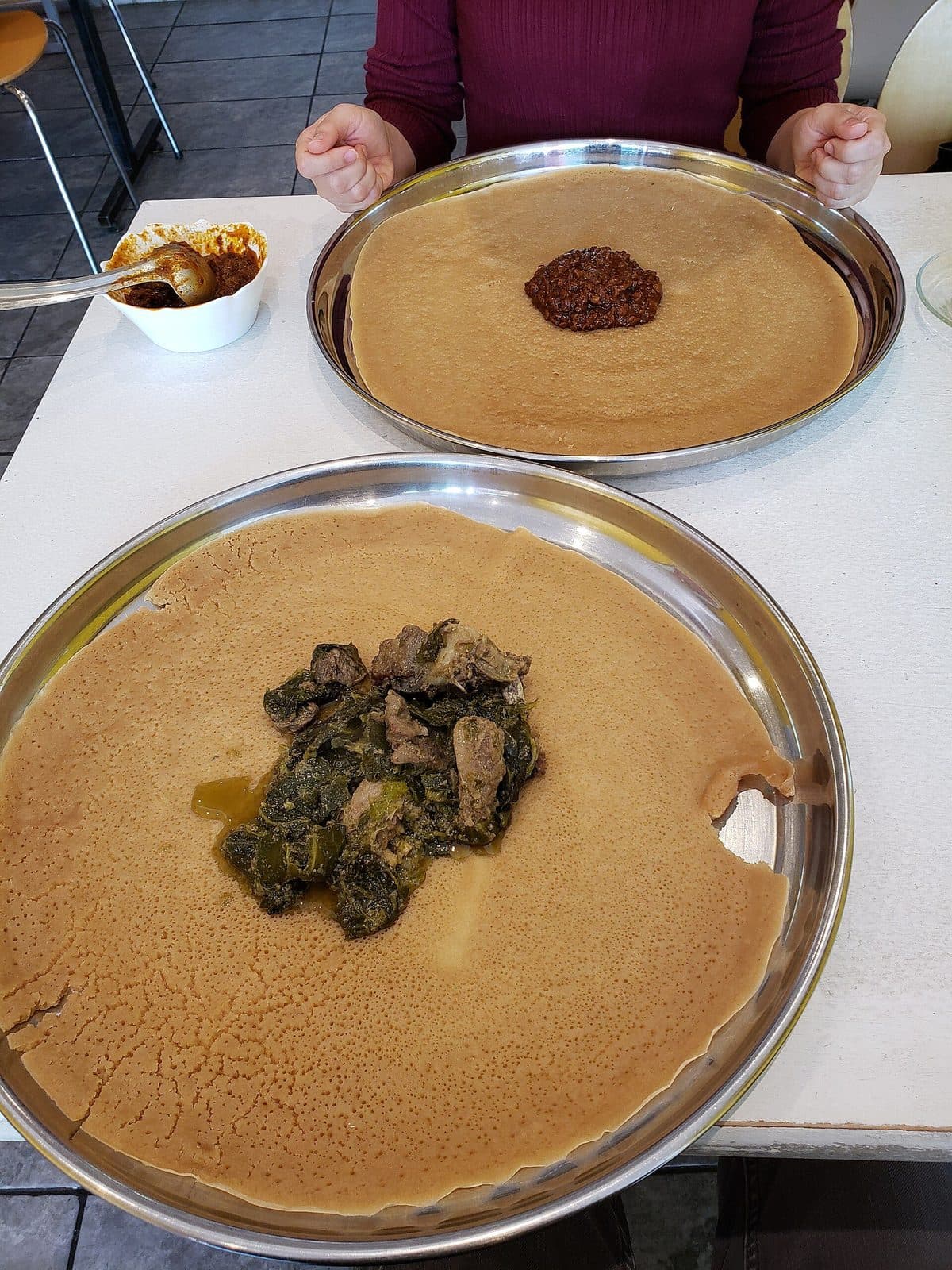
Wot is a slow-cooked stew, and it is the heart of the cuisine. Doro wat (chicken) is the celebration dish, rich with berbere spice and served with a boiled egg. Misir wot (red lentils) and shiro (ground chickpeas) are staples, gentle and deeply savory.
The flavor comes from two things: berbere, a red spice blend, and niter kibbeh, a spiced clarified butter.
A gursha, feeding a bite to someone else by hand, is a gesture of affection and welcome.
Grilled and raw meats
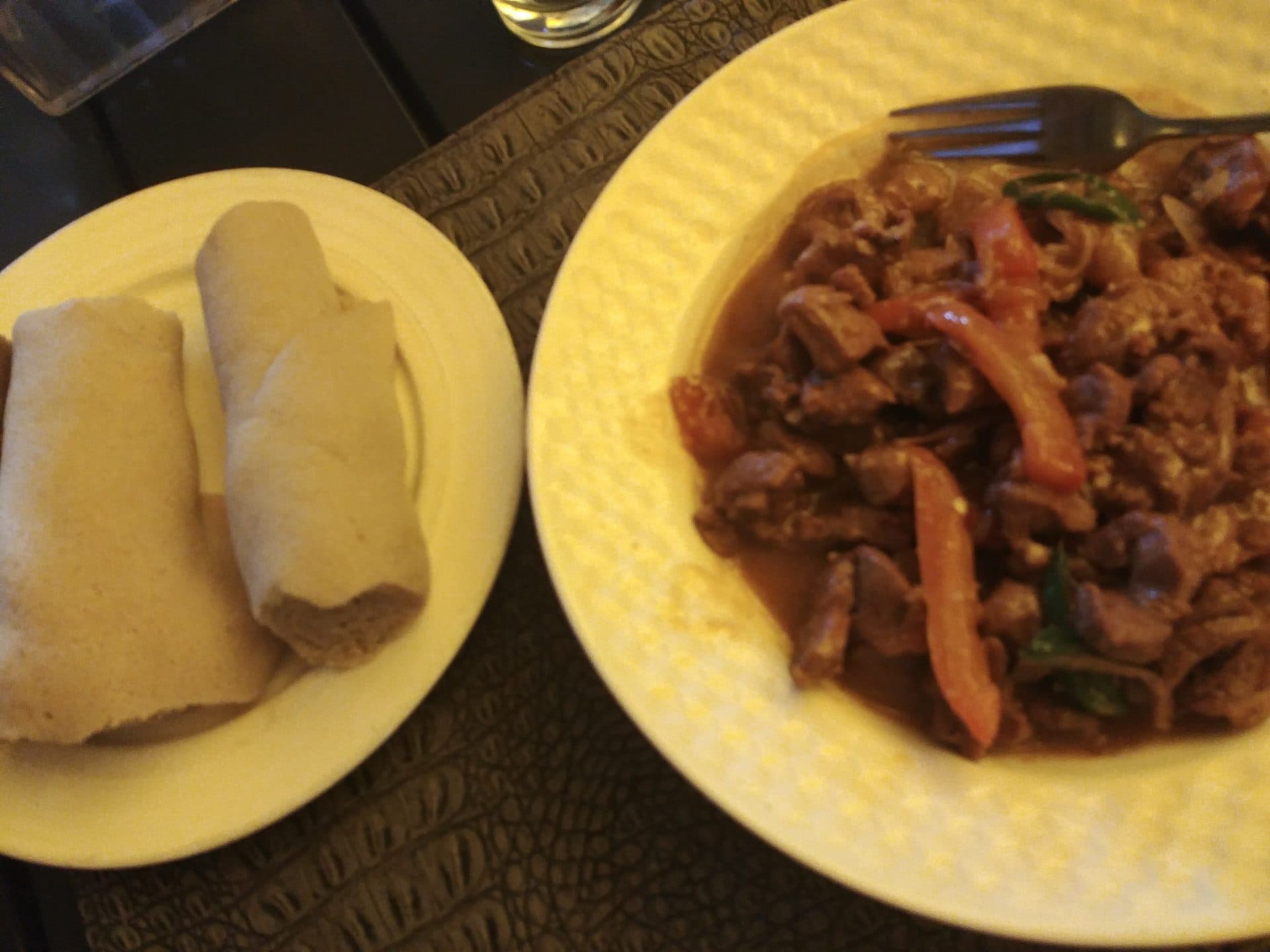
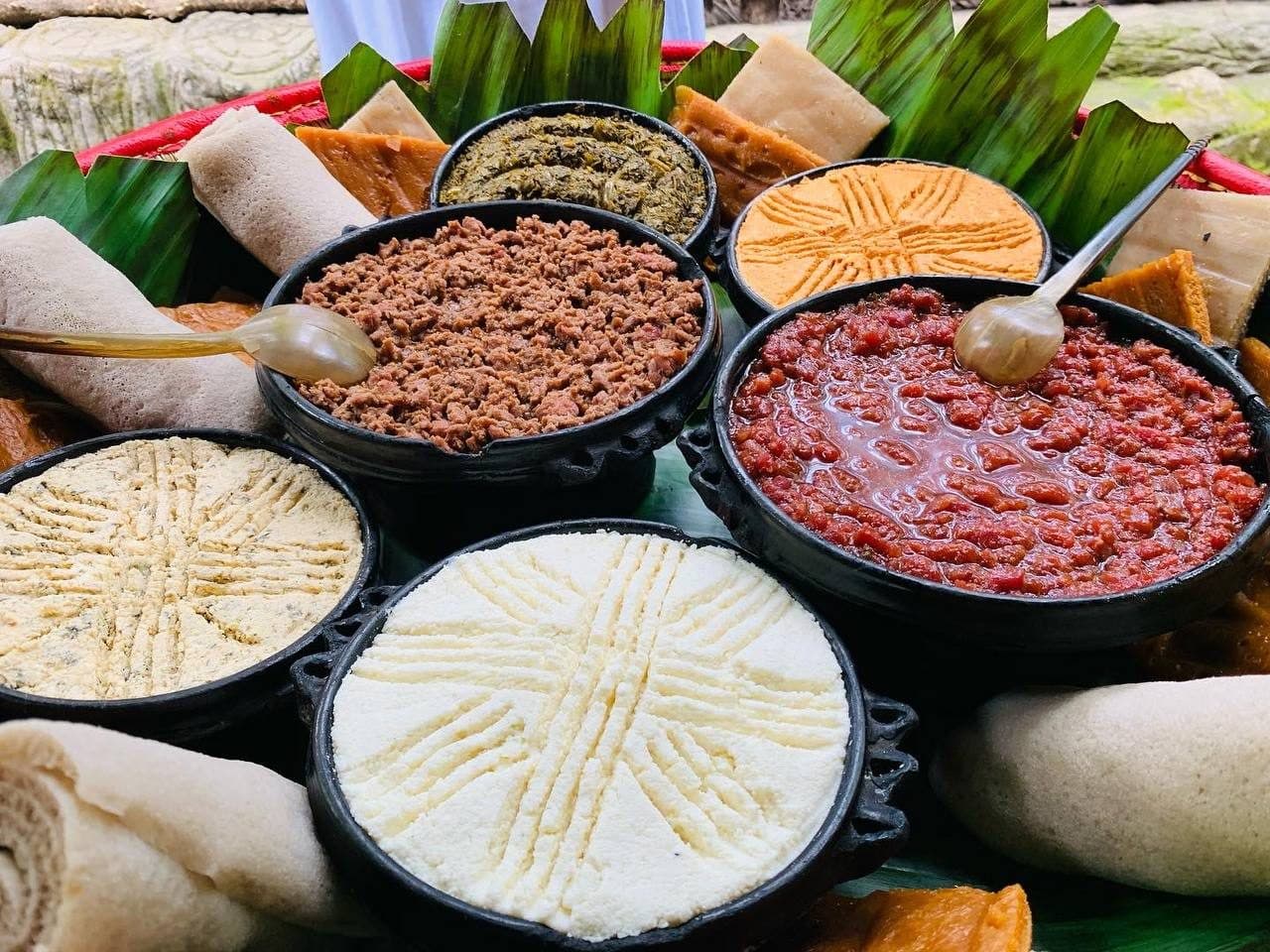
Tibs is sauteed or grilled meat, often beef or lamb, with onions and peppers. Tire sega is fresh raw beef, a delicacy eaten with mustard and awaze. Kitfo is minced beef seasoned with mitmita and kibbeh, served warm, rare, or cooked to taste.
Fasting (tsom) food
During Orthodox fasting periods, food is vegan: no meat or dairy. The result is one of the best vegan spreads anywhere, built from lentils, split peas, greens (gomen), and vegetables. Many kitchens keep fasting food available every day of the week.
How to eat it
Use your right hand, tear the injera, and scoop. A gursha, feeding a bite to someone else by hand, is a gesture of affection and welcome. There is no wrong way to enjoy it, so dig in.

Frequently asked
What is injera made of?
Traditional injera is made from teff, a tiny Ethiopian grain, fermented to give it its signature tang. Some kitchens blend in other flours.
Is Ethiopian food good for vegans?
Yes. Orthodox fasting food is entirely vegan, so a fasting (beyaynetu) platter of lentils, split peas, and greens is a rich vegan meal. Many DMV restaurants serve it every day.
What should I order first?
Start with a combination platter so you can taste several stews and vegetables at once, with extra injera to scoop.
More in this guide: food & flavor
Or browse every TiruList guide.
Keep reading
All articles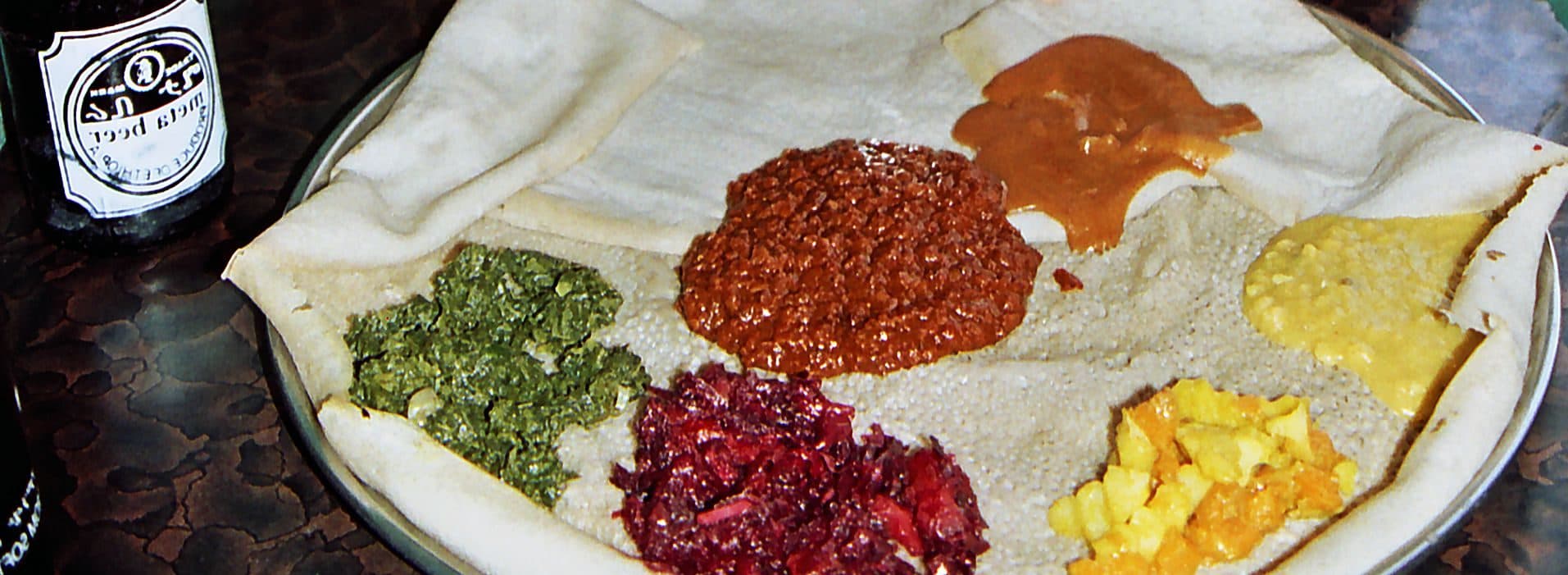
Food & Dining
What is injera?
Injera is the soft, sour teff flatbread at the center of every Ethiopian and Eritrean meal. Here is what it is made of, why it is tangy, and how to eat it.
Food & Dining
What is kitfo?
Kitfo is minced beef seasoned with mitmita and spiced butter, served rare, warm, or cooked. Here is what it is and how to order it.
Food & Dining
Best Ethiopian restaurant in the DMV?
The food, the injera, the buna, the welcome. The community ranks the Ethiopian and Eritrean restaurants it actually goes back to, and you can add your vote in seconds.
The TiruList directory
Everything Habesha in the DMV, in one place.
Restaurants, churches, markets, services, and events, vouched for by the community.